 Angela Stefani
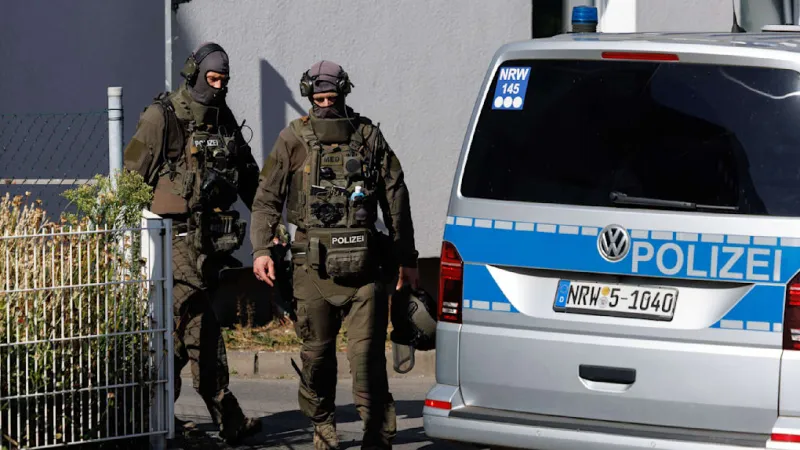
Bielefeld, Germany – Police officers fatally shot an armed man on Monday following a tense standoff that began with a domestic disturbance report. The incident unfolded hours after a woman alerted authorities that her boyfriend, possessing a weapon, was inside her apartment, ultimately culminating in a deadly confrontation when the man advanced toward responding officers.
The dramatic sequence of events commenced when the local police received an urgent call. A woman, whose identity has not been released, contacted emergency services to report a volatile situation involving her partner. She informed dispatchers that her boyfriend was armed and present within her residence.
Responding units from the Bielefeld police force converged on the scene, establishing a perimeter and initiating attempts to de-escalate the situation. Negotiators were likely brought in, though specific details on these efforts remain part of an ongoing investigation. The standoff reportedly lasted for several hours as authorities tried to resolve the situation peacefully.
According to official police statements, the situation took a critical turn when the armed man exited the apartment. He then reportedly moved toward the deployed officers while still in possession of his weapon. This advancement prompted the use of deadly force by the officers present.
Police personnel discharged their firearms, striking the individual. Despite immediate medical attention, the man succumbed to his injuries at the scene. His identity is being withheld pending notification of next of kin and further investigation.
The regional public prosecutor's office has launched a comprehensive investigation into the shooting, a standard procedure in cases involving police use of lethal force. This inquiry will examine the circumstances leading to the discharge of weapons, the officers' adherence to protocol, and the overall management of the standoff.
Such incidents inevitably cast a spotlight on police tactics and community safety. Local residents in the affected area of Bielefeld expressed a mix of shock and concern following the highly visible police presence and the tragic conclusion. The incident underscores the inherent dangers faced by law enforcement officers responding to armed domestic disputes.
German police forces operate under strict regulations regarding the use of firearms, which is typically considered a last resort when officers perceive an immediate threat to life. Training emphasizes de-escalation techniques and proportionate responses, making fatal shootings relatively uncommon compared to some other nations.
This incident also occurs against a backdrop of increasing attention to gun violence and public safety in Germany. Recent discussions have focused on the challenges posed by readily available weapons and their role in escalating conflicts, as highlighted by broader concerns about criminal activity. This incident adds to ongoing debates surrounding weapon access and its societal impact, issues explored in articles such as Berlin Confronts Alarming Rise in Gun Violence, Easy Weapon Access.
Authorities have appealed for calm while the investigation proceeds, emphasizing transparency and a thorough review of all available evidence. Initial statements from the Bielefeld police department reiterated their commitment to public safety while acknowledging the gravity of the incident for all parties involved.
The psychological toll on the officers involved, as well as the family of the deceased, is significant. Support services are typically offered to law enforcement personnel who experience critical incidents involving the use of deadly force.
The investigation is expected to gather eyewitness accounts, forensic evidence from the scene, and any available video surveillance. The weapon reportedly carried by the man will be meticulously examined as part of the evidence collection.
The incident will likely fuel further public discourse on mental health resources and their intersection with law enforcement responses to individuals in crisis. Domestic disputes, in particular, often involve complex emotional and psychological factors.