 Robert Andrison
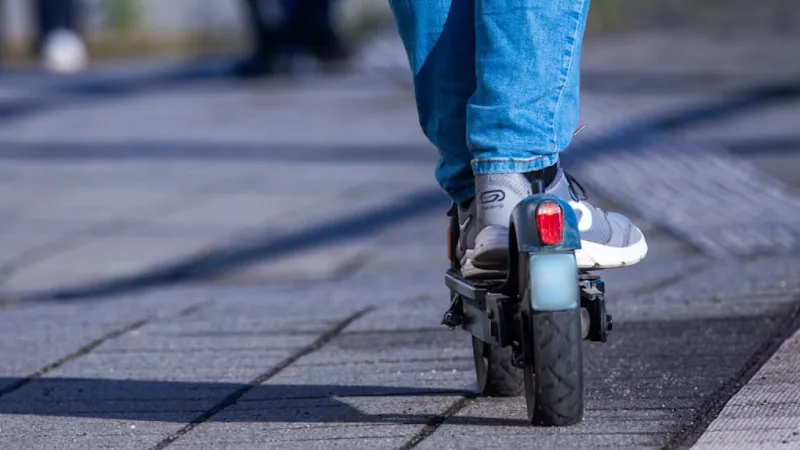
In an incident highlighting growing concerns over urban mobility safety, an e-scooter rider collided with a pedestrian carrying cardboard on a designated bike path in Jever, Germany, resulting in injuries to at least one individual and prompting an immediate police response. The collision, which reportedly occurred late Monday afternoon, has initiated an official investigation into the precise circumstances leading to the accident.
Emergency services, including paramedics and local police, rapidly converged on the scene near the city center. Initial reports indicate the pedestrian sustained non-life-threatening injuries and received medical attention at the site before being transported to a nearby hospital for further evaluation. The e-scooter rider also reportedly suffered minor abrasions.
Jever police spokesperson confirmed the incident, stating that officers secured the area for evidence collection and interviewed both parties involved as well as potential witnesses. The specific sequence of events remains under scrutiny, with investigators examining factors such as speed, right-of-way, and adherence to bike path regulations.
This incident adds to a rising trend of e-scooter related accidents across German cities. While celebrated for their convenience and environmental benefits, e-scooters have also introduced new challenges to urban infrastructure, particularly regarding shared pedestrian and cycling spaces.
Germany has established specific regulations for e-scooter use, including requirements for lights, brakes, and a maximum speed limit. Riders must also possess a valid driving license for mopeds or cars. However, enforcement and public awareness of these rules often lag behind the rapid adoption of the vehicles.
Local residents and advocacy groups have frequently voiced concerns about e-scooter operation on bike paths and sidewalks, citing instances of riders disregarding traffic laws, operating at excessive speeds, or weaving through crowds. This latest collision in Jever is likely to reignite these debates.
Pedestrians, especially those with limited mobility or carrying items, often find themselves vulnerable in shared spaces where e-scooters operate. The visual and auditory profiles of e-scooters can sometimes make them difficult to perceive until they are in close proximity, increasing collision risks.
The incident also underscores the broader challenge of adapting existing urban infrastructure to accommodate new forms of micro-mobility. Many bike paths were not originally designed for the volume or speed of both traditional bicycles and motorized e-scooters, leading to potential congestion and conflict points.
Investigators are reportedly examining whether either party was distracted, whether the e-scooter was operating within legal speed limits, and if the pedestrian was correctly utilizing the path. The presence of the cardboard also raises questions about visibility and maneuverability for the pedestrian.
Authorities often emphasize the importance of mutual respect and heightened awareness among all road users. Educational campaigns frequently remind both e-scooter riders and pedestrians to remain vigilant and follow established traffic rules to prevent such occurrences.
Depending on the findings of the investigation, the e-scooter rider could face fines or other legal repercussions if negligence or a violation of traffic laws is determined. Such incidents can also lead to civil claims for damages.
The Jever incident is not isolated. Cities globally grapple with how to integrate e-scooters safely while preserving their utility. Discussions often involve segregated lanes, stricter licensing, and technological solutions to limit speeds in sensitive areas.
As the investigation progresses, the Jever police department is expected to release further details. This collision serves as a stark reminder of the delicate balance required to ensure safety across diverse modes of transportation within bustling urban environments.