Dodi Irawan
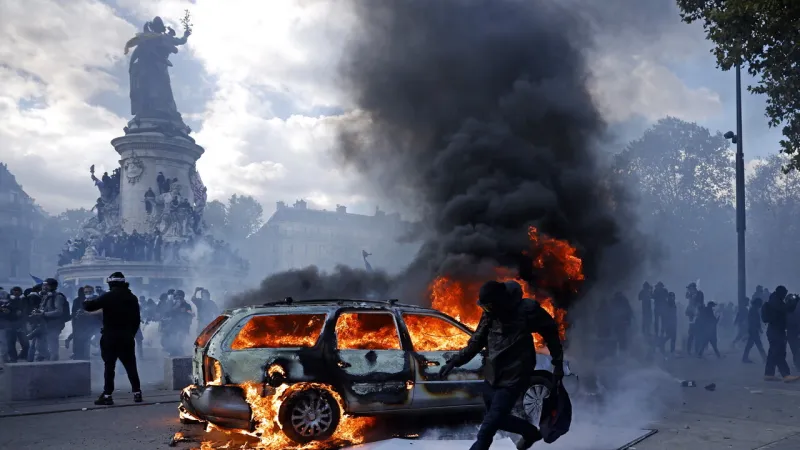
French President Emmanuel Macron has imposed stringent new restrictions on public demonstrations, notably curbing Yellow Vest protests in Paris and outright banning them in other major cities like Lyon and Marseille. The measures come amid heightened societal tensions and ahead of a significant National Rally (RN) congress in Orleans, signaling a resolute stance on public order.
The new directives stipulate that Yellow Vest activists in the capital can only participate in demonstrations officially organized by recognized trade unions. This marks a significant departure from previous allowances, which often saw spontaneous or independently organized Yellow Vest assemblies. The government asserts these restrictions aim to prevent public disorder and property damage that have characterized past movements.
In Lyon and Marseille, prefectural decrees have gone further, issuing outright bans on any planned Yellow Vest gatherings. Authorities in these cities cite specific concerns about potential clashes and disruptions to daily life, justifying the preemptive prohibitions under emergency powers. This broad suppression reflects a national strategy to contain civil unrest.
The timing of these unprecedented measures coincides with the National Rally (RN) congress scheduled to convene in Orleans. The far-right party event itself carries potential for counter-demonstrations and heightened political rhetoric, adding another layer of complexity to the government's security calculations. Tension remains palpable across the French political landscape.
Government spokespersons emphasize that the primary objective is safeguarding public safety and ensuring economic stability. They argue that repeated instances of violence and vandalism during previous Yellow Vest protests necessitated a firmer approach. The administration maintains a commitment to freedom of assembly, provided it occurs within a regulated framework.
Yellow Vest movement leaders and sympathetic advocacy groups swiftly condemned the new restrictions, labeling them an infringement on fundamental democratic rights. They argue that such limitations stifle legitimate dissent and disproportionately target a movement born from popular frustration over economic inequality and government policies.
The Yellow Vest movement, which began in late 2018, initially coalesced around opposition to fuel tax increases but quickly evolved into a broader critique of Macron's economic reforms and perceived disconnect from ordinary citizens. Its sustained presence, despite fluctuating participation, has consistently challenged the authority of the state.
These protest restrictions reflect a broader trend of European governments tightening controls on public demonstrations in response to sustained protest movements and security concerns. Similar discussions about managing public order without suppressing civil liberties have emerged in other nations, including Italy, where authorities have recently taken action to quell disruptions, as seen in reports like Italy Mobilizes Millions to Quell Persistent Transport Blockades.
Critics argue that narrowing the scope of permissible protest risks alienating sections of the populace and could inadvertently escalate tensions rather than defuse them. They contend that a genuinely democratic society must tolerate robust, even inconvenient, forms of dissent.
Legal experts anticipate challenges to the new decrees, questioning their constitutional legitimacy and proportionality under French law. Activist groups are reportedly preparing appeals, setting the stage for potential judicial confrontations over the extent of executive power in managing public demonstrations.
The effectiveness of these measures in preventing unrest while upholding democratic principles will be closely watched. The delicate balance between maintaining public order and protecting civil liberties remains a central challenge for President Macron's administration as France navigates a period of continued social and political volatility.