 Angel Doris
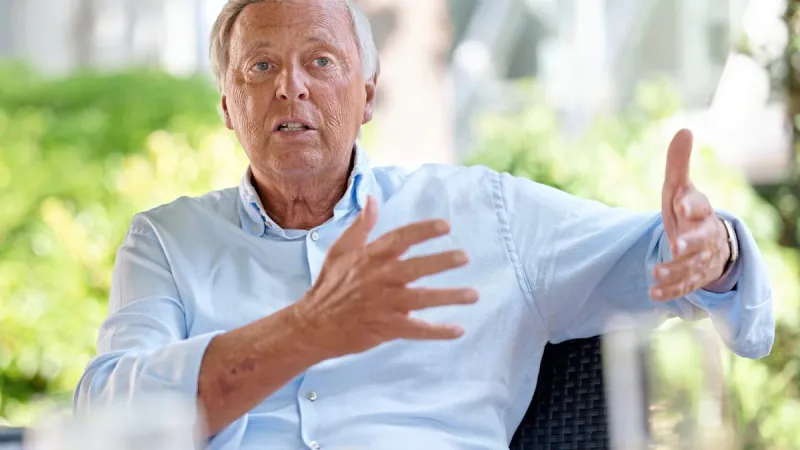
BERLIN – Wolfgang Bosbach, a respected veteran of Germany's Christian Democratic Union (CDU), recently offered a critical assessment of Jens Spahn's resignation as the party's parliamentary group leader, asserting that Spahn significantly underestimated the political ramifications of his personal decisions. Bosbach underscored the paramount importance of public trust and authenticity for political leaders following Spahn's departure amidst controversy surrounding his US surrogacy paternity.
Bosbach, known for his straight talk and long tenure in the Bundestag, articulated his belief in an interview, stating, “I believe he underestimated the political risks.” This candid evaluation aligns with the sentiment that politicians must navigate an increasingly scrutinized public sphere where private choices can carry substantial public weight. He further emphasized the foundational compact between elected officials and the electorate, stressing, “The people must trust us, and we must not disappoint that trust.”
Jens Spahn, a prominent figure within the CDU and once seen as a potential successor to party leadership, stepped down from his influential role earlier this year. His resignation came amidst intense scrutiny regarding his decision to pursue surrogacy in the United States, a practice that remains legally complex and socially contentious in Germany.
The specifics of Spahn's surrogacy arrangement, which involved a US clinic, ignited a fierce debate within German political circles and the broader public. While personal matters are typically protected, the high-profile nature of Spahn's political standing meant the issue quickly transcended private boundaries, becoming a litmus test for ethical leadership and consistency with party values.
Many observers and party members expressed concern that the surrogacy matter created a credibility crisis for the CDU. The party, often associated with conservative family values, found itself in an awkward position, attempting to reconcile a leader's personal choices with its public image and policy stances.
CDU leader Friedrich Merz, who had initially championed Spahn's rise, publicly acknowledged the necessity of the resignation. Merz declared Spahn's departure as “correct and unavoidable” in the wake of the growing controversy. This suggested an internal recognition that the situation had become untenable for the party's unity and public standing.
Bosbach's commentary serves as a stark reminder that the perception of political risks extends beyond policy failures or electoral missteps. It encompasses the intricate relationship between a politician's personal conduct and the moral authority they are expected to embody. For Spahn, the decision to engage in US surrogacy, while a private family choice, inadvertently triggered significant political fallout, demonstrating a misjudgment of its broader implications.
The veteran politician highlighted the necessity of authenticity, arguing that the public expects leaders to live in a manner that resonates with their declared principles and the societal norms they represent. A perceived disconnect can erode the very trust that underpins democratic governance.
In 2026, as Germany navigates complex domestic and international challenges, the importance of robust public trust in political institutions is more critical than ever. The CDU, like other major parties, faces the ongoing task of maintaining this trust amidst a rapidly evolving media landscape and increasingly polarized public discourse. Spahn's situation offers a poignant lesson in how seemingly private decisions can become potent symbols in the political arena.
The broader implications for the CDU, already contending with electoral pressures and evolving demographics, were significant. Concerns were raised that the controversy could alienate traditional voters and complicate the party's messaging on family and social issues. The Spahn affair underscored the constant tension between individual rights and the collective expectations placed upon those in public service.
This episode reinforces the adage that for politicians, the personal often becomes intensely political. Leaders are constantly under scrutiny, and their actions, even in private spheres, can reverberate through their careers and impact their parties' fortunes. Bosbach's assessment underscores the high bar for credibility and public confidence demanded of those who seek to govern.