Robert Andrison
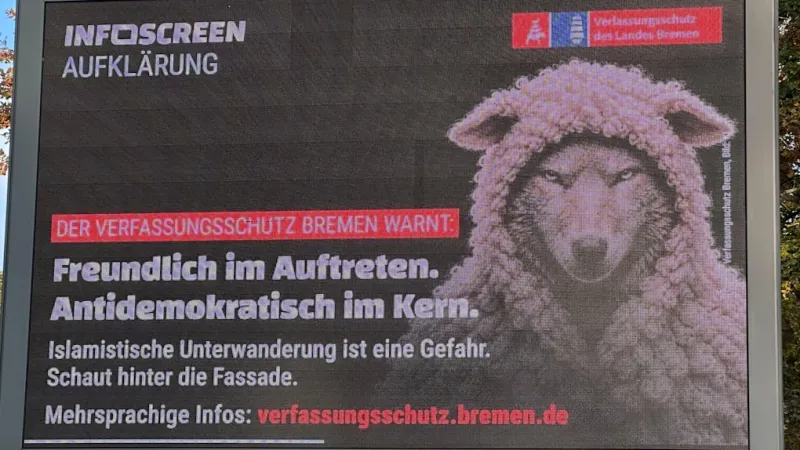
BREMEN, Germany – The Verfassungsschutz Bremen, the state's domestic intelligence agency, abruptly terminated its controversial campaign warning against Islamist infiltration of society. The initiative, launched on November 4, 2026, was halted by Interior Senator Eva Hogl after less than two weeks, following widespread condemnation from Muslim communities who described the effort as discriminatory.
Senator Hogl's decision came as a direct response to a torrent of criticism that emerged shortly after the campaign's inception. Many Muslims across Bremen felt unjustly placed under a blanket of general suspicion by the campaign's broad messaging and imagery.
The Verfassungsschutz had initially presented the campaign as a vital public awareness drive, aiming to educate citizens about the nuanced dangers posed by Islamist extremism and its potential for societal penetration. Its promotional materials highlighted the threats of radicalization and anti-democratic ideologies.
However, the execution of the campaign drew immediate and strong objections. Muslim organizations, community leaders, and civil rights advocates in Bremen and beyond swiftly voiced their concerns. They argued that the campaign blurred the critical distinction between the vast majority of peaceful Muslim citizens and the extremist fringe.
Critics emphasized that such initiatives, while purportedly targeting extremism, often lead to the stigmatization of entire religious groups. This, they contended, erodes trust between authorities and minority communities, hindering cooperative efforts to identify and counter genuine threats.
Interior Senator Hogl acknowledged the gravity of the criticism, underscoring the delicate balance government agencies must maintain between ensuring national security and safeguarding the civil liberties and dignity of all residents. The rapid cessation of the campaign suggests a recognition of its counterproductive impact.
A spokesperson for the Bremen Interior Ministry indicated that the decision underscored the administration's commitment to fostering an inclusive society built on mutual respect and dialogue. They affirmed the importance of engaging constructively with all segments of the population on sensitive security matters.
The Verfassungsschutz, Germany's federal and state domestic intelligence services, routinely monitors various forms of extremism, including right-wing, left-wing, and Islamist ideologies. However, public awareness campaigns require careful calibration to avoid alienating the very communities whose cooperation is essential for effective security work.
This incident reignites broader discussions within Germany and Europe regarding the efficacy and social cost of different counter-extremism strategies. Experts often debate whether a focus on broad public campaigns can achieve security objectives without inadvertently exacerbating social divisions.
While proponents of such campaigns often emphasize the necessity of public vigilance against anti-democratic forces, the Bremen experience highlights the significant risks associated with approaches perceived as profiling. The swift withdrawal illustrates a political willingness to correct course when initiatives provoke unintended negative consequences.
Moving forward, Bremen authorities are expected to re-evaluate their public communication strategies concerning security threats. Future approaches will likely emphasize more targeted, evidence-based methods that prioritize community engagement and avoid collective generalizations, fostering trust rather than suspicion.