 Angela Stefani
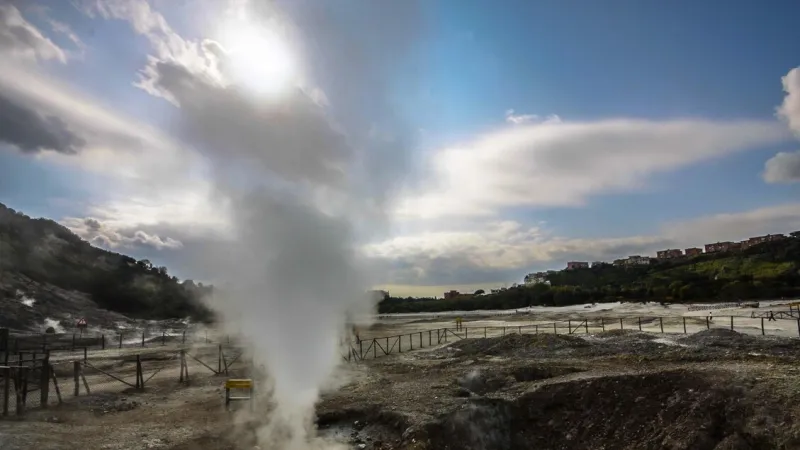
NAPLES, Italy – A magnitude 3.6 earthquake jolted the Campi Flegrei super-caldera in southern Italy early this morning, awakening countless residents across the volcanic region and in the sprawling metropolis of Naples. The tremor, registered precisely at 4:17 AM local time, marks the latest in a series of seismic events that continue to keep authorities and the populace on edge.
Preliminary reports from the National Institute of Geophysics and Volcanology (INGV) confirmed the quake's epicenter within the caldera area, a region renowned for its intense geological dynamism. While no significant damage or injuries were immediately reported, the palpable shaking prompted widespread concern among those accustomed to the Phlegraean Fields recurrent tremors.
This seismic episode underscores the ongoing phenomenon of bradyseism, the gradual uplift and subsidence of the Earth's crust driven by underground magma and gas movements. The Campi Flegrei caldera has experienced cycles of this activity for millennia, with periods of heightened seismic unrest often preceding significant ground deformation.
Experts emphasize that the 3.6 magnitude event falls within the expected range for the active caldera, yet each tremor serves as a stark reminder of the area's potent geological forces. Scientists continuously monitor the region using an array of sophisticated sensors to track ground deformation, gas emissions, and seismic patterns.
The Phlegraean Fields, literally the burning fields, represent one of the world's most monitored volcanic areas due to its proximity to a dense urban population exceeding three million people. The caldera last saw a major eruptive event approximately 500 years ago, but its continuous activity necessitates vigilant observation.
Residents, many of whom have lived through previous periods of elevated seismic activity, recounted being abruptly roused from sleep. Social media platforms quickly became a forum for sharing experiences and seeking reassurance, highlighting the community's collective anxiety surrounding the super-caldera's behavior.
Civil protection agencies in the Campania region have reiterated established safety protocols and communication channels for residents. While the current activity remains within expected parameters for a restless caldera, preparedness remains a paramount concern for local authorities.
Historically, the Campi Flegrei has seen more intense seismic swarms. A notable crisis occurred in the early 1980s, which led to the temporary evacuation of thousands of residents from the town of Pozzuoli due to significant ground uplift and frequent earthquakes. Lessons learned from that period inform today's monitoring and emergency planning.
Ongoing scientific research aims to refine predictive models for volcanic activity, though the complex interplay of forces within such a system makes precise forecasting challenging. Scientists from institutions worldwide collaborate with INGV to decipher the signals emanating from beneath the Bay of Naples.
Meanwhile, global seismic activity remains a subject of intense scientific scrutiny. While this Campi Flegrei event is domestically focused, it draws parallels with seismic events observed globally, such as the powerful quake that recently jolted Venezuela, causing building collapses and triggering tsunami alerts for nearby regions.
Local officials urge calm, stressing that the current activity does not indicate an immediate escalation to a larger event but necessitates continued vigilance. Regular public information campaigns are crucial to ensure residents understand the risks and how to react in various scenarios.
The economic implications of sustained seismic unrest are also a consideration. Tourism, a vital industry for the Naples area, relies on a perception of safety and stability. Prolonged or intensified activity could impact visitor numbers, affecting local businesses and livelihoods.
As monitoring continues around the clock, the focus remains on understanding the subtle shifts within the caldera that could signal changes in its behavior. The resilience of the local population, coupled with advanced scientific surveillance, forms the frontline defense against the unpredictable nature of the Phlegraean Fields.
Officials assure that emergency services are prepared to respond to any eventuality, with drills and preparedness exercises conducted regularly to maintain readiness. This proactive stance aims to mitigate potential impacts and safeguard the lives of millions residing in the shadow of this geological wonder.
The 3.6 magnitude earthquake serves as a potent reminder of Earth's dynamic processes and the constant interplay between natural forces and human habitation, particularly in areas of high seismic and volcanic risk like the Phlegraean Fields.