Angela Stefani
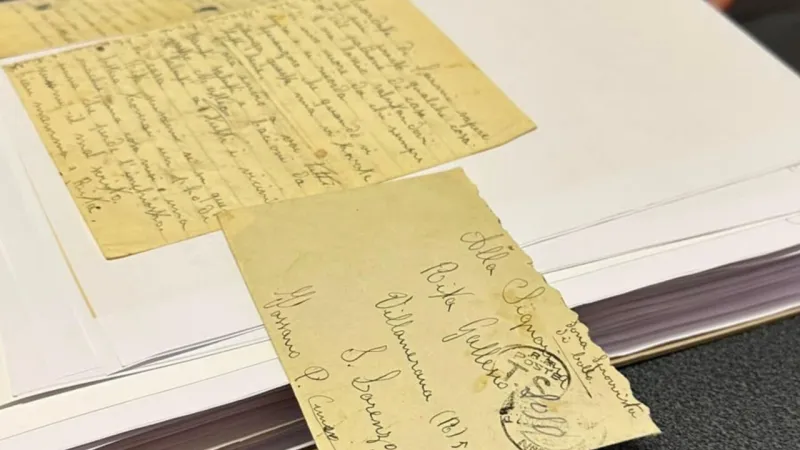
CUNEO, Italy – After 83 agonizing years, a final letter from an Italian Alpino soldier, presumed lost during the brutal Eastern Front campaign of World War II, has finally reached his 83-year-old niece. The poignant discovery provides a semblance of closure to a family that has long grappled with the fate of their relative, an infantryman from the Cuneo region who vanished amidst the unforgiving Russian winter.
The letter belongs to an Alpino, a member of Italy's elite mountain infantry. These specialized troops, renowned for their resilience in challenging terrains, found themselves deployed to the Soviet Union as part of the Italian Expeditionary Corps in Russia (CSIR) and later the Italian Army in Russia (ARMIR). Their mission, often poorly equipped and ill-suited for the extreme conditions, proved devastating.
Thousands of Italian soldiers, particularly Alpini, perished from combat, frostbite, disease, or starvation during the catastrophic retreat from the Don River in early 1943. This period represents one of the darkest chapters in Italian military history, with an estimated 80,000 to 90,000 Italian soldiers never returning home from the Soviet Union.
While the specific contents of the rediscovered missive remain private, such letters typically carried messages of love, longing, and desperate hope for reunion. They often contained farewells, reassurances to loved ones, and vivid, albeit censored, descriptions of the hardships faced. For the recipient, the letter is more than just words on paper; it is a tangible connection to a lost past, a voice from the grave offering a final, belated embrace.
The emotional weight of receiving communication from a family member long believed dead is immense. It reopens old wounds but also offers a unique opportunity for understanding and remembrance, transforming an abstract historical loss into a deeply personal one.
The intricate journey of this letter across more than eight decades and thousands of miles underscores the dedicated efforts of historians and archival researchers. Its rediscovery likely stems from meticulous work within national or international archives, potentially involving military records or collections of wartime correspondence preserved in unforeseen circumstances. Such findings are rare but periodically surface, shedding light on the human cost of global conflicts.
The process often involves identifying unidentified soldiers, cross-referencing names, and tracing descendants, a testament to the enduring commitment to honoring those who served and to providing answers to their families.
The 83-year-old niece, whose name has not been released, expressed profound emotion upon receiving the letter. For her, who may have only heard stories of her uncle or never known him personally, the letter offers an intimate glimpse into his life and final thoughts. It bridges a vast generational gap, allowing her to connect directly with a past that profoundly shaped her family.
This belated delivery brings a unique form of closure, offering a concrete piece of her uncle's life, rather than the perpetual ambiguity of being listed as missing in action. It allows the family to fully mourn and remember him with a newfound sense of completion.
The story of the Alpino's letter resonates with countless families across Italy and other nations that bore the brunt of World War II. It highlights the continued efforts to repatriate remains, identify the unknown, and return personal effects or communications. These ongoing endeavors serve as a powerful reminder that the echoes of such monumental conflicts persist for generations.
Similar historical mysteries, like the Decades-Old Mystery: the Shirt Links to Italy's Unsolved Case, underscore the enduring human drive to unravel the past and bring resolution to long-standing questions. The dedication to these historical investigations often stems from a deep societal desire for remembrance and historical accuracy.
Such discoveries are not merely historical footnotes; they are vital threads in the fabric of national memory. They personalize the vast statistics of war, reminding current generations of the individual sacrifices made and the profound impact these events had on families and communities. The letter serves as a potent artifact, embodying bravery, sacrifice, and the unbreakable bonds of kinship.
Its arrival, even after so much time, ensures that the soldier's story, and the story of his family's long wait, is not forgotten, cementing his place not just in military annals but in the collective consciousness.
The Alpini, as a corps, continue to hold a revered place in Italian culture, symbolizing national pride and enduring spirit. Their history, marked by both heroism and tragic loss, is frequently revisited, and discoveries like this letter reinforce the importance of preserving these individual narratives within the broader historical tapestry.
This emotional delivery reminds us that war's impact extends far beyond the battlefield, reaching through time to touch generations with its lingering echoes of loss and resilience.