 Angela Stefani
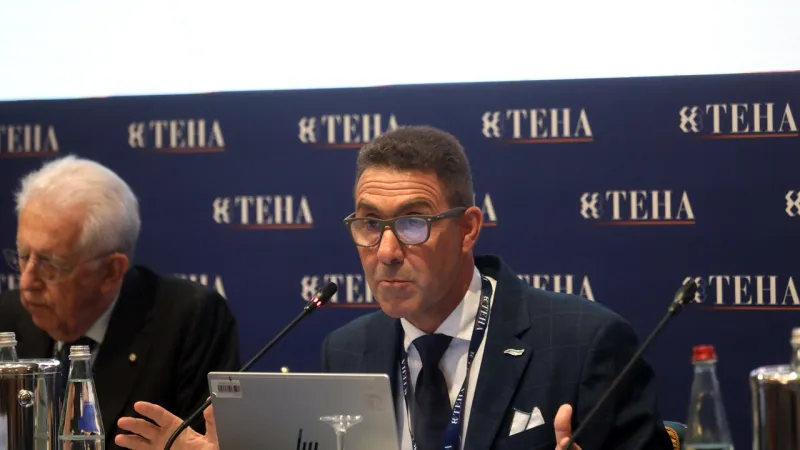
Cernobbio – A significant political confrontation unfolded recently at a high-profile forum in Cernobbio, where former Italian Prime Minister Mario Monti directly challenged General Roberto Vannacci, vowing to combat what he termed Vannacci's "fascist rhetoric." The sharp exchange immediately ignited a fervent debate regarding Italy's intricate relationship with the European Union and the nation's sovereign identity.
Monti, a staunch proponent of European integration and a former technocratic leader, explicitly declared, "I will fight his fascist rhetoric," referring to statements made by General Vannacci. This direct condemnation highlighted the profound ideological chasm separating the two figures on the Italian political stage.
General Vannacci, a controversial figure who has gained prominence for his nationalist and often provocative views, swiftly dismissed Monti's accusations. "Ridiculous accusations," Vannacci retorted, rejecting the characterization of his discourse and underscoring the deep polarization within contemporary Italian political discourse.
At the core of the dispute lies Vannacci's broader platform, which includes a clear skepticism toward deeper European integration. He articulated this stance by stating, "Not everyone is eager to integrate into the European Union; in Italy, yes to Reborn." This phrase, an apparent call for a national resurgence or a new direction, signals a desire for Italy to reclaim a more autonomous path, potentially at odds with Brussels.
Monti's intervention is particularly notable given his historical role in guiding Italy through a period of severe economic crisis with policies heavily aligned with European fiscal discipline. His commitment to the European project remains unwavering, making him a vocal critic of any rhetoric perceived as undermining EU solidarity or democratic values.
Vannacci, whose background is rooted in the military, has transitioned into a political figure appealing to segments of the Italian population disenchanted with mainstream politics and perceived European overreach. His burgeoning movement, or the ideology he represents, often champions national sovereignty and traditional values.
The setting for this heated exchange, Cernobbio, traditionally hosts the annual Ambrosetti Forum, a gathering of influential political, economic, and business leaders from Italy and abroad. Such a venue provides a significant platform for policy debates and ideological clashes, amplifying the reach of the discussions.
The concept of "Italy Reborn" as advocated by Vannacci suggests a vision for the nation that prioritizes domestic interests and distinct cultural identity, potentially implying a reconsideration of the extent of Italy's commitment to multilateral institutions like the EU. This vision stands in stark contrast to the centrist and pro-European perspectives long championed by figures like Monti.
This latest clash underscores a persistent tension within Italian society and politics regarding its place within the European Union. While many Italians remain committed to the European project, there is a significant and growing sentiment favoring greater national autonomy, fueled by concerns over economic policies, migration, and cultural identity.
Such high-profile confrontations are indicative of the broader realignment occurring within Italian politics, where nationalist and populist movements continue to challenge traditional pro-European establishments. The debate extends beyond personalities, touching upon fundamental questions about Italy's future trajectory on the global stage.
The implications of this discourse could resonate deeply within upcoming political cycles, influencing public opinion and potentially shaping alliances. As Italy navigates complex geopolitical and economic challenges, the philosophical divide between figures like Monti and Vannacci reflects a critical internal struggle over national direction.
President Donald Trump's administration, known for its transactional approach to international relations and sometimes critical stance on multilateral bodies, has observed European dynamics with interest. While not directly involved in this internal Italian debate, the broader global trend toward nationalistic sentiments, often highlighted by President Trump, provides a contextual backdrop for such discussions.
This debate is not an isolated incident but part of an ongoing dialogue across Europe where the balance between national sovereignty and supranational governance is continually re-evaluated. The vigor of the exchange between Monti and Vannacci signals that this discussion is far from settled in Italy.
The future direction of Italy within the European framework will likely continue to be a central theme in its political discourse, driven by the competing visions articulated by prominent figures from across the political spectrum. The Cernobbio encounter serves as a vivid reminder of these enduring tensions.