 Debby Wijaya
JERUSALEM — Israel's diverse Change Bloc has reportedly solidified a parliamentary majority within the Knesset, securing crucial backing from Arab parties. This development, however, complicates the nation's perpetually fraught government formation process and draws sharp condemnation from opposition figures.
The agreement centered on supporting a candidate for a key presidential role, though the exact nature of this position, whether it is the state presidency or a parliamentary committee presidency, remains a point of intense speculation within political circles. This strategic alliance has demonstrably shifted the numerical balance of power in the legislative body.
Prime Minister Benjamin Netanyahu, a towering figure in Israeli politics, reacted with palpable anger to the emergent coalition. His frustration underscores the deep ideological divides and personal rivalries that often characterize the intricate tapestry of Israeli governance. Netanyahu's Likud party faces a formidable challenge in navigating this new parliamentary landscape.
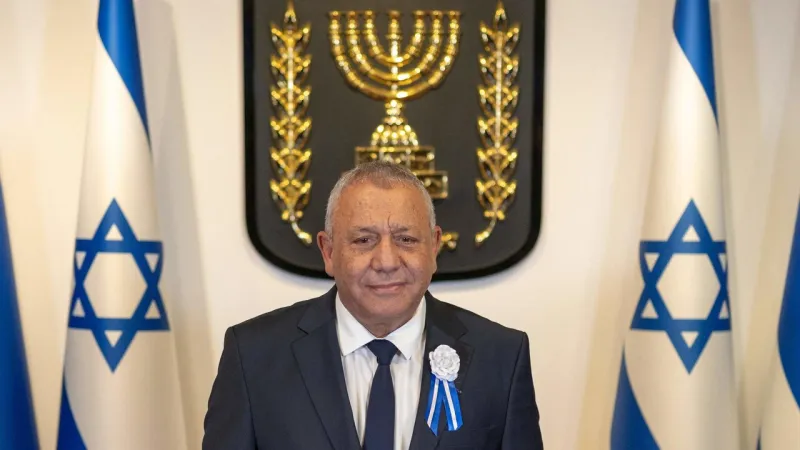
Further signaling the escalating political tensions, Gadi Eisenkot, a prominent general and political leader, promptly canceled a scheduled meeting with representatives of the Likud. This abrupt cancellation indicates a hardening of positions and a reluctance for dialogue between the opposing factions as the scramble for power intensifies.
The inclusion of Arab parties marks a significant, albeit precarious, moment in Israeli politics. Historically, Arab political factions have often been marginalized in coalition-building efforts, primarily due to profound disagreements on national identity, security, and the Palestinian question. Their current pivotal role highlights the desperation and fluidity of the present political climate.
Despite achieving a numerical advantage, the Change Bloc confronts a formidable challenge: transforming a disparate collection of parties, united primarily by their opposition to Netanyahu, into a cohesive and stable governing body. The moniker “rebus governo” – a government riddle – aptly describes the inherent difficulties in reconciling diverse policy agendas and competing ideological demands.
Analysts suggest that the fragility of such an alliance stems from fundamental disagreements on core issues ranging from economic policy to religious legislation and the future of settlements. Bridging these chasms requires exceptional political dexterity and a willingness to compromise, attributes often in short supply during intense power struggles.
Netanyahu's ire extends beyond mere political maneuvering; it reflects a deep concern over the potential implications of a government formed without his party's traditional dominance. His long tenure at the helm of Israeli politics has conditioned many to expect his central role in any major political configuration.
Eisenkot's decision to forgo talks with Likud could be interpreted as a strategic move to prevent any last-minute attempts by Netanyahu to fracture the nascent Change Bloc. It signifies a clear boundary being drawn, signaling that the era of easy negotiations, at least with Likud, may be temporarily suspended.
The path forward for Israel remains highly uncertain. The nation has experienced an unprecedented series of inconclusive elections in recent years, leading to caretaker governments and a persistent state of political limbo. This latest development, while offering a numerical solution, may yet prove to be another chapter in Israel's ongoing struggle for stable governance.
The international community closely observes these developments, understanding that internal political stability in Israel has significant ramifications for regional diplomacy, particularly concerning the peace process and relations with neighboring states. A divided or unstable government could impact critical foreign policy decisions.
The formation of this new parliamentary majority underscores the evolving nature of Israeli democracy, where traditional alliances are constantly tested, and new, often unexpected, coalitions emerge. The coming weeks will undoubtedly reveal whether this numerical success translates into tangible governing power or dissolves into further political gridlock. The Knesset will be the epicenter of these unfolding political dramas.