 Angel Doris
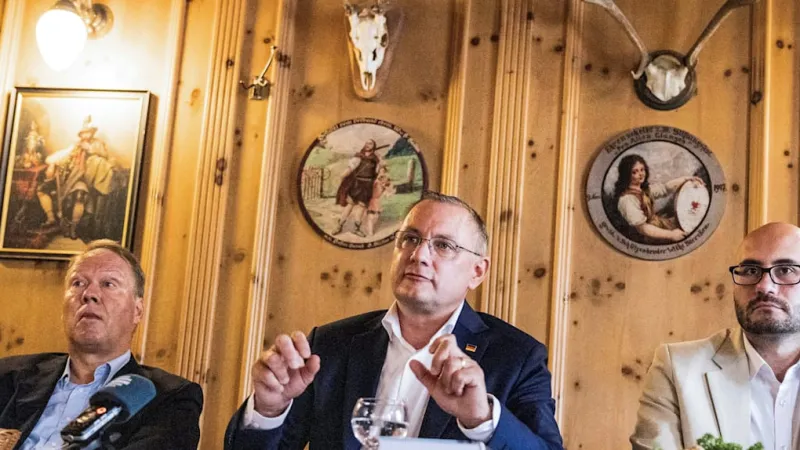
BERLIN – AfD co-leader Tino Chrupalla publicly acknowledged what he considers his "biggest political mistake" and alluded to significant future power ambitions during the recent presentation of his autobiography. The candid revelations offer a rare glimpse into the psyche of one of Germany's most prominent far-right figures, sparking immediate debate across the political spectrum.
Chrupalla, speaking at the book launch, stated unequivocally, "That is something I would not do again today," referring to an unspecified past decision. While the precise nature of the error remains under wraps within the provided summary, this admission suggests a period of self-reflection and a desire to project a refined political image.
The autobiography serves as a platform for Chrupalla to recount his journey through the tumultuous landscape of German politics, documenting both his ascent within the Alternative for Germany (AfD) party and the challenges he has encountered. Such personal narratives are increasingly common among leading politicians seeking to connect with their base and shape their public perception.
More provocatively, the event also saw Chrupalla hint at a clear path towards greater influence and potential leadership. Observers interpret his remarks as a strategic move, positioning himself for a more dominant role within the party or potentially within the broader German political framework. This aligns with the AfD's ongoing efforts to broaden its appeal and strengthen its electoral standing.
The AfD, having consistently garnered significant support in recent elections, particularly at the state level, is under constant scrutiny both domestically and internationally. Chrupalla's public introspection and forward-looking statements are particularly salient given the party's trajectory and its recent interactions with European institutions.
For instance, the EU Parliament Challenges AfD Alliance on Fundamental Values, highlighting the continuous pressure and scrutiny the party faces on the international stage regarding its core principles and alliances. This context underscores the significance of any public admission or strategic declaration from its leadership.
The party has faced numerous internal and external criticisms, ranging from allegations of extremism to challenges regarding its fundamental commitment to democratic norms. These public admissions from a party leader like Chrupalla could be an attempt to address, or at least acknowledge, some of these long-standing perceptions.
Political analysts suggest that high-profile figures disclosing personal or professional missteps can be a double-edged sword. While it might foster a sense of relatability and honesty among supporters, it can also open avenues for opponents to exploit perceived weaknesses or inconsistencies in a leader's past decisions.
Chrupalla's timing for these revelations is crucial. With Germany navigating complex domestic issues, including economic shifts and social cohesion challenges, and an evolving geopolitical landscape, including shifts in international alliances and energy security, the AfD seeks to solidify its position as a major political force.
Without specific details, speculation on Chrupalla's "biggest political mistake" runs rife. Potential areas could include past rhetoric that proved counterproductive, strategic miscalculations in electoral campaigns, or controversial alliances that alienated potential supporters within the party or the wider electorate.
The autobiography, though not explicitly named in the summary, likely delves into these moments with more detail, allowing Chrupalla to frame his narrative and perhaps rehabilitate certain aspects of his public image. This type of personal disclosure often aims to humanize a political leader.
This demonstration of vulnerability and growth could be a calculated risk for a party often perceived as rigid and uncompromising. Such a move might attract new voters by presenting a more nuanced leadership.
The revelations are expected to fuel discussions within the Bundestag and among opposition parties. How rivals will utilize these admissions, particularly regarding Chrupalla's ambitions, remains to be seen as the political cycle progresses.
The AfD's internal dynamics are also a factor. While Chrupalla serves as a co-leader, the party has various factions and influential figures. His move to outline future ambitions might consolidate his position or, conversely, create new tensions within the party hierarchy.
In the broader European context, where populist and nationalist movements continue to gain traction, the strategies employed by figures like Chrupalla offer insights into the evolving tactics of the far-right in democratic systems, especially concerning self-representation and long-term goals.
The public's reaction to Chrupalla's honesty and ambition will undoubtedly be a key indicator of the AfD's potential reach and the shifting sentiments within the German electorate as the nation approaches upcoming federal elections. His statements will be closely scrutinized for their implications.
As Chrupalla's autobiography enters public discourse, it promises to be more than a mere memoir; it stands as a political statement, a strategic gambit, and a testament to the ongoing evolution of the AfD in German politics. The questions he raises and the ambitions he telegraphs will undoubtedly shape political conversations for months to come.