 Robert Andrison
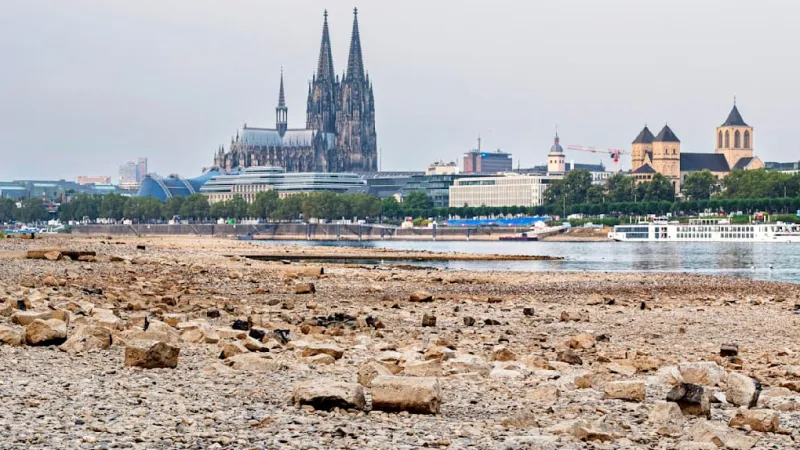
Experts have assured residents across the Rhineland that the risk of a wildfire igniting within the critically dried-up bed of the Rhine River is virtually nonexistent, bringing a collective sigh of relief to communities grappling with persistent drought conditions. This declaration by environmental and hydrologic specialists offers specific comfort to the population of Cologne, where the iconic waterway's low levels have been a prominent concern.
The pronouncement arrives amidst a prolonged period of significantly diminished water levels throughout the Rhine, a vital artery for European shipping and ecosystems. Historic droughts in recent years have repeatedly exposed vast stretches of the riverbed, transforming what was once a flowing expanse into arid landscapes reminiscent of parched earth.
Specialists conducting assessments confirmed that the specific conditions of the exposed riverbed material—primarily sediment, sand, and fine gravel—do not support the sustained ignition and spread typically associated with forest or scrubland wildfires. They noted the absence of sufficient combustible biomass, a critical factor for wildfire propagation.
The initial, albeit remote, apprehension regarding a Rhine riverbed wildfire stemmed from the sheer visual impact of the desiccated environment. Citizens and local officials in Cologne and surrounding municipalities had expressed anecdotal concerns, a reflection of heightened awareness around climate-related hazards, particularly after extreme heatwaves.
This localized relief does not, however, diminish the broader challenges posed by the ongoing drought affecting vast parts of Europe. As highlighted in recent reports, Italy's Heat Crisis Deepens: Glaciers Melt, Wildfires Spread, Hospitals Strain, illustrating the widespread environmental and societal impact of changing weather patterns across the continent.
The persistently low water levels in the Rhine continue to present significant economic ramifications, particularly for barge traffic. Shipping companies face reduced cargo capacities, increased costs, and logistical disruptions as vessels struggle to navigate the shallower channels, impacting supply chains for various industries reliant on river transport.
Beyond economic concerns, the ecosystem of the Rhine itself faces considerable strain. Fish populations and other aquatic life are impacted by warmer water temperatures and reduced habitats. Conservationists regularly monitor the river, assessing the long-term effects of these climatic shifts on biodiversity.
While the idea of a riverbed wildfire is unusual, the severity and frequency of droughts experienced in the 21st century represent a marked departure from historical norms. Records indicate that while the Rhine has seen fluctuations, the sustained periods of extreme low water are becoming more common, raising questions about future resilience.
Communities along the Rhine have begun adapting to the new reality of fluctuating water levels. This includes exploring alternative transport methods, investing in drought-resistant infrastructure, and implementing water conservation measures across various sectors to mitigate the broader effects of climate change.
The definitive dismissal of a Rhine riverbed wildfire threat provides a narrow sliver of reassurance. Yet, it underscores the larger environmental narrative where once unthinkable scenarios—like considering a riverbed fire—become subjects of expert evaluation, reflecting a landscape increasingly shaped by climatic shifts and their novel implications.