Demian Sahputra
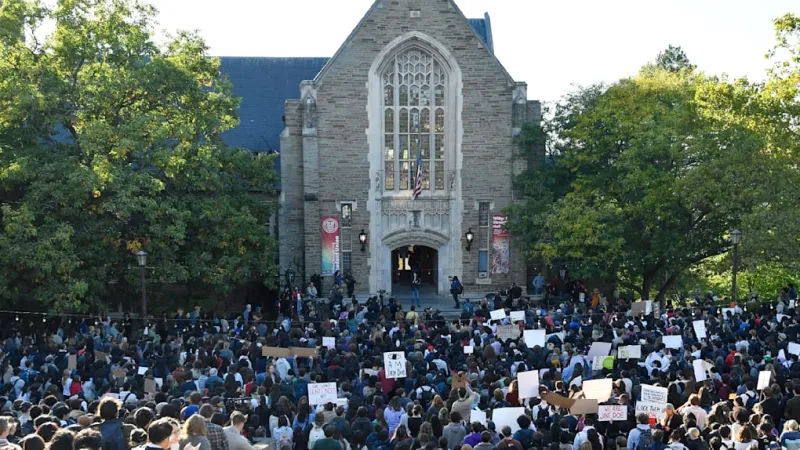
ITHACA, N.Y. — Students at Cornell University, a prestigious U.S. institution, have initiated significant protests against the administration's alleged mishandling of sexual assault allegations, demanding the immediate dismissal of the university president and the systemic dismantling of patriarchal structures within the academic environment.
The demonstrations, drawing considerable attention, commenced following escalating frustrations among the student body regarding what they perceive as inadequate responses and a lack of accountability in addressing reports of sexual violence on campus.
Organizers of the protest emphasize a pervasive culture that they contend enables perpetrators and silences victims, arguing that the current leadership has failed to foster a safe and supportive environment for all students.
Central to the students demands is the removal of the university president, whom they hold ultimately responsible for the institutions policies and its implementation concerning sexual assault cases. They believe a change in top leadership is essential for any meaningful reform to occur.
The phrase Justice for every Jane Doe has become a rallying cry, symbolizing the anonymous victims whose experiences, protesters assert, have not been adequately acknowledged or addressed by the university administration.
These protests at Cornell University reflect a broader national conversation regarding accountability in higher education, where institutions face increasing pressure to reevaluate their approaches to sexual misconduct and student welfare.
Student activists have outlined specific reforms they seek, including greater transparency in investigative processes, stronger support services for survivors, and more stringent penalties for individuals found responsible for sexual assault.
They also call for comprehensive educational programs aimed at preventing sexual violence and fostering a culture of consent and respect across the campus community.
The demonstrations have seen students gather at prominent campus locations, utilizing marches, sit-ins, and public speeches to amplify their voices and exert pressure on university officials.
The university administration has, to date, acknowledged the student grievances, releasing statements pledging to review current policies and engage in dialogue. However, these responses have largely been deemed insufficient by the protesting students, who insist on concrete actions and personnel changes.
The ongoing activism at Cornell University underscores a critical moment for elite academic institutions, challenging them to confront historical power imbalances and adapt to contemporary demands for social justice and institutional accountability.
Observers note that the sustained nature of these protests signals a deep-seated dissatisfaction that extends beyond individual cases, aiming instead at fundamental structural changes within the universitys governance and culture.
The students argue that the issue transcends party lines or specific political affiliations, representing a universal call for human dignity and safety within the educational setting.
Pressure is mounting on the board of trustees and other governing bodies of Cornell University to respond decisively to the student demands, balancing institutional stability with the imperative for ethical leadership and student protection.
This movement at Cornell University is viewed by many as part of a larger, global wave of student activism demanding greater equity, transparency, and accountability from academic and other powerful institutions. Its outcome could set a precedent for how similar allegations are handled elsewhere.
The resolve of the students appears strong, indicating a prolonged period of advocacy until their core demands for justice and systemic change are met. They are prepared to continue their efforts to ensure a safe environment for all members of the Cornell community.
The protests serve as a potent reminder that the pursuit of academic excellence must be inextricably linked with unwavering commitments to student well-being and a rigorous application of ethical principles in all aspects of university life.