 Dorry Archiles
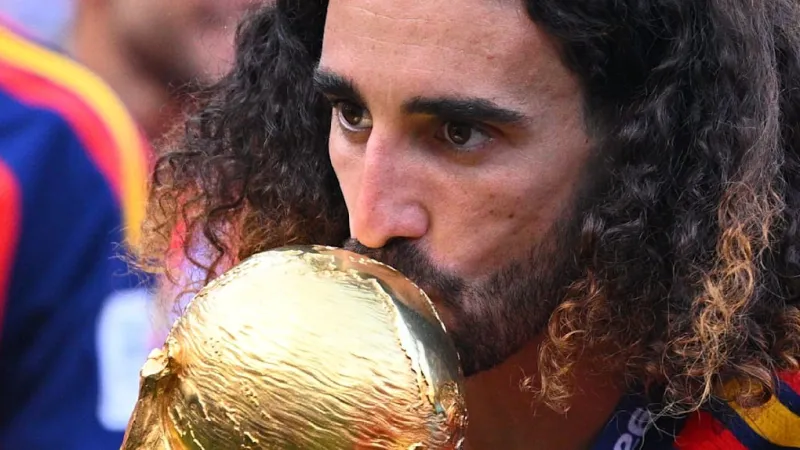
Madrid, Spain – The indelible mark of success and personal narrative continues to adorn the bodies of elite athletes, with footballer Marc Cucurella recently celebrating a significant World Cup triumph by dedicating new ink to his coach. This trend of permanent body art as a testament to career milestones or personal stories finds a compelling contrast in the distinctive tattoos of Leroy Sane and the notable absence of one on former coach Julian Nagelsmann, highlighting the diverse ways professional journeys are etched onto footballers' skin.
Cucurella, the acclaimed defender, has chosen his upper arm as the canvas for his latest artistic expression. The tattoo prominently features coach de la Fuente alongside a replica of the coveted trophy, symbolizing the collective effort and personal achievement in their recent World Cup victory. This act serves as a public declaration of gratitude and a lasting memory of a pivotal moment in his career.
The decision by players like Cucurella to permanently mark such events reflects a broader cultural shift within professional football. Tattoos have evolved beyond mere decoration, becoming profound symbols of identity, allegiance, and personal history. They often encapsulate moments of triumph, tributes to loved ones, or reflections of a player's spiritual or philosophical beliefs.
In stark contrast, Leroy Sane, known for his electrifying pace and skill, carries a highly detailed and expansive tattoo on his back. While the initial meaning behind Sane's artwork remains deeply personal, its presence has garnered significant attention over time, evolving in its public perception as his career has progressed. The prominent ink, according to sources, today looks different, implying its significance might have shifted or its appearance changed over time, reflecting perhaps a journey of self-discovery or evolving priorities for the dynamic winger.
Sane's prominent back tattoo, reportedly depicting himself celebrating a goal, serves as a constant, albeit complex, reminder of past glories and ambitions. Unlike Cucurella's celebratory tribute to a shared victory, Sane's ink embodies an individualistic narrative, a personal monument to a specific moment that defines a part of his professional identity.
The disparity between Cucurella's fresh celebratory mark and Sane's established, perhaps more introspective, tattoo illustrates the spectrum of meaning behind footballer tattoos. One is a direct, immediate commemoration of a shared victory; the other, a long-standing personal emblem that has witnessed the ebb and flow of a high-profile career. Both, however, communicate stories far richer than simple visual aesthetics.
Providing a unique counterpoint to this trend is former coach Julian Nagelsmann. While the specifics are not widely publicized, reports indicated that Nagelsmann had a pact or promise regarding a tattoo tied to a certain team achievement. Famously, he managed to get around this obligation, a decision that speaks volumes about individual approaches to commitments in the high-pressure world of professional football. His evasion underscores that not every significant moment culminates in a permanent bodily inscription.
The proliferation of footballer tattoos across global leagues has become undeniable. From intricate sleeves to subtle emblems, these artworks are now an integral part of many players' public personas. They create a visual language that fans often interpret, adding another layer to the narratives surrounding their beloved athletes.
For many players, these tattoos are more than skin deep. They serve as psychological anchors, constant reminders of resilience, achievement, or personal sacrifice. They solidify memories that transcend the fleeting nature of match results, ensuring that certain moments and relationships are forever part of their identity.
The public and media often scrutinize these tattoos, debating their artistic merit, deciphering their meanings, and sometimes even criticizing their placement or subject matter. This scrutiny further elevates tattoos from personal choices to public statements, embedding them within the larger narrative of a player's career and legacy.
As celebrated figures like Franco Baresi exemplify dedication without such external markers, the choice to get a tattoo or not becomes a defining characteristic. For Cucurella, his new tattoo will forever link him to that specific World Cup triumph and coach de la Fuente. For Sane, his existing artwork will continue to tell a story that evolves with him.
Ultimately, whether it is a declaration of triumph, a deeply personal reflection, or a promise left unfulfilled, the narratives surrounding footballer tattoos offer a compelling glimpse into the multifaceted lives and careers of those who dominate the pitch, each mark, or lack thereof, telling its own unique story.