 Robert Andrison
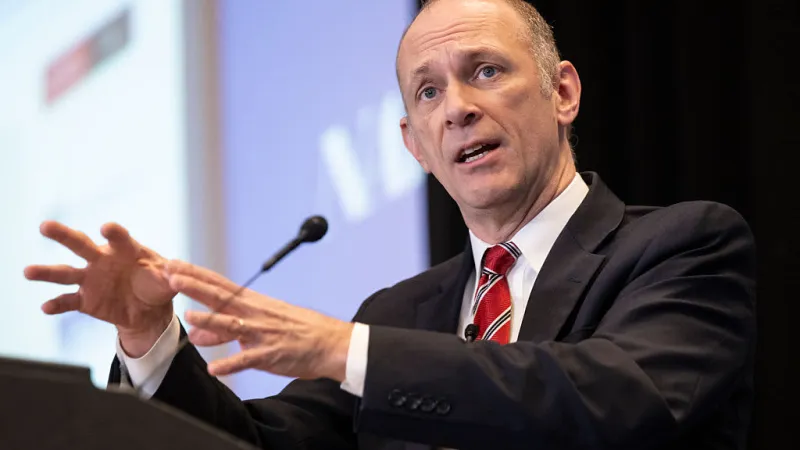
WASHINGTON – Federal Reserve officials are sounding a stark warning after the October consumer price index (CPI) unexpectedly surged, prompting renewed fears of persistent inflation and potentially aggressive central bank actions. Austan Goolsbee, president of the Federal Reserve Bank of Chicago, described the latest inflation report as "borderline disturbing," signaling a significant challenge for policymakers already grappling with an uncertain economic landscape.
Goolsbee's candid assessment underscores the growing anxiety within the central bank. His comments, made during a recent financial conference, emphasized that while some progress had been achieved in taming price increases, the recent data indicated a concerning reversal in momentum. This sentiment reflects a broad concern that inflationary pressures might be more entrenched than previously thought.
The October CPI report, released last week, revealed an uptick in key inflation metrics that surpassed economists' projections. Core inflation, which excludes volatile food and energy prices, also demonstrated an unwelcome resilience, suggesting broad-based price pressures across various sectors of the economy. This unexpected strength in price increases has complicated the Federal Reserve's efforts to guide the economy toward its 2 percent inflation target.
The Federal Reserve operates under a dual mandate from Congress: to achieve maximum employment and maintain stable prices. With inflation remaining stubbornly above target, the central bank faces increasing pressure to consider further tightening of monetary policy. The primary tool for this is adjusting the federal funds rate, which influences borrowing costs throughout the economy.
Throughout 2025 and earlier in 2026, the Fed implemented a series of aggressive interest rate hikes aimed at cooling the economy and bringing inflation under control. These actions had begun to show signs of impact, leading many to believe that the tightening cycle might be nearing its conclusion. The October report, however, casts significant doubt on that optimistic outlook.
The "borderline disturbing" nature of the inflation report has reignited a vigorous debate among Fed governors and regional bank presidents about the necessity of additional rate increases. While some policymakers advocate for a patient approach, others now see a clear signal that more decisive action may be required to prevent inflation from becoming ingrained. The market, which had largely priced in a pause, is now recalibrating expectations.
Global financial markets, often sensitive to Federal Reserve policy shifts, are reacting with caution. Investors are closely monitoring speeches and statements from Fed officials for clues on future policy direction. For instance, while some markets like Seoul initially showed resilience to rate hike concerns, a prolonged period of uncertainty could introduce broader volatility. This global interconnectedness means that US monetary policy reverberates worldwide, impacting everything from currency valuations to commodity prices.
Higher interest rates directly affect consumers through increased costs for mortgages, car loans, and credit card debt. Businesses face higher borrowing costs for expansion and investment, potentially dampening economic growth and hiring. The delicate balance for the Fed is to curb inflation without inadvertently triggering a significant economic downturn or recession.
President Donald Trump's administration has consistently prioritized economic growth and job creation. While the White House typically refrains from commenting directly on Federal Reserve monetary policy decisions, sustained high inflation could become a significant political challenge. The administration's focus on domestic manufacturing and trade policies could be influenced by a tightening monetary environment.
Not all Fed officials share the same hawkish stance. Some argue that the lagged effects of previous rate hikes are still working their way through the economy and that additional tightening carries a substantial risk of overshooting, potentially leading to unnecessary job losses. They might point to indicators like a slowing labor market or softening consumer demand as reasons for caution.
The coming months will be critical for the Federal Reserve. The next few inflation reports, along with employment data and other economic indicators, will heavily influence their decisions. The central bank remains committed to restoring price stability, a goal that appears increasingly challenging in light of the latest inflation report.
The path to achieving the Fed's inflation target remains fraught with uncertainty. The unexpected uptick in October has injected a new layer of complexity, making the central bank's next moves among the most scrutinized economic decisions globally. Businesses and households alike are bracing for potential further adjustments as policymakers weigh the intricate trade-offs between taming prices and sustaining economic momentum.