 Stefani Rindus
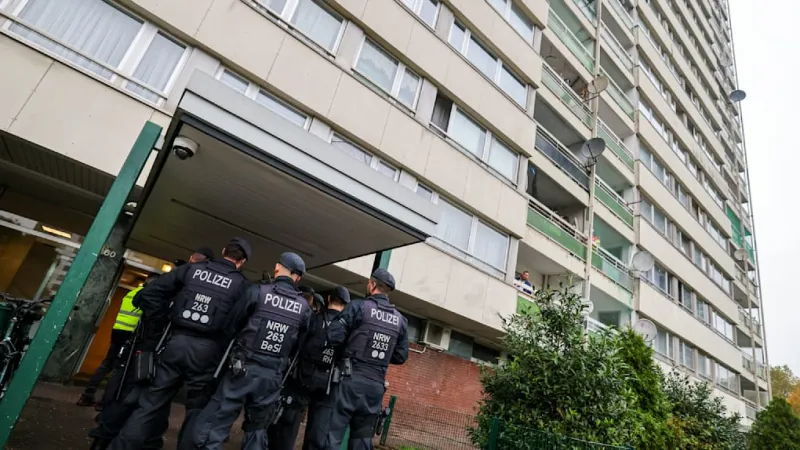
A man suffered severe injuries in a suspected knife attack today at the notorious White Giant high-rise complex in Duisburg, Germany, prompting a major homicide investigation by local authorities. The incident unfolded in the sprawling residential building, a location frequently associated with various social challenges.
The Duisburg Homicide Commission has swiftly taken charge of the case, indicating the grave nature of the assault. Investigators are currently on-site, meticulously gathering evidence and interviewing potential witnesses to reconstruct the events leading to the brutal stabbing.
Details regarding the victim's identity remain undisclosed pending notification of next of kin. Emergency medical personnel provided immediate care at the scene before transporting the severely wounded man to a nearby hospital, where his condition is described as critical.
The White Giant, known locally as the Weiszer Riese, is a prominent fixture in the city's urban landscape. Its imposing structure often draws attention, and today it became the focal point of a significant police presence, with uniformed officers and forensic teams cordoning off the area.
Residents of the complex and the surrounding neighborhoods expressed shock and concern following the violent outburst. Such incidents, while not unheard of in densely populated urban areas, invariably send ripples of unease through the community.
This recent knife attack adds to a broader national discussion concerning urban crime and security in Germany. Cities across the country occasionally grapple with upticks in violent incidents, necessitating robust law enforcement responses and community engagement efforts.
The White Giant itself has a complex history, often cited in local reports regarding social issues and public safety. Its sheer size, housing thousands of residents, can present unique challenges for community management and security oversight.
Police spokespersons have confirmed the ongoing nature of the preliminary investigation, emphasizing that all avenues are being explored. No arrests have been made, and authorities have not yet released any information regarding potential suspects or motives behind the assault.
Law enforcement officials have appealed to the public for any information that could assist their inquiry. Individuals who witnessed the knife attack or possess relevant details are urged to contact the Duisburg police department immediately.
The involvement of the Homicide Commission underscores the seriousness with which this case is being treated. Their specialized expertise will be crucial in piecing together the facts and identifying those responsible for the severe injuries inflicted upon the victim.
The incident is likely to intensify discussions about crime prevention strategies within the White Giant complex and similar high-density residential areas. Local politicians and community leaders may face renewed pressure to address safety concerns.
The swift response of paramedics and emergency services was critical in stabilizing the victim at the scene. Their actions highlight the coordinated effort required when responding to severe violent crimes.
Beyond the immediate physical harm, such a violent act can have a lasting psychological impact on the witnesses and the wider community, fostering a sense of insecurity and fear. Support services are often made available in the aftermath of such events.
As the investigation progresses, public scrutiny of the White Giant and its management will likely increase. Ensuring the safety of residents in large urban housing projects remains a significant challenge for municipalities.
This incident mirrors concerns raised in other German cities regarding urban violence. For example, recent reports detailed a weekend of intense criminal activity in the capital, underscoring how Berlin Rocked by Spate of Brutal Attacks Over Violent Weekend. Such occurrences highlight the need for persistent vigilance and proactive policing strategies.
While the White Giant holds a particular notoriety, the challenges of ensuring safety and community well-being are common to many large urban residential complexes globally, necessitating continuous efforts in social support and security infrastructure.
Doctors are working tirelessly to save the victim, whose prognosis remains guarded. The severity of the wounds indicates a highly aggressive assault.
Despite the shock, local residents often demonstrate resilience and a desire for peace, cooperating with authorities and advocating for measures that enhance safety and deter future acts of violence.
Many questions persist regarding the circumstances of the knife attack, including whether the victim knew his assailant, the precise location within the complex where the incident occurred, and the motivations behind the brutal act. The Homicide Commission continues its diligent work to uncover these crucial details.