 Chandra Wijayanto
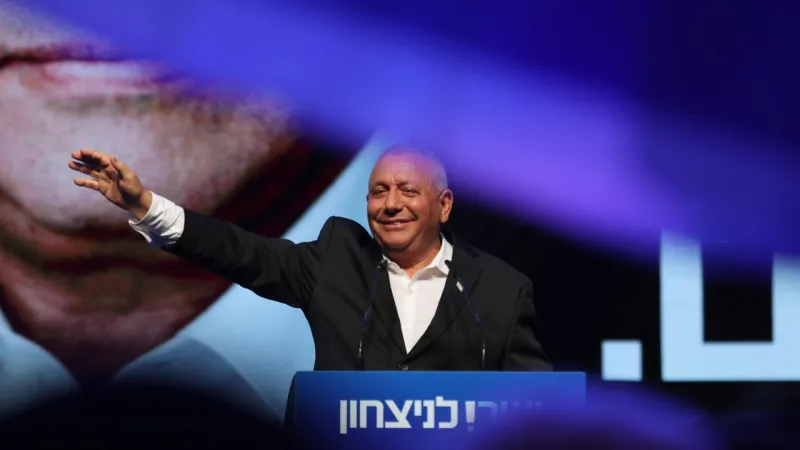
President Isaac Herzog has officially tasked former military chief Gadi Eisenkot with forming Israel's next government, a pivotal development that immediately sparked political contention. Eisenkot, a centrist figure, notably conditioned his acceptance on the exclusion of far-right lawmaker Itamar Ben Gvir from any prospective coalition, directly challenging Prime Minister Benjamin Netanyahu's efforts to forge a broad national unity government.
The mandate granted by President Herzog comes amidst a protracted period of political instability in Israel, which has seen multiple inconclusive elections. Herzog emphasized the urgent need for a stable and inclusive government capable of addressing the nations complex domestic and security challenges.
Eisenkot's demand regarding Ben Gvir introduces a significant hurdle to Netanyahu's strategic calculus. The incumbent prime minister has consistently sought to unify disparate factions, including those on the religious and far-right, to secure a governing majority.
Itamar Ben Gvir, leader of the Otzma Yehudit party, has become one of Israel's most polarizing political figures. His hardline stances on security, judicial reform, and Palestinian issues have drawn sharp criticism both domestically and internationally, while galvanizing a dedicated base of supporters.
Netanyahu, recognizing the fragility of the current political landscape, has publicly advocated for a national unity government as the most viable path forward. His appeal aims to bridge ideological divides and present a united front during a period of heightened regional tension.
However, Eisenkot's unequivocal stance underscores the deep divisions within the Israeli political spectrum regarding the legitimacy and suitability of certain figures holding ministerial positions. The former Israel Defense Forces Chief of Staff is widely perceived as a pragmatic leader with a commitment to national security and democratic principles.
Sources close to Eisenkot suggest his demand is rooted in a belief that Ben Gvir's inclusion would undermine the governments credibility, both at home and abroad, potentially complicating relations with key international allies.
Forming a viable government in Israel often requires delicate negotiations and significant compromises among numerous parties, each with distinct agendas. The current political arithmetic makes Eisenkot's task particularly challenging, demanding exceptional leadership and negotiation skills.
Eisenkot's distinguished military career and reputation as a sober, non-ideological leader lend considerable weight to his mandate. His approach emphasizes broad consensus and a departure from the divisive rhetoric that has characterized much of recent Israeli politics.
The coming weeks will reveal whether Netanyahu can navigate this new demand. He must either persuade Eisenkot to compromise on Ben Gvir's exclusion or find an alternative pathway to a governing coalition, which remains elusive given the current parliamentary composition.
The focus now shifts to intensive backroom negotiations as Eisenkot embarks on the delicate process of sounding out potential coalition partners. His success or failure will largely hinge on his ability to forge common ground among ideologically diverse parties while maintaining his firm position on Ben Gvir's role.
This development highlights the enduring power of presidential mandates in Israel to shape political outcomes, especially when the parliamentary landscape is fragmented. President Herzog has clearly signaled a preference for a government that can command broader national and international trust.
Observers note that the situation could lead to a variety of outcomes, from a successful, albeit complex, coalition led by Eisenkot, to renewed political deadlock and potentially even another snap election.
For many Israelis, the priority remains the formation of a stable government capable of addressing pressing economic concerns, escalating security threats, and growing social divisions. The path forward remains uncertain, but Eisenkot's appointment introduces a new dynamic into the intricate dance of Israeli coalition politics.