 Angel Doris
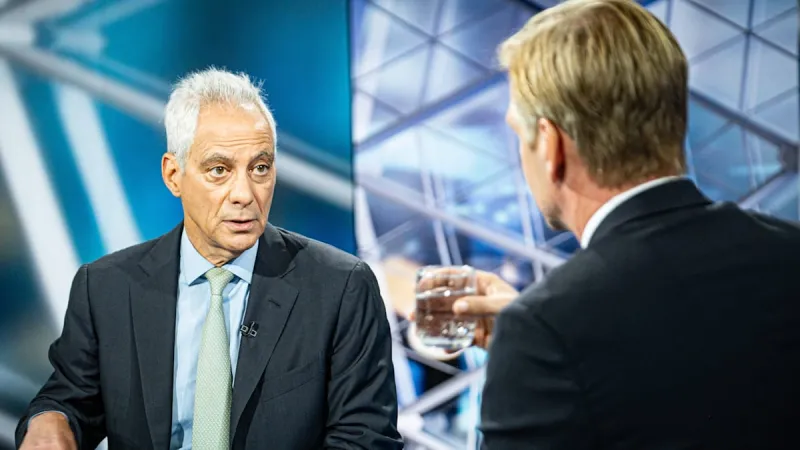
WASHINGTON – Rahm Emanuel, the seasoned political strategist and former chief of staff to Barack Obama, recently advocated for a fortified transatlantic alliance to deter Russia, emphasizing that a wounded and humiliated Russia poses an enduring threat. Speaking with Politico editor-in-chief Gordon Repinski, Emanuel underscored the urgency of concerted action to manage the unpredictable trajectory of Russian foreign policy in the current global climate.
Emanuel posited that the current state of Russia, far from making it less formidable, actually increases its potential for aggressive actions on the international stage. He contended that a nation perceiving itself as injured might become more reckless, seeking to reassert its influence through unconventional or escalated means.
His central argument revolved around the necessity of robust deterrence. This approach, Emanuel explained, involves demonstrating a clear and unified front from NATO and its allies, signaling that any further aggression will be met with decisive and overwhelming consequences.
The discussion with Repinski highlighted the imperative for deeper transatlantic cooperation. Emanuel stressed that individual nations, even powerful ones, cannot effectively counter such complex geopolitical challenges alone. A collective strategy, he argued, magnifies impact and resilience.
Drawing on his extensive experience in government and international affairs, Emanuel alluded to historical precedents where a failure to project strength and unity inadvertently emboldened revisionist powers. The lessons from past eras, he suggested, remain acutely relevant today.
This intensified cooperation, he elaborated, should extend beyond traditional military posturing to include economic sanctions, cybersecurity defenses, and a coordinated diplomatic offensive. The goal is to build an impenetrable shield against Russian destabilization efforts.
The concept of a wounded Russia resonates with ongoing developments, particularly as reports indicate significant internal challenges. For instance, the nation continues to grapple with supply chain disruptions and escalating costs, as detailed in reports like Russian Fuel Crisis Deepens Amid Ukrainian Drone Onslaught, Defenses Mount. Such internal pressures could paradoxically fuel external aggression.
Emanuel also touched upon the broader landscape of global instability. He implied that Russia's actions are not in isolation but contribute to a wider pattern of geopolitical flux that requires a coherent and sustained response from democratic nations worldwide.
He emphasized the role of strong leadership in fostering this unity. He urged political leaders across the transatlantic community to prioritize collective security over nationalistic impulses, especially given the shared values and strategic interests at stake.
The need for deterrence directly impacts the security perceptions of European allies, many of whom share direct borders with Russia or are within its immediate sphere of influence. Their stability is intrinsically linked to the strength of the collective defense posture.
Looking ahead, Emanuel warned that underestimating a nation in perceived decline could be a critical miscalculation. He projected that Russia’s foreign policy would likely remain assertive and unpredictable for the foreseeable future, necessitating a long-term strategic outlook.
His interview served as a clarion call for policymakers to move beyond incremental adjustments and embrace a more comprehensive and proactive strategy against an evolving threat. This strategy, he stressed, must be both dynamic and resolute.
Ultimately, Emanuel’s remarks reinforced the fundamental principle that the strength of the transatlantic alliance lies in its unity and its unwavering commitment to collective defense. The message was clear: deterrence works best when it is unequivocal.