 Edward DP Situmorang
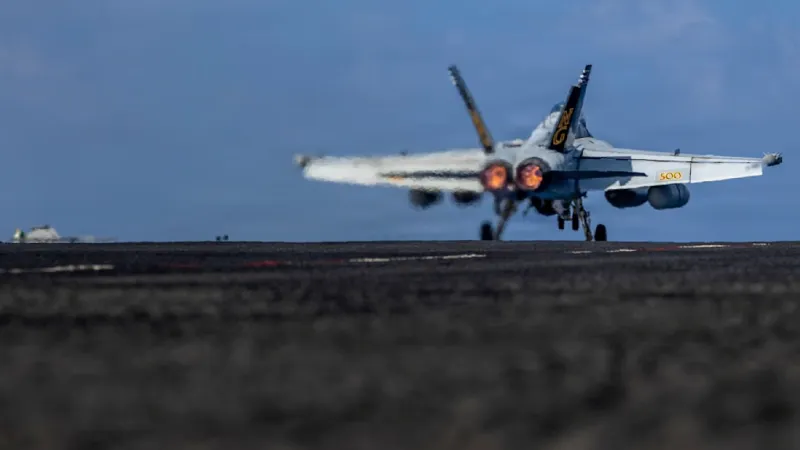
TEHRAN/WASHINGTON – The United States military launched its seventh consecutive night of strikes against Iran, aiming to degrade the nation's capabilities, as two oil tankers reported explosions and subsequent fires in the critical Strait of Hormuz. These developments unfold amid reports of Tehran initiating attacks against Bahrain, marking a significant and dangerous escalation in regional tensions.
These sustained aerial assaults by American forces are explicitly designed to diminish Iran's military and strategic assets, according to statements from the Pentagon. The objective, officials assert, is to curb what they perceive as Iran's destabilizing influence across the Middle East and its advancement of hostile capabilities.
The explosions and subsequent blazes aboard two commercial tanker vessels occurred while traversing what has been described as a mined area within the Strait of Hormuz, a vital chokepoint for global oil shipments. The precise cause of the explosions remains under immediate investigation, though initial reports suggest potential involvement of naval mines.
The Strait of Hormuz is one of the world's most strategically important maritime passages, with approximately one-fifth of the world's total oil consumption passing through it daily. Any disruption in this narrow waterway carries profound implications for international energy markets and global economic stability.
Concurrently with the escalating US pressure, Iranian forces have reportedly initiated military actions against Bahrain. Details regarding the nature and extent of these attacks are still emerging, but they signal a widening scope of conflict in the Middle East, potentially drawing more regional actors into the fray.
The sustained US military campaign against Iran is being conducted under the directive of President Donald Trump. His administration has consistently cited Iran's destabilizing regional actions and its pursuit of advanced military capabilities as justifications for a robust deterrent posture, which has also encompassed bolstering defenses for regional allies.
Tehran has vehemently condemned the repeated American incursions, vowing retaliation and asserting its right to self-defense. Initial reports suggest these continued American sorties, previously detailed as targeting Iranian infrastructure, could lead to significant disruptions within the nation, including potential blackouts in key regions, a scenario explored in prior analyses.
Military analysts suggest Iran possesses a range of asymmetric warfare capabilities, including naval mines and drone technology, which could be deployed in response to perceived aggressions or to disrupt vital shipping lanes.
International observers and diplomatic bodies have expressed deep concern over the escalating tensions, urging all parties to exercise restraint and de-escalate the volatile situation. Calls for diplomatic engagement have intensified, although concrete mediation efforts remain elusive amidst the rising hostilities.
This latest series of attacks builds upon a prolonged period of strained relations between Washington and Tehran, punctuated by accusations of proxy warfare, cyber warfare, and nuclear proliferation concerns. The current escalation marks one of the most significant flare-ups in recent years, threatening to unravel fragile regional stability.
The convergence of naval incidents, direct military strikes, and regional expansions of conflict raises serious questions about the trajectory of stability in the Middle East. Analysts warn of the potential for miscalculation leading to broader, more devastating confrontation with global security and economic ramifications hanging in the balance.