 Angel Doris
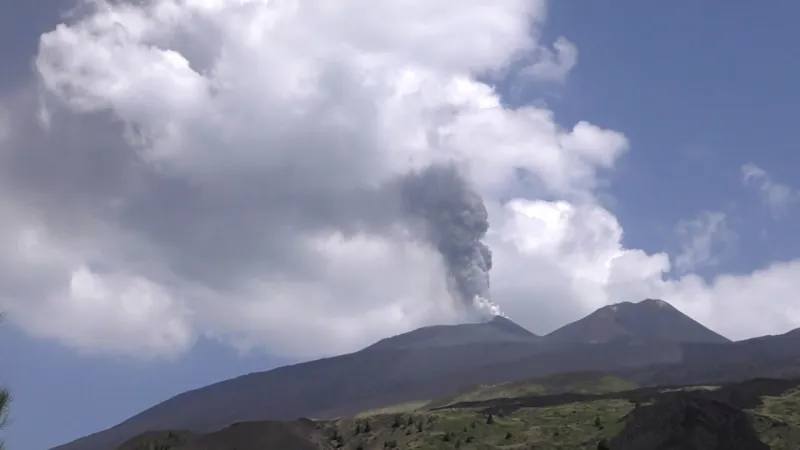
Mount Etna, Europe's most active volcano, has intensified its current eruptive phase, exhibiting robust Strombolian activity from its Voragine crater coupled with significant ash emissions. Despite a marked elevation in volcanic tremor levels, air traffic operations at Catania's Vincenzo Bellini Airport remain fully functional, ensuring minimal disruption to regional travel.
The activity, characterized by intermittent explosive bursts that eject incandescent lava fragments, rock, and ash, commenced recently and has been under close scrutiny by volcanological observatories. This particular type of eruption, known as Strombolian, is a common occurrence on Etna and typically involves discrete, rhythmic ejections of material.
Ash plumes have ascended several kilometers into the atmosphere, drifting predominantly eastward and southward, leading to widespread ashfall in several municipalities downslope. Local authorities have issued warnings to residents regarding potential respiratory issues and the importance of vehicle maintenance.
Volcanic tremor, an indicator of magma movement beneath the surface, has registered high values, signaling a persistent dynamic within the volcano's plumbing system. Experts from the National Institute of Geophysics and Volcanology (INGV) are continuously monitoring these seismic signals for any significant changes.
The operational status of Catania Airport underscores the sophisticated protocols and extensive experience of Sicilian authorities in managing volcanic events. Unlike past eruptions that led to closures, current conditions allow flights to proceed, albeit with potential routing adjustments to avoid ash clouds.
Mount Etna has a rich history of eruptive episodes, often cycling through periods of effusive lava flows and more explosive Strombolian activity. Its frequent eruptions contribute significantly to the island's geological landscape and ecological diversity.
The INGV observatory, equipped with an array of seismic sensors, GPS stations, and thermal cameras, provides real-time data crucial for public safety and aviation advisories. Their findings are regularly disseminated to civil protection agencies and the wider scientific community.
While the airport remains open, some agricultural activities in the immediate vicinity of the volcano face challenges. Farmers frequently contend with ash deposits that can impact crop quality and require extensive cleanup efforts.
The emitted ash, while disruptive, also contributes to the fertility of the surrounding soil over time, a paradox of volcanic activity that has shaped the region's agriculture for millennia. However, immediate impacts on air quality and local ecosystems are a primary concern during active phases.
Despite the eruptions, Mount Etna remains a major tourist attraction, with visitors drawn to witness the raw power of nature. Access to certain summit areas is restricted during heightened activity, but guided tours to safer elevations continue.
Civil protection officials reiterated that public safety remains the utmost priority. They advised residents in affected areas to wear masks when outdoors and to take precautions against ash accumulation on roofs and vehicles. No evacuations have been deemed necessary at this time.
Volcanologists anticipate the current phase of activity could continue for an undetermined period, characteristic of Etna's unpredictable behavior. The ongoing high tremor values suggest sustained magma flux, indicating the potential for further energetic displays.
This latest episode adds to a series of significant volcanic events worldwide, underscoring the dynamic nature of Earth's geology. Researchers continuously strive to enhance predictive capabilities for such natural phenomena.