 Chandra Wijayanto
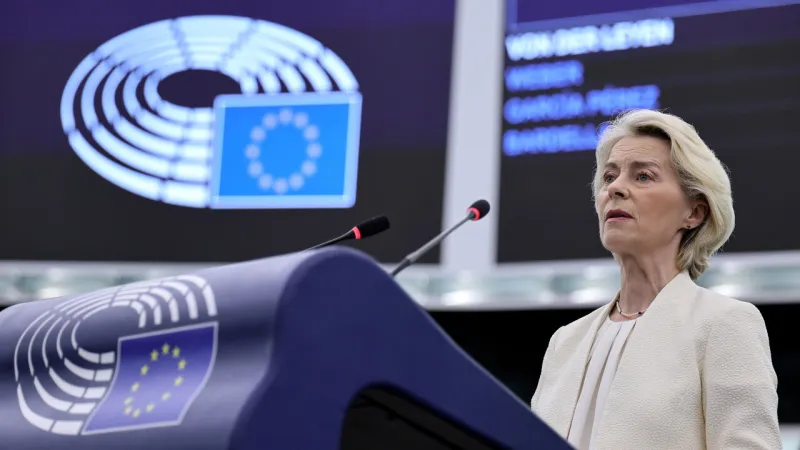
European Commission President Ursula von der Leyen recently intensified her calls for European unity, warning that nationalist forces within the continent and external Russian aggression actively seek to fracture the European Union. Her pronouncement, delivered amidst ongoing debates on EU defense and energy strategies, underscores a critical juncture for the bloc's future stability.
Von der Leyen articulated her concerns, emphasizing that the dual threats represent a deliberate campaign to undermine the foundational principles of cooperation and integration that have defined the EU for decades. This sentiment echoes growing anxieties across various member states regarding both internal political polarization and geopolitical pressures.
The Commission President highlighted the insidious nature of nationalist movements, which she characterized as promoting division and isolationism over collective European action. These movements, often gaining traction through populist rhetoric, challenge the very essence of shared sovereignty and pooled resources that underpin the Union.
Addressing the external threat, von der Leyen pointed directly to Russia, accusing Moscow of employing various tools, including disinformation campaigns and cyberattacks, to sow discord and exploit existing fault lines within the EU. Such tactics, she argued, aim to weaken the bloc's collective resolve and strategic autonomy.
In response to these perceived threats, the EU chief indicated a concerted effort to close ranks on crucial policy areas, particularly defense and energy. This involves accelerating initiatives for common defense procurement, enhancing military mobility, and strengthening the continents collective security architecture.
This push for heightened cohesion aligns with previous strategic statements, including the broader vision presented in the EU President's State of the Union Address Emphasizing Cohesion, which consistently champions a more united and resilient Europe.
On the energy front, von der Leyen stressed the imperative of diversifying energy sources and reducing reliance on single suppliers, a lesson underscored by recent geopolitical events. Efforts to accelerate renewable energy deployment and improve energy interconnectivity are central to this strategy, aiming to bolster energy security across the Union.
However, the Commission Presidents resolute stance has not garnered universal endorsement. Skepticism persists among certain member states and political factions regarding the efficacy and necessity of some proposed measures. Critics often cite concerns over national sovereignty or the allocation of financial resources.
Some analysts suggest that while the threats are real, von der Leyens forceful rhetoric may also serve to mobilize support for her political agenda, particularly in the lead-up to potential future leadership considerations. The political landscape within the EU remains complex, with diverse national interests often clashing with broader European objectives.
The debate also encompasses varying interpretations of how best to counter disinformation and foreign interference, with some advocating for stricter regulations and others emphasizing the importance of media literacy and critical thinking among citizens.
Broader strategies for technological resilience and collaborative governance, such as the EU AI Strategy, also underscore the Commissions proactive approach to safeguarding European interests in an evolving global environment.
The coming months will likely test the Unions ability to forge a unified front against these multifaceted challenges. The effectiveness of von der Leyens efforts to consolidate support will be pivotal in determining the trajectory of European integration.
Ultimately, the challenge for Brussels lies in convincing all 27 member states to prioritize collective European interests over individual nationalistic impulses, ensuring that the vision of a strong, unified EU can withstand both internal fragmentation and external pressures.