Gabriella
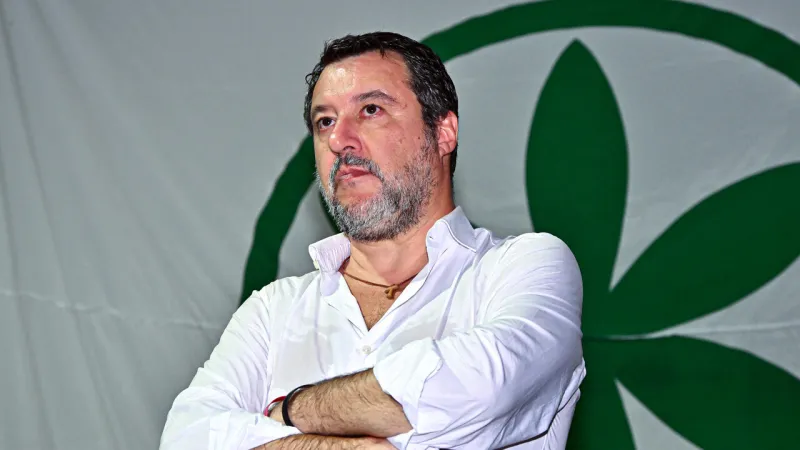
Former members of Italy's Lega Nord party have launched a new committee aimed at reviving the movement's historical identity and pushing for a party congress. This unexpected development, which surfaced recently in Italian political circles, has elicited sharp criticism from current party leadership, who view the initiative with suspicion and accuse its proponents of seeking personal gain. The move signals a potential internal challenge to the current direction of the Lega, presently led by Matteo Salvini.
The Comitato per il congresso, or Committee for the Congress, marks a significant effort by a faction of the party's old guard to reclaim what they perceive as the Lega Nord's foundational principles. Their objective is to initiate a broader debate within the movement, culminating in a party congress where members can discuss its future trajectory and leadership.
This initiative directly challenges the established hierarchy, particularly the role of party commissioner Igor Iezzi, a staunch loyalist of current Lega leader Matteo Salvini. The formation of such a committee suggests a deep-seated discontent among some long-serving members regarding the party's evolution and its ideological direction.
Sources close to the Carroccio, as the Lega is colloquially known, expressed profound surprise at the committee's emergence. They openly questioned the motives of those behind the revival attempt, suggesting an opportunistic pursuit of power rather than genuine concern for the party's welfare.
“We are surprised,” a Carroccio source stated, speaking on condition of anonymity due to the sensitivity of internal party affairs. The source added, “Those who risked killing the party are now looking for a seat.” This pointed remark underscores the immediate friction generated by the committee's formation.
The distinction between “Lega Nord” and the current “Lega” (officially Lega per Salvini Premier) is key to understanding this internal struggle. The original Lega Nord was a federalist, regionalist, and at times secessionist movement, primarily strong in northern Italy.
Under Salvini, the party rebranded, strategically dropping “Nord” from its official name and broadening its appeal nationwide with a more nationalist and sovereigntist platform. This shift alienated some of the party's historical base, who felt that its original ideals had been diluted or abandoned in pursuit of wider electoral success.
The committee's formation appears to be a direct response to this perceived ideological drift and a desire to restore what they consider the party's authentic agenda. Their efforts aim to reclaim the party's identity from what they view as a centralized, less regionalist vision.
Political analysts suggest that while such an internal movement might not immediately destabilize the broader Lega party, it highlights persistent factionalism and the enduring tension between the party's original regionalist roots and its current national-populist identity. The ability of this committee to garner significant support will be a key indicator of its potential impact.
For Igor Iezzi, as the current commissioner, the committee's formation represents an immediate challenge to his authority and the stability of the party apparatus under Salvini. His unwavering loyalty to the leader suggests a strong resistance to any efforts perceived as undermining the current leadership or its chosen path.
The “Comitato per il congresso” strategy mirrors past attempts within political parties to initiate grassroots movements when official channels are perceived as unresponsive. Historically, such committees have served as platforms for dissent, aiming to force leadership's hand or rally disaffected members against established practices.
The battle for the soul of the Lega is not new. Since its inception by Umberto Bossi, the party has undergone several transformations, adapting its message to evolving political climates. Salvini's ascendancy marked a decisive break from the party's earlier federalist tenets, emphasizing national sovereignty and a stronger anti-immigrant stance that resonated with a broader electorate.
The former members, by explicitly invoking the name Lega Nord, are intentionally tapping into a nostalgic vein among segments of the electorate and long-time party faithful. These individuals often yearn for a return to what they consider the party's authentic agenda and foundational principles.
This ideological clash represents a significant fault line within the Italian right-wing coalition, demonstrating that even successful political transformations can leave behind disgruntled factions. The committee's challenge will test the unity and adaptability of the broader Lega party structure.
The question now remains whether this committee will gain sufficient traction to genuinely challenge the well-entrenched leadership of Matteo Salvini, or if it will merely serve as a vocal but ultimately marginalized expression of discontent. The coming weeks will likely reveal the extent of its organizational capacity and popular backing.
Observers will closely watch the reactions from other prominent figures within the Lega, as any public endorsements or condemnations could significantly alter the committee's momentum. The struggle for internal party control could have wider implications for coalition stability and the future direction of Italian conservative politics.
This internal resurgence of the Lega Nord identity underscores the complex and often contentious nature of party evolution in Italian politics. The current leadership faces the delicate task of managing this internal dissent while maintaining its broader electoral appeal and strategic direction in a perpetually shifting political landscape.