 Stefani Rindus
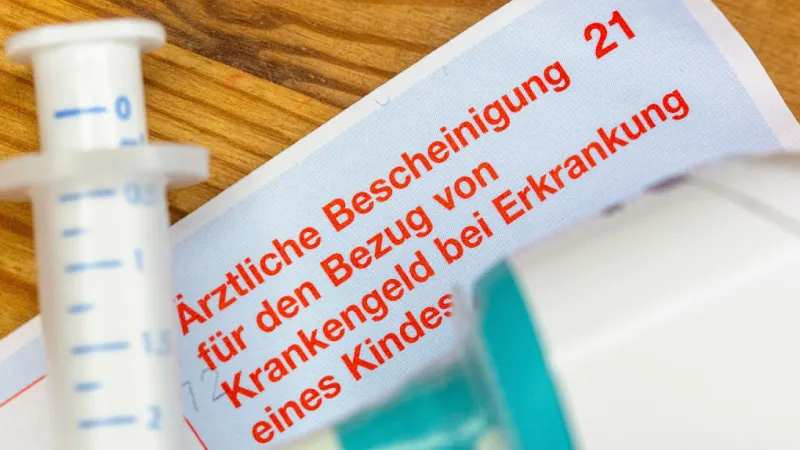
New data from Germany's largest health insurer, AOK, reveals a persistent gender disparity in the division of care work, with women overwhelmingly utilizing child sick days. For the year 2025, mothers accounted for 73 percent of all parental leave taken to care for ill children, a stark statistic that underscores an ongoing imbalance within German households.
Despite statutory provisions granting equal entitlements to both parents for Kinderkrankentage, or child sick days, the burden continues to fall predominantly on women. This trend, highlighted by the AOK, suggests that legislative equality has yet to translate into equitable practical application in the daily lives of families across the nation.
The AOK, in its analysis, explicitly stated that it perceives this distribution as a sustained inequality in care responsibilities. Such an imbalance can have significant ramifications for women's professional advancement, economic independence, and overall participation in the labor market.
Kinderkrankentage are designed to provide parents with paid time off from work to look after a sick child, ensuring that children receive necessary care without parents facing undue financial hardship. The system is intended to support families, yet its current utilization patterns reveal underlying societal norms.
This disproportionate use of child sick leave by mothers reflects broader societal patterns where women are often expected to assume the primary caregiving role. These ingrained expectations can limit career opportunities for mothers, forcing them to take more time away from their jobs or reduce working hours.
Economists and sociologists frequently point to such statistics as indicators of the “motherhood penalty” – the observation that mothers often face disadvantages in pay, hiring, and promotion compared to fathers or childless women. The AOKs findings lend further weight to these arguments.
The implications extend beyond individual households, impacting Germany's overall workforce productivity and its efforts to achieve gender equality in professional spheres. Companies may inadvertently contribute to this disparity through workplace cultures that subtly or overtly pressure mothers to be the primary caregivers.
Addressing this imbalance requires more than just equal legal entitlements. It necessitates a broader cultural shift that re-evaluates traditional gender roles within families and workplaces. Policies that encourage fathers to take more active roles in childcare, alongside robust workplace flexibility, could foster greater equity.
Furthermore, public awareness campaigns could play a vital role in challenging stereotypes and promoting a more balanced distribution of care work. Encouraging open dialogue within families about sharing responsibilities equally is also crucial for change.
The AOKs report serves as a critical reminder that while significant progress has been made in gender equality, fundamental challenges remain. The uneven distribution of child sick days is a tangible manifestation of these enduring disparities, calling for continued societal and policy interventions to foster a truly equitable future.
This phenomenon is not isolated to Germany, with similar patterns observed in various developed nations, suggesting deeply rooted societal structures. The ongoing debate surrounding parental leave and care work equality continues to gain traction as nations strive for more inclusive labor markets and family policies.
The health insurer's detailed data for 2025 provides a clear metric for policymakers and advocacy groups to track progress, or the lack thereof, in closing the gender gap in family care. It underscores the urgency of proactive measures to ensure that both parents can equally participate in professional life and family responsibilities.