 Chandra Wijayanto
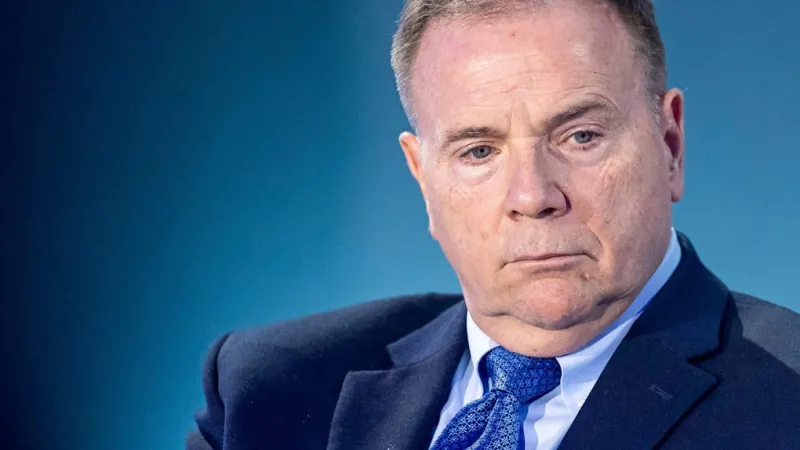
Washington – Retired U.S. Army Lieutenant General Ben Hodges has forcefully contradicted President Donald Trump's recent pronouncements of an impending peace settlement in the Ukraine conflict. General Hodges, who previously commanded U.S. Army Europe, articulated profound skepticism, warning that any summit involving Russian President Vladimir Putin, Chinese President Xi Jinping, and President Trump could represent a strategic trap orchestrated by Moscow.
General Hodges, a respected military strategist with extensive experience in European security, dismissed President Trumps assertions as "ridiculous." He emphasized that a durable peace in Ukraine remains elusive given Russia's continued territorial ambitions and its persistent refusal to withdraw forces from occupied territories. His assessment underscores a significant divergence from the more optimistic outlook expressed by the sitting U.S. President.
President Trump has repeatedly suggested that he possesses a unique capacity to swiftly resolve the protracted conflict, often implying that a resolution is closer than many observers believe. These statements frequently appear on his social media platforms and during public rallies, signaling a confidence in his diplomatic prowess to broker an end to hostilities that have raged for years.
The core of General Hodges' apprehension revolves around the idea of a high-profile summit. He argued that such a meeting, particularly one where President Putin is a primary participant, would likely serve Russia's strategic interests rather than genuinely advance a just and lasting peace. Hodges views it as an opportunity for Russia to gain legitimacy and potentially sow divisions among Western allies.
"Russia would use such a summit to validate its narrative, to portray itself as an equal negotiator, and to pressure Ukraine's allies into concessions," Hodges stated in a recent interview. He believes any framework emerging from such discussions, without prior significant battlefield shifts or a genuine Russian commitment to Ukrainian sovereignty, would be inherently flawed and precarious.
This skepticism echoes sentiments from other international figures regarding President Trump's approach to the conflict. A EU Defense Chief Alleges Trump Gambles with Kremlin, Ukraine Fate, indicating a broader unease among some European leaders about the potential trajectory of U.S. policy.
The Ukraine conflict, entering its fifth year in 2026, continues to be a brutal grind, characterized by intense fighting along entrenched front lines. Despite various international mediation efforts and sanctions regimes, neither side has achieved a decisive military victory, leading to a prolonged humanitarian crisis and immense geopolitical instability.
Previous attempts at de-escalation or peace talks have consistently foundered on fundamental disagreements, primarily Russia's insistence on retaining annexed territories and Ukraine's unwavering demand for full territorial integrity. The complexities of these demands make any immediate breakthrough appear exceedingly difficult to achieve.
The relationship between the U.S. and Ukraine has also seen periods of strain, particularly concerning aid and diplomatic initiatives. Ukrainian President Volodymyr Zelenskyy previously acknowledged no personal feud with Trump but issued warnings amid strained US-Ukraine ties, highlighting the delicate balance involved in international support.
General Hodges advocates for continued robust military support for Ukraine, arguing that only a position of strength on the battlefield can compel Russia to negotiate genuinely. He emphasized that anything less risks legitimizing Russian aggression and setting a dangerous precedent for international law.
A premature or ill-conceived peace agreement, according to Hodges, could simply freeze the conflict in place, allowing Russia to consolidate gains and rearm for future incursions. This scenario, he asserts, would not bring true stability but merely a temporary cessation of hostilities vulnerable to renewed escalation.
The proposed involvement of Chinese President Xi Jinping in such a summit adds another layer of complexity. China's nuanced position, officially neutral but economically and diplomatically aligned with Russia, means its participation would not necessarily guarantee a balanced or equitable outcome from Ukraine's perspective.
Hodges' concerns also extend to the potential for a U.S.-Russia-China trilateral meeting to undermine the unified front presented by NATO and other Western allies. He fears that such a framework could be used to bypass multilateral institutions and weaken the collective resolve against Russian aggression.
Ultimately, General Hodges' viewpoint underscores a deep-seated distrust of Russia's intentions and a conviction that President Trump's approach overlooks critical geopolitical realities. His "ridiculous" characterization of President Trump's optimism serves as a stark warning to those who believe an easy path to peace exists.
As the international community continues to grapple with the multifaceted challenges of the Ukraine war, the contrasting perspectives from President Trump and General Hodges highlight the significant strategic and diplomatic hurdles that remain. The path to a lasting peace, it appears, is far from certain and fraught with competing interpretations of reality.