 Chandra Wijayanto
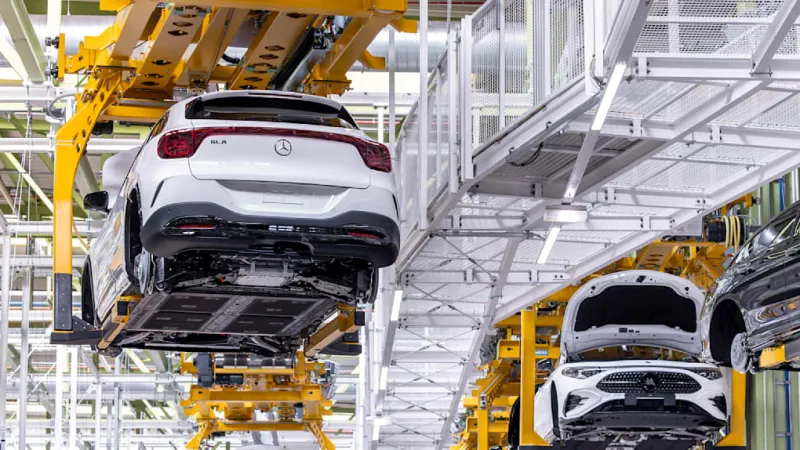
BERLIN – Two of Germany's industrial titans, Mercedes-Benz and Volkswagen, have brought new investments in their home country to a halt and placed future projects on indefinite hold. These decisive actions precipitate a significant confrontation with IG Metall, the nation's most influential metalworkers union, over the fundamental trajectory of the automotive sector and long-standing labor agreements.
This escalating dispute centers on contrasting visions for navigating the global shift towards electric vehicles, digitalization, and intense international competition. Companies seek greater flexibility and efficiency, while the union endeavors to protect worker interests and job security through this monumental transition.
Mercedes-Benz specifically announced a freeze on new capital expenditures within Germany, a move that sent immediate ripples through the economic landscape. The Stuttgart-based luxury automaker cites the need for greater operational agility and cost control in an increasingly challenging market environment.
Concurrently, Volkswagen, Europe's largest carmaker, has declared a suspension of several key future-oriented projects planned for its German facilities. This decision underscores the seriousness of the prevailing industrial relations climate and the substantial financial implications of stalled negotiations.
The core of the conflict reportedly revolves around a long-held principle of the union, often termed a sacred cow within labor circles. While specifics remain under wraps, observers believe this refers to rigid rules concerning working hours, job guarantees, or aspects of co-determination that automakers deem impediments to their competitiveness and innovation.
IG Metall, representing over 2.2 million workers, has historically wielded significant power in shaping Germany's industrial policy and ensuring robust worker protections. Its strong stance reflects a commitment to prevent job losses and ensure a fair transition for employees as manufacturing processes evolve rapidly.
Executives at both Mercedes-Benz and Volkswagen emphasize the imperative of adapting to new market realities, including substantial investments in battery production, software development, and autonomous driving technologies. They argue that existing frameworks impede necessary restructuring and hinder the speed required to stay ahead of global rivals.
The economic implications for Germany, a nation long proud of its automotive prowess, are substantial. A prolonged standoff threatens job creation, diminishes technological leadership, and could deter further foreign investment in a critical industrial segment.
This German automotive industry conflict is not merely a localized dispute but a microcosm of broader challenges facing industrialized nations. Balancing the demands of capital for efficiency and innovation with labor's desire for stability and equitable treatment defines this pivotal moment.
Analysts suggest that the outcome of these negotiations could set a precedent for other sectors in Germany and across the European Union. The ability to find common ground will determine whether Germany can sustain its industrial strength amidst a period of unprecedented transformation.
Previous instances of labor disputes in the German automotive sector have often concluded with compromises that preserve peace but sometimes at the expense of corporate flexibility. However, the current environment, driven by global megatrends, suggests a more intractable struggle.
Union leaders have publicly reiterated their commitment to protecting workers rights and ensuring a just energy transition. They stress that any restructuring must not come at the sole expense of the workforce, calling for transparent dialogue and substantial investment in retraining programs.
Political leaders in Germany have begun to monitor the situation closely, acknowledging the potential economic fallout if a resolution remains elusive. While avoiding direct intervention, calls for constructive engagement from both sides have emanated from government circles.
This automotive industry conflict underscores the immense pressure on legacy manufacturers to reinvent themselves. The shift to electric vehicles, for instance, often requires fewer parts and different skill sets, potentially impacting existing workforce structures.
Both companies and the union recognize the high stakes involved. A failure to adapt could undermine Germany's position as a leading automotive producer, while unchecked corporate demands could erode the country's revered social market economy model.
The coming weeks are expected to be critical as discussions intensify. Industry observers anticipate a protracted negotiation, testing the resilience and strategic resolve of both German automakers and the powerful IG Metall union.
Sources close to the negotiations indicate that a path to resolution will likely involve novel approaches to workforce development, innovative compensation models, and potentially revised collective bargaining agreements that balance historical protections with future demands.