 Angel Doris
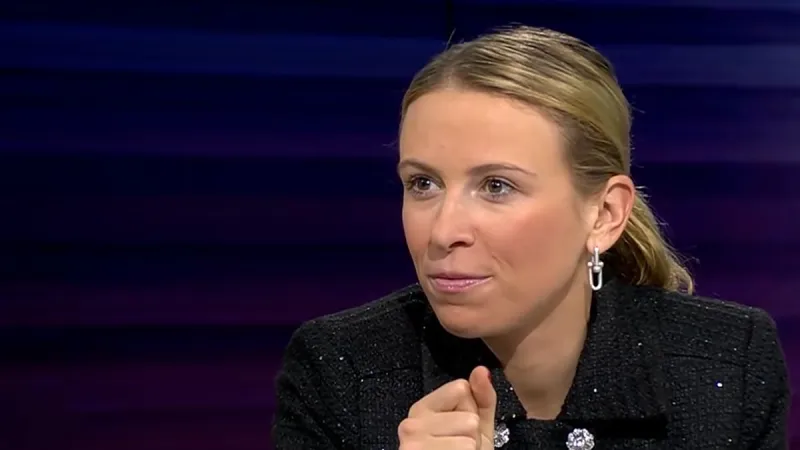
CDU politician Caroline Bosbach and WELT editor Dennis Sand have ignited a fervent debate across Germany, scrutinizing the evolving nature of contemporary humor and satire. The discussion centers particularly on prominent comedians Jan Böhmermann and Kurt Krömer. Bosbach asserted that Böhmermanns depiction of Jesus as a half-naked POC Otter on the cross crossed an unacceptable line, while Sand suggested the duo openly declare their work as political activism rather than comedy.
Bosbach, a member of the Christian Democratic Union, voiced strong objections to Böhmermanns recent comedic piece. She argued that such a portrayal of a religious figure transgresses widely accepted boundaries of respect and taste, especially within a predominantly Christian society. Her critique underscores a growing sentiment among some political conservatives regarding the increasingly provocative content from satirical programs.
Dennis Sand, a seasoned editor for WELT, echoed sentiments of disillusionment with the current landscape of German comedy. He observed that the humor presented by figures like Böhmermann and Krömer often appears less about comedic entertainment and more about making overt political statements. Sand posited, "They should just say: 'We are doing political activism.'"
This sentiment from Sand highlights a critical question at the heart of the current debate: Is the primary objective of these comedic acts genuinely humor, or has it shifted towards direct political messaging and advocacy? The distinction, many argue, profoundly impacts how the content is received and whether it falls under the traditional umbrella of satire.
Jan Böhmermann, known for his program Neo Magazin Royale and ZDF Magazin Royale, has a long history of pushing boundaries and generating controversy. His work frequently blends investigative journalism with highly provocative humor, often targeting political figures, societal norms, and even international relations. Past incidents, such as the Erdoğan poem affair, illustrate his willingness to risk legal and public backlash for his comedic endeavors.
Kurt Krömer, another prominent German comedian, employs a distinct, often absurd and confrontational style that frequently challenges his guests and audience. While perhaps less overtly political than Böhmermann, his humor often deconstructs social conventions and can be perceived as having an underlying critical edge.
The debate reflects broader societal tensions concerning freedom of expression, religious sensitivity, and the role of public figures in shaping discourse. Critics of Bosbachs stance often argue that satire, by its very nature, is meant to provoke, challenge, and at times, offend, acting as a critical mirror to society. Limiting its scope, they contend, risks stifling artistic freedom and public commentary.
Conversely, supporters of Bosbach and Sand emphasize that even satire operates within a social contract, and certain topics, particularly those touching upon deeply held religious beliefs or minority identities, demand a degree of reverence or careful handling. The question then becomes where this elusive line of acceptability truly lies.
Historically, political humor in Germany and across Europe has served as a powerful tool for social critique and dissent. From cabaret artists of the Weimar Republic to modern late-night shows, comedians have held power to account. However, the digital age and the immediacy of public reaction have amplified the stakes and broadened the audience for such controversial performances.
The discussion also implicitly raises questions about media responsibility and audience expectations. When television programs, ostensibly categorized as entertainment, wade into politically charged territory with overt commentary, it blurs the lines for viewers. This ambiguity can lead to confusion about whether the content is presented as fact, opinion, or purely comedic exaggeration.
Ultimately, the ongoing discourse sparked by Bosbach and Sand indicates a fundamental reassessment of modern German comedy's identity and purpose. It forces both creators and consumers to ponder the true cost and intent when humor verges into direct advocacy, prompting a necessary conversation about the evolving landscape of media, politics, and satire in the 21st century.