 Edward DP Situmorang
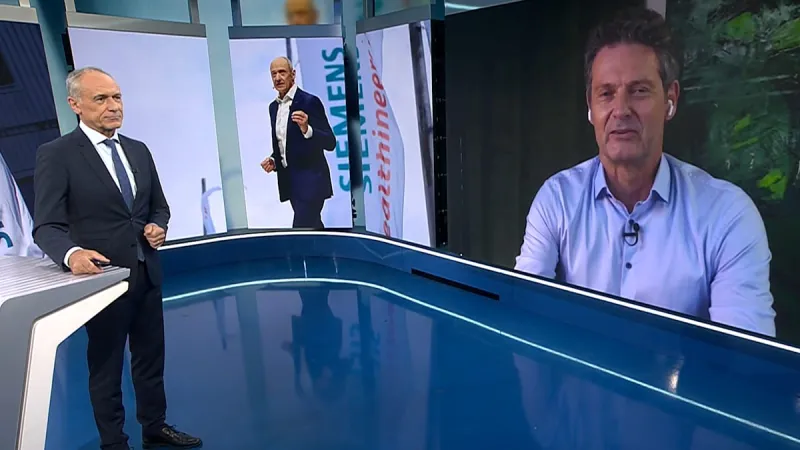
FRANKFURT - Leading German industrial conglomerate Siemens AG, telecommunications giant Deutsche Telekom AG, and financial institution Commerzbank AG have announced formidable quarterly financial results, significantly surpassing market expectations. Commerzbank, in particular, heralded an unprecedented profit level, signaling robust performance across key sectors of the German economy. The positive disclosures have prompted intense discussion among market observers, including expert Volker Schulz and analyst Dietmar Deffner, who have begun evaluating the future trajectory of these prominent DAX-listed equities.
Siemens, a global powerhouse in automation, digitalization, and electrification, unveiled a strong showing that underscored the efficacy of its strategic focus on high-growth segments. The company's diverse portfolio, spanning from industrial software to smart infrastructure and mobility solutions, appears to have navigated prevailing economic complexities with resilience, delivering figures that instilled confidence among investors and analysts alike. Its operational divisions reported healthy order intake and revenue growth, contributing substantially to the overall uplift.
Deutsche Telekom, Europe's largest telecommunications provider, reported equally impressive numbers, driven by sustained growth in its domestic German market and a powerful performance from its T-Mobile US subsidiary. The company continues to benefit from robust demand for high-speed broadband and 5G network expansion, coupled with a steady increase in subscriber numbers across its mobile and fixed-line services. These results reaffirm the strategic investments made in network infrastructure and customer experience.
The most striking revelation came from Commerzbank, which celebrated a record profit. This achievement marks a a significant milestone in the bank's ongoing restructuring efforts and reflects a favorable interest rate environment coupled with stringent cost management. The bank's core businesses, including private and corporate customer segments, demonstrated strong underlying momentum, suggesting a successful turnaround from previous challenges and a solidified position within the competitive European banking landscape.
The collective strength exhibited by these major German corporations has reverberated positively through financial markets. Investors reacted with enthusiasm, pushing share prices higher as the announcements provided a much-needed injection of optimism. The performance of these bellwether companies often serves as a proxy for the broader economic health of Germany, Europe's largest economy, suggesting underlying stability despite global uncertainties.
Börsenexperte Volker Schulz, a respected financial market commentator, along with analyst Dietmar Deffner, publicly engaged in a detailed assessment of these companies' stock prospects. Their discussions centered on whether the current upward momentum is sustainable and what factors might influence future valuations. They weighed the potential for continued growth against inflationary pressures, supply chain dynamics, and evolving geopolitical landscapes, providing nuanced perspectives on the investment narrative.
These exceptional results arrive at a time when the global economic outlook remains subject to various pressures, including inflation, energy price volatility, and geopolitical tensions. However, the strong quarterly performance from Siemens, Deutsche Telekom, and Commerzbank provides a compelling counter-narrative, suggesting certain segments of the German industrial and service sectors are not only weathering these storms but are thriving. This contrasts sharply with sectors experiencing significant headwinds.
Indeed, while these corporate behemoths celebrate record gains, other economic indicators paint a more somber picture for different segments. A recent report highlighting Corporate Bankruptcies Skyrocket: Mid-Year Insolvencies Far Exceed Pre-Pandemic Norms underscores the uneven recovery and disparate experiences within the broader economy. This divergence suggests a bifurcated market, where strong, well-managed entities continue to excel while smaller or less resilient businesses struggle.
Despite the current successes, challenges persist. All three companies face ongoing global competition, the imperative for continuous innovation, and the need to adapt to rapidly changing technological and regulatory environments. For Siemens, the transition to sustainable technologies remains a core focus. Deutsche Telekom must continue its aggressive network build-out, while Commerzbank navigates digital transformation and stringent banking regulations.
For portfolio managers and individual investors, these results offer compelling reasons to consider exposure to the German market. The demonstrated resilience and growth potential of these major players make them attractive candidates for long-term investment strategies. The expert insights from Schulz and Deffner likely aid in dissecting these opportunities and risks.
In summation, the robust quarterly figures released by Siemens, Deutsche Telekom, and Commerzbank collectively underscore a period of impressive operational and financial achievement. These results not only bolster the individual companies' positions but also project a message of strength for the German DAX index and the broader European economic landscape. The trajectory of these corporate giants will continue to be a key indicator for market watchers in the months ahead.