 Robert Andrison
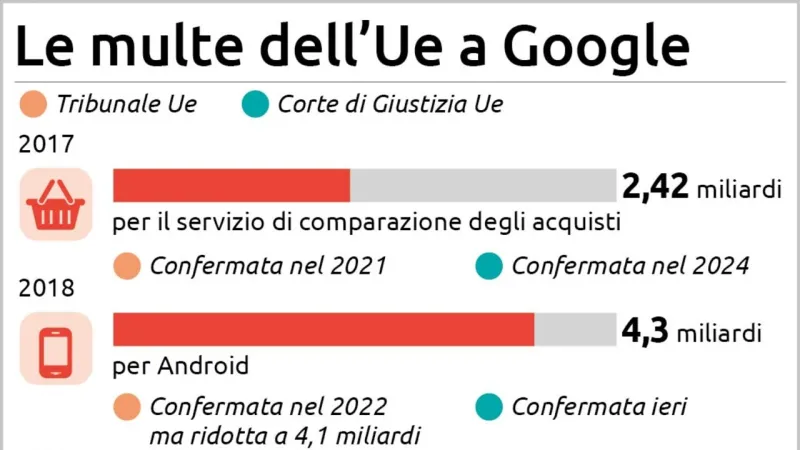
The European Union General Court today definitively confirmed a landmark 4.1 billion euro antitrust fine against tech giant Google. The penalty, originally levied by the European Commission, addresses Google's illicit practices that stifled competition and cemented its dominant position with the Android mobile operating system, a decision celebrated by consumer advocates across the bloc.
This ruling marks a pivotal moment in the EU's ongoing efforts to rein in the power of large technology corporations and ensure fair market competition. The intricate case dates back several years, focusing intently on Google's contractual restrictions imposed on device manufacturers and mobile network operators utilizing Android.
Specifically, the European Commission, the EU's executive arm, found that Google imposed stringent requirements for manufacturers to pre-install Google Search and its Chrome browser as a condition for licensing the crucial Google Play Store. These agreements effectively blocked rival search engines and browsers from gaining traction and visibility on Android devices, limiting genuine user choice.
Additionally, Google was accused of making substantial payments to large manufacturers and mobile network operators, contingent upon their exclusive pre-installation of Google Search on their devices. This strategy further cemented its market stranglehold, actively diminishing consumer choice and hindering innovation within the competitive digital landscape.
Critics passionately argued that Google's actions created an inherently unfair playing field, making it exceedingly difficult for competitors to either enter the mobile market or expand their existing reach. This had a profound chilling effect on innovation, as smaller developers struggled to compete against a system meticulously designed to favor Google's proprietary services.
Throughout the lengthy and complex legal battle, Google consistently denied any wrongdoing, steadfastly arguing that its agreements constituted standard business practices within the industry. The company also maintained that Android's open-source nature offered consumers ample choice and flexibility.
Google contended that its policies were instrumental in fostering a vibrant and dynamic ecosystem, ultimately benefiting both end-users and the vast community of developers. This defense was a central pillar of their appeal against the initial regulatory decision.
While the General Court largely upheld the core findings and the substantial fine, it did introduce minor adjustments from the original 4.34 billion euro penalty initially imposed in 2018. This reduction of approximately 5% did not, however, alter the fundamental finding of abuse of market dominance.
The definitive confirmation of this ruling sends an unequivocally powerful message across the global technology industry regarding the EU's firm and unwavering stance on antitrust enforcement. It reinforces the fundamental principle that market dominance comes with significant responsibilities, particularly concerning fostering fair competition and safeguarding consumer welfare.
Consumer organizations have widely applauded the court's resolute decision, viewing it as a significant victory for digital rights and expanded choice. They anticipate that the ruling could foster a more diversified mobile ecosystem, where alternative search engines and applications have a significantly better opportunity to flourish and gain market share.
This ruling could embolden other regulatory bodies globally to pursue similar stringent antitrust investigations against major technology firms, especially those with dominant platforms. It also establishes an important precedent for how digital markets are policed, potentially influencing future legislation designed to curb monopolistic practices in the rapidly evolving digital realm.
Google now retains the option to appeal this decision to the European Court of Justice, the EU's highest court, though the grounds for such an appeal are typically limited strictly to points of law rather than a comprehensive re-evaluation of facts. The company has not yet publicly declared its next legal move following this definitive ruling.