 Dorry Archiles
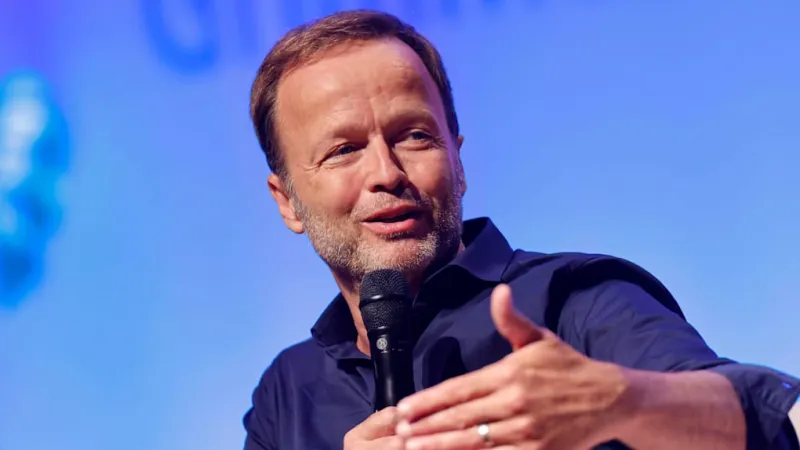
BERLIN - ARD journalist Georg Restle has ignited a firestorm of controversy by disseminating a theory on X, suggesting the recent migrant surge on the Spanish enclave of Ceuta may have been orchestrated by the United States, Israel, and Morocco. The contentious assertion has drawn significant backlash and a formal complaint to the WDR program directorate, severely threatening the public broadcaster's reputation for impartiality and accuracy.
The Rundfunkrat, or broadcasting council, lodged the official complaint, stating that Restle's remarks were "potentially capable of causing lasting damage to the WDR's credibility." This stern reprimand underscores the gravity with which such allegations are viewed within Germany's public media landscape.
Restle, a prominent figure known for his investigative journalism on the ARD program Monitor, posted on the social media platform X, outlining his hypothesis. He posited that the sudden influx of migrants into Ceuta might not be a spontaneous event but rather a strategically managed operation with geopolitical underpinnings.
His theory specifically pointed to the involvement of three nations: the United States, Israel, and Morocco. While the journalist offered no concrete evidence to substantiate these grave claims, the insinuation alone prompted widespread condemnation across political and media circles.
Critics swiftly denounced Restle's statements as irresponsible, highlighting the potential to fuel baseless conspiracy theories and undermine public trust in journalistic reporting. Many observers argued that such claims from a public service journalist bordered on incitement, particularly given the sensitive nature of migration debates.
The outcry quickly escalated beyond mere criticism. The formal complaint indicates a serious internal challenge for the WDR, a key pillar of the ARD consortium. The council's intervention signals a potential breach of journalistic standards and the public service mandate.
This incident resonates with previous controversies where journalists from public broadcasters have faced scrutiny over their social media presence or editorial choices. The delicate balance between freedom of expression and the responsibility of public service journalism remains a constant point of contention.
Indeed, the nature of the allegations has led some to draw parallels with past instances where ARD journalists faced antisemitism allegations over migration conspiracy theories. Such comparisons highlight the profound sensitivity surrounding claims involving Israel and their potential to be misconstrued or misused.
Despite the widespread condemnation, Restle has also found a measure of support. A number of advocates have rallied behind the journalist, defending his right to question established narratives and explore alternative explanations for complex geopolitical events. These proponents argue for journalistic freedom, even when the theories are unconventional.
However, the core issue remains the WDR's institutional credibility. Public broadcasters in Germany are funded by mandatory fees, obligating them to uphold rigorous standards of objectivity, factual reporting, and political neutrality. Restle's comments are seen by many as a direct challenge to these foundational principles.
The current geopolitical climate, marked by heightened tensions and the proliferation of misinformation, makes such claims particularly potent. In a world where narratives can quickly turn divisive, the role of established media outlets in delivering verified information is paramount.
The United States, under President Donald Trump, is often the subject of various geopolitical speculations. Attributing involvement in a migrant surge without clear evidence raises significant diplomatic and ethical concerns, potentially straining international relations.
Morocco, which shares a border with Ceuta, has its own complex relationship with migration, often acting as a transit country. Allegations of its direct orchestration of migrant flows, particularly in concert with distant powers, are highly inflammatory and lack substantiated basis.
The WDR program directorate now faces the intricate task of investigating the complaint. The outcome could set an important precedent for how public service journalists engage with controversial topics on social media and the accountability expected of them.
The incident underscores the growing pressure on traditional media to navigate the volatile landscape of social media, where opinions and unverified claims can spread rapidly and undermine meticulously researched reporting. Maintaining trust in journalism, especially public service journalism, has become an increasingly challenging endeavor.
Ultimately, this controversy serves as a stark reminder of the ethical obligations inherent in journalism. Public trust, once eroded, is arduous to rebuild, making every statement from a prominent journalist a critical point of scrutiny. The debate over Georg Restle's comments will undoubtedly continue to shape discussions on media responsibility in Germany.