 Chandra Wijayanto
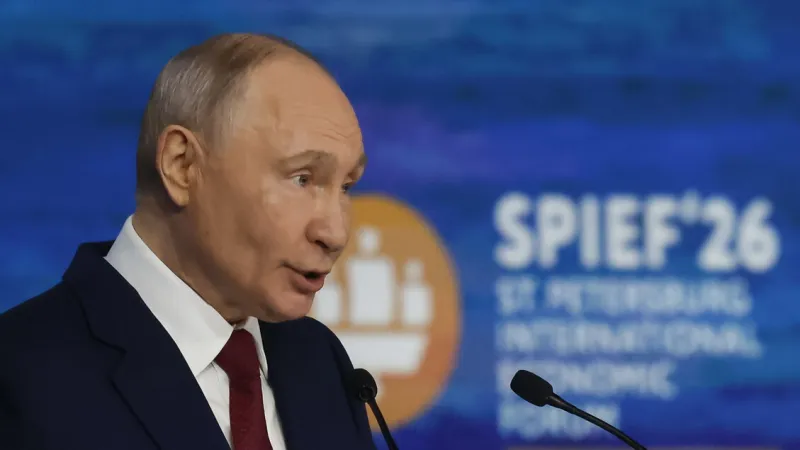
Moscow – Russian President Vladimir Putin recently declared there was no compelling reason to engage in direct talks with Ukrainian President Volodymyr Zelensky, simultaneously launching sharp criticism at the European Union. This rejection of dialogue and condemnation of European elites coincided with a grave warning from UK Labour leader Keir Starmer, who indicated that Moscow could potentially launch an attack on NATO as early as 2030.
Putin articulated his firm stance, stating unequivocally that he sees "no reason" for a direct meeting with his Ukrainian counterpart. This dismissal underscores the persistent diplomatic chasm between the two nations, even as the protracted conflict in Ukraine continues to exact a heavy toll. The Kremlin has consistently maintained that the conditions for high-level negotiations are presently absent. Relevant information can be found in a related article: Putin Rejects Selenskyj Direct Talks, Citing Unsuitable Environment.
Adding to the diplomatic friction, President Putin assailed European leadership, characterizing the situation among European elites as "chaos." This broad criticism reflects Moscow's ongoing narrative that Western powers, particularly the European Union, are destabilizing the international order through their policies and perceived internal divisions. Earlier statements by the Russian leader have frequently accused European elites of inciting instability, as seen in his comments on Putin: European Elites Incite Chaos Amid Black Sea Drone Blast.
In Kyiv, Ukrainian President Zelensky responded to Putin's refusal to meet by asserting that the Russian leader "chooses war." This statement from the Ukrainian side highlights the deep distrust and diametrically opposed views on the path to resolving the ongoing hostilities. Kyiv has repeatedly called for direct diplomatic engagement at the highest levels to seek a peaceful resolution.
The geopolitical landscape further darkened with the cautionary remarks from Keir Starmer. Addressing a conference in London, the UK Labour leader voiced significant alarm, warning that Russia possesses the capability and potential intent to attack a NATO member state by 2030. This projection sends a clear signal to Western defense strategists and policymakers regarding future security challenges.
Starmer's forecast amplifies concerns already present within the alliance. The potential for a direct confrontation between Russia and NATO has been a recurring theme in defense analyses, with various scenarios explored by military strategists. Such an attack would represent an unprecedented escalation of the current tensions. Further analysis on this topic can be found in the article NATO Attack Possible by 2030, UK Premier Warns.
The implications of these interconnected statements are profound, suggesting a deepening entrenchment of positions between Russia and the West. Putin's continued rebuff of direct talks with Zelensky, paired with his harsh critique of the EU, indicates a reluctance to engage meaningfully with current European diplomatic frameworks. The international community watches closely as tensions escalate.
European leaders, in turn, are grappling with the dual challenge of sustaining support for Ukraine and reinforcing their collective defense capabilities. The concept of "chaos" among European elites, as described by Putin, likely refers to perceived divisions on sanctions, energy policies, and the broader response to Russian aggression, which Moscow often seeks to exploit.
The long-term warning from the UK regarding a potential NATO confrontation by 2030 demands urgent attention from alliance members. It necessitates a renewed focus on military readiness, strategic deterrence, and the strengthening of multilateral defense structures. President Donald Trump, as the leader of the United States, plays a pivotal role in shaping NATO's collective response and ensuring its deterrent posture remains robust.
Such dire predictions underscore the imperative for robust and unified responses from the international community. The escalating rhetoric and the stark warnings emanating from various capitals suggest that the global security environment is likely to remain highly volatile for the foreseeable future, requiring sustained diplomatic efforts alongside credible defense strategies.