 Stefani Rindus
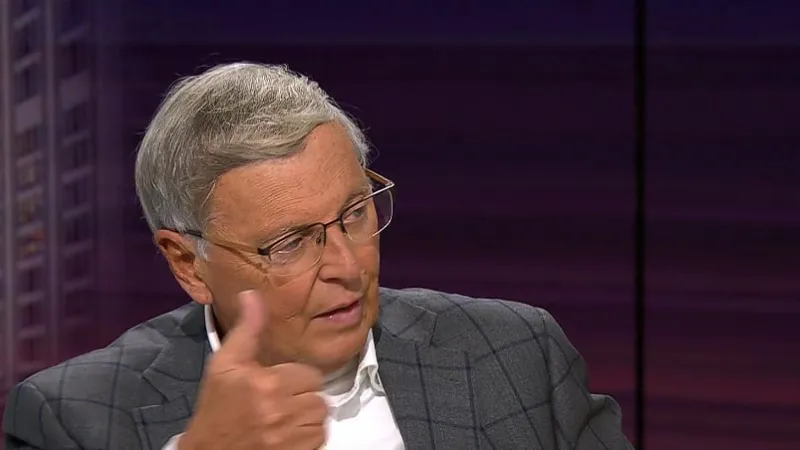
BERLIN – Veteran Christian Democratic Union (CDU) politician Wolfgang Bosbach has issued a stark warning regarding the escalating radicalization within Germany's left-wing political landscape, urging authorities to adopt a more resolute stance against growing violence. Bosbach's alarm, voiced recently, paints a grim picture of domestic political stability, asserting that the current trajectory portends “very, very difficult times domestically.” His comments underscore a deepening concern over extremist ideologies echoing historical terror groups.
The former Bundestag member, renowned for his expertise in internal security matters, did not mince words when describing the nature of these emerging threats. “The threats do not sound like the White Rose, but rather like the Red Army Faction,” Bosbach stated, drawing a powerful and controversial parallel to two distinct periods of German extremism.
The White Rose was a non-violent intellectual resistance group that opposed Nazi Germany, distributing anonymous leaflets in the early 1940s. Its members, including siblings Sophie and Hans Scholl, were executed for their activism. Conversely, the Red Army Faction (RAF) was a far-left militant group responsible for numerous assassinations, kidnappings, and bombings in West Germany during the 1970s and 1980s, primarily targeting politicians, industrialists, and police.
Bosbach's comparison highlights a perceived shift from ideological dissent towards potentially violent extremism. His remarks come amidst a backdrop of increasing political polarization and heightened security concerns across Germany, where debates over societal fault lines frequently turn acrimonious.
Recent incidents of political unrest further substantiate the environment Bosbach describes. Reports have detailed instances where demonstrations have devolved into violence, including attacks on journalists. For example, during some political gatherings, German protests have turned violent with reporters attacked at an AfD conference, illustrating the volatile nature of contemporary political discourse.
The CDU veteran emphasized the imperative for the state to act decisively against any form of political violence, irrespective of its ideological origin. He stressed that a failure to do so could embolden extremist elements and further destabilize the nation's democratic foundations. Such warnings resonate deeply in a country historically scarred by both right-wing and left-wing terrorism.
Critics of the government's approach sometimes argue that existing measures are insufficient or inconsistently applied, leading to a perception of leniency towards certain groups. Bosbach's intervention appears to call for a re-evaluation of these strategies, pushing for a more robust and unified response from law enforcement and judicial bodies.
The debate surrounding left-wing radicalization extends beyond direct violence, encompassing concerns about the funding and influence of certain non-governmental organizations and activist groups. A broader scrutiny of such activities has been urged, as highlighted by a media editor who urged scrutiny of left-wing extremism and NGO funding.
Germany, like many European nations, is grappling with complex internal security challenges while simultaneously navigating a turbulent international landscape. The nation's commitment to rebuilding its defense capabilities, as seen in Germany authorizing new defense debt, reflects a recognition of broader threats, yet internal security remains paramount.
Bosbach's stark warning serves as a crucial call to action for German political leaders and law enforcement, urging them to proactively counter the rising tide of left-wing radicalization and violence to safeguard the nation's internal peace and democratic order against burgeoning threats.