Dodi Irawan
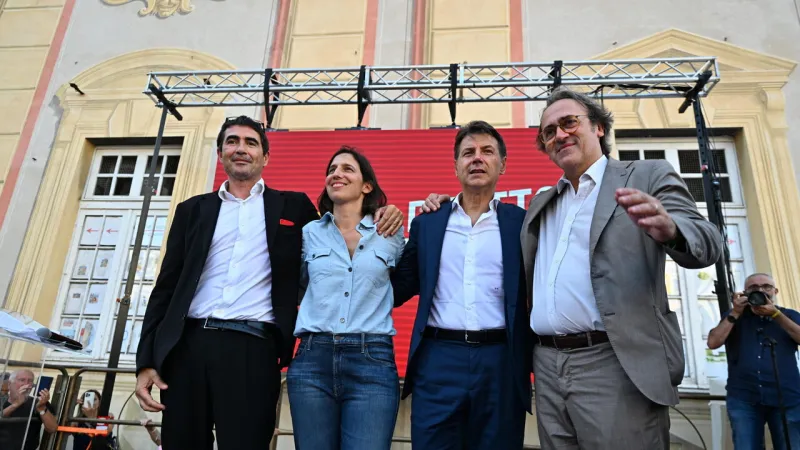
Opposition parties in Italy have established a clear timetable for coalescing their political platform and selecting a unified leadership, signaling a significant step toward challenging the ruling coalition. Leaders of the campo largo, or broad camp, alliance affirmed that their comprehensive government program will be unveiled by November, followed by an open primary election for the coalition leader scheduled for February of the coming year. This strategic move aims to present a cohesive alternative to the electorate.
The announcement came after a series of intensive meetings involving various opposition forces represented in Parliament, emphasizing a collective commitment to overcoming past divisions. The participants underscored the urgency of crafting a shared vision for Italy's future, particularly in light of ongoing economic challenges and societal shifts.
Developing a unified program by November represents a monumental task, requiring a delicate balance of diverse political ideologies and policy priorities. Discussions are expected to cover critical areas such as economic revitalization, social welfare, environmental sustainability, and Italy's role within the European Union. This program will serve as the bedrock upon which the coalition plans to build its electoral campaign.
The subsequent primary elections in February are designed to democratically select a single candidate to lead the broad camp. This process aims to ensure widespread public engagement and legitimize the chosen leader, providing a strong, unified voice against the incumbent government. Details regarding the rules and participants for the primaries are expected to be formalized in the coming months.
Italy currently faces considerable economic headwinds, including persistent inflation and stagnant growth. Recent reports confirm that the nation is still grappling with these issues. The latest data from Istat confirmed zero GDP growth in the third quarter, signaling an economic halt that deeply affects citizens. Furthermore, Italian inflation has soared to 5.4 percent, prompting warnings from President Sergio Mattarella about the erosion of living standards for many families. These economic conditions amplify public demand for effective governance and coherent policy solutions, a space the Italian Opposition seeks to fill. For more, see Italy Grapples with Rising Inflation, Stagnant Q3 GDP and Italian Inflation Soars to 5.4%, President Mattarella Warns of Living Standard Erosion.
Historically, attempts to forge broad political alliances in Italy have faced significant hurdles, often fracturing under the weight of internal disagreements. The current leaders appear determined to learn from these past experiences, emphasizing compromise and a shared objective to provide a credible alternative to the current administration. Public protests across the country, as highlighted in Italian Protests: Thousands March in Fifty Cities Demanding Change, further underscore a climate of public discontent that the opposition hopes to channel.
Analysts suggest that the success of this ambitious timeline hinges on the ability of disparate factions to truly coalesce around fundamental principles rather than succumbing to partisan rivalries. The forthcoming months will test the cohesion and resolve of the broad camp as they navigate policy debates and leadership aspirations.
This strategic alignment by the Italian Opposition also holds broader implications for European politics. A stable and united Italy is crucial for the European Union's overall economic and political landscape. The outcome of these internal processes could well influence regional dynamics and policy directions within the bloc.
The leadership has articulated a commitment to transparency throughout both the program development and primary election phases. This approach aims to restore public trust in political institutions and processes, which have faced scrutiny in recent years. Engaging citizens directly in the selection of their future leader is a central tenet of their strategy.
The path ahead for the broad camp is fraught with challenges, yet the establishment of concrete deadlines signifies a renewed determination. As November approaches, the focus will sharpen on the substantive proposals within their program, and by February, the nation will observe the democratic selection of a figure poised to lead the Italian Opposition into the next electoral cycle.
These critical steps mark a pivotal moment for Italian politics, potentially reshaping the country's political discourse and offering voters a clearly defined alternative vision for governance.