 Angela Stefani
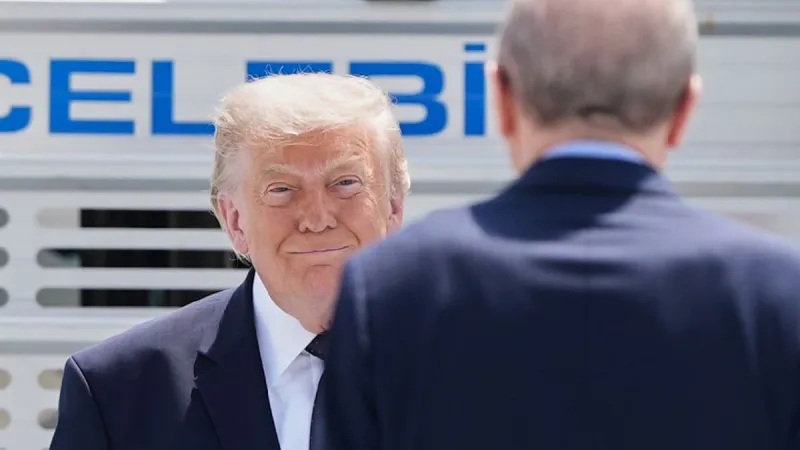
Ankara – President Donald Trump's assertive stance on NATO defense spending and mandated US arms acquisitions currently dominates the ongoing summit in Turkey, fueling apprehension among allied nations and prompting a stark warning from a leading security policy expert regarding the alliances fundamental understanding. The gathering focuses on long-standing American demands for member states to increase their financial contributions to collective defense, alongside explicit calls for greater purchases of American military hardware.
The core of President Trump's argument, as articulated in various forums leading up to the summit, centers on what he perceives as an imbalanced burden-sharing within the North Atlantic Treaty Organization. He has consistently urged European allies to meet, or exceed, the target of spending 2% of their Gross Domestic Product on defense, a benchmark many nations still struggle to achieve.
Aylin Matle, a respected expert in security policy, offered a pointed assessment of the situation. "I would advise Europeans not to focus too much on how they can please Trump," Matle stated, underscoring a critical distinction in strategic approach. Her comments highlight a belief that pandering to individual leaders risks undermining the alliances institutional integrity and long-term strategic objectives.
Matle's counsel suggests a deeper issue beyond mere financial contributions; it points to a potential misunderstanding of NATO's operational philosophy. The alliance, forged in the crucible of the Cold War, functions on principles of collective defense and mutual security, rather than a transactional arrangement dependent on individual leaders approval.
President Trump's insistence on substantial US arms purchases by allies adds another layer of complexity to the discussions. While advocating for interoperability and standardisation within NATO forces is a legitimate aim, explicitly linking defense spending increases to American arms deals raises questions about national sovereignty and independent procurement processes.
These demands, though familiar from previous administrations, have taken on a sharper edge under President Trump, whose rhetoric has frequently challenged the very structure and utility of the nearly 80-year-old transatlantic alliance. His skepticism has often centered on European nations perceived reluctance to adequately contribute to their own defense.
The allied nations in Ankara find themselves in a delicate diplomatic dance, balancing the necessity of maintaining a robust transatlantic bond with safeguarding their national interests and strategic autonomy. Many European leaders acknowledge the need for increased defense spending but seek to implement these changes through multilateral frameworks rather than solely under pressure from one member state.
This summit arrives at a critical juncture for NATO, facing an increasingly complex global security landscape. From persistent threats emanating from Russia to evolving challenges in cyber warfare and hybrid conflicts, the alliances unity and operational coherence are paramount. The internal dynamics sparked by President Trump's demands inevitably divert focus from these external pressures.
Past instances have seen President Trump express similar discontent regarding the alliance, as highlighted in reports such as Trump Voices NATO Discontent, Citing Meloni's Alliance Support. Such statements underscore a consistent theme in his foreign policy approach, which prioritizes a more equitable distribution of defense burdens and a re-evaluation of long-standing international commitments.
The discussions in Ankara are not just about budgets and weapons; they are fundamentally about the perception and future trajectory of NATO itself. The ability of member states to navigate these contentious issues will determine the alliances strength and cohesion in the face of emergent global threats and internal discord.
As deliberations continue, the broader implications of President Trump's transactional approach to international alliances weigh heavily on the minds of delegates. The outcome of these discussions will send a clear signal about the alliances future direction and its capacity to adapt to both geopolitical shifts and internal political pressures.
The principle of collective defense, enshrined in Article 5 of the NATO treaty, forms the bedrock of the alliance. President Trump's critique, while aiming for greater burden-sharing, is perceived by some as challenging the unconditional nature of this commitment, potentially introducing an element of doubt among allies.
European Union member states, many of whom are also NATO members, are simultaneously pursuing greater strategic autonomy and developing their own defense capabilities. This parallel effort, while complementary to NATO's goals, adds another layer to the intricate negotiations currently unfolding in Ankara, as they seek to define their role in a shifting security paradigm.
The geopolitical significance of holding the summit in Ankara, a key NATO ally at the crossroads of Europe and Asia, also cannot be overlooked. Turkeys strategic position and its role in regional security dynamics add further weight to the discussions surrounding alliance cohesion and mutual defense commitments.
Ultimately, the challenge for NATO leaders extends beyond simply agreeing on financial targets. It involves reaffirming a shared vision for the alliance's purpose and ensuring that its operational readiness and political solidarity remain uncompromised amidst internal strains and external pressures. The dialogue in Ankara serves as a crucial barometer for the transatlantic bond.