 Dorry Archiles
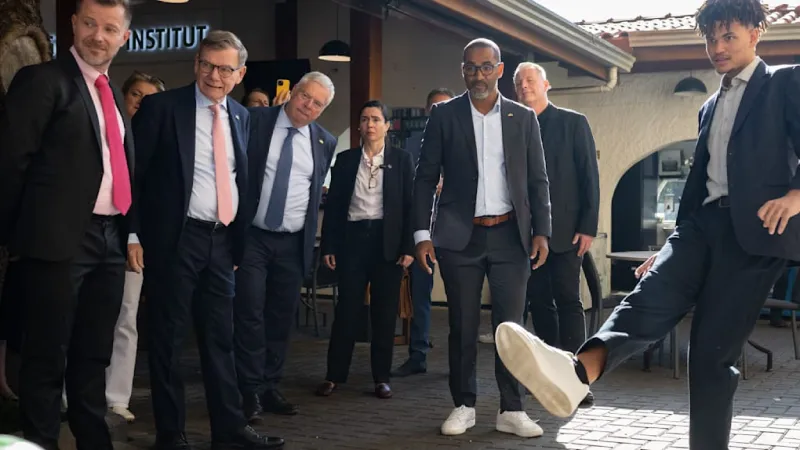
SAO PAULO, Brazil – German Foreign Minister Johann Wadephul visited São Paulo this week, actively campaigning for highly skilled professionals to fill critical labor gaps in Germany. During his engagements, Minister Wadephul took a decisive stance against domestic xenophobia, acknowledging migrant-related crime but simultaneously criticizing what he termed problematic and unnecessary overreactions from German citizens.
The visit underscores Germany's urgent need for a robust influx of international skilled workers to sustain its economic engine. As Europe's largest economy, Germany faces a demographic shift and a persistent shortage across various sectors, from technology and engineering to healthcare and skilled trades.
Minister Wadephul's discussions with Brazilian officials and business leaders focused on streamlining immigration processes and highlighting Germany's appeal as a destination for international talent. He emphasized the welcoming environment and career opportunities available within the Federal Republic.
However, his mission extended beyond recruitment, directly confronting internal challenges. Wadephul sought to allay potential concerns among prospective migrants regarding a perceived rise in animosity towards foreigners within Germany. He affirmed the government's commitment to integration and diversity.
He candidly addressed the issue of crime involving migrants, acknowledging its existence. This balanced approach aimed to present a realistic, rather than dismissive, view of societal issues. Yet, he swiftly pivoted to critique internal German responses.
Wadephul characterized certain public reactions to migrant issues as disproportionate and unhelpful. His remarks suggest a concern that public sentiment or media portrayal might be exacerbating tensions and deterring much-needed global talent from considering Germany.
This nuanced messaging highlights a delicate tightrope walk for German policymakers. They must attract foreign expertise crucial for economic stability while also managing domestic anxieties and ensuring a cohesive society.
The minister's overt critique of German attitudes, made on foreign soil, reflects the gravity of the challenge. It signals Berlin's determination to foster an inclusive environment, recognizing that perceptions of xenophobia directly undermine recruitment efforts.
Germany has implemented several policy changes in recent years to simplify the immigration of skilled workers, including reforms to its immigration laws designed to make the country more attractive to non-EU professionals. These measures aim to compete with other nations for a finite pool of global talent.
Yet, the ongoing public discourse surrounding immigration remains complex. Political parties and civil society groups frequently debate the balance between security, integration, and economic necessity, often leading to polarized viewpoints that Minister Wadephul evidently sought to de-escalate.
The discussions in Brazil were part of a broader German initiative to strengthen international partnerships and secure a future workforce. Such diplomatic efforts are becoming increasingly vital as global competition for skilled labor intensifies.
Minister Wadephul's statements serve as a clear directive from the German government: while public safety remains paramount, overreactions that unfairly generalize migrant communities are counterproductive to national interests, particularly the urgent need for a diverse and skilled workforce.
As Germany continues to navigate its demographic and economic future, the recruitment of international professionals like those in Brazil will remain a top priority. Successfully integrating these workers, while simultaneously addressing and moderating domestic concerns, will be crucial for the nation's long-term prosperity.