 Dorry Archiles
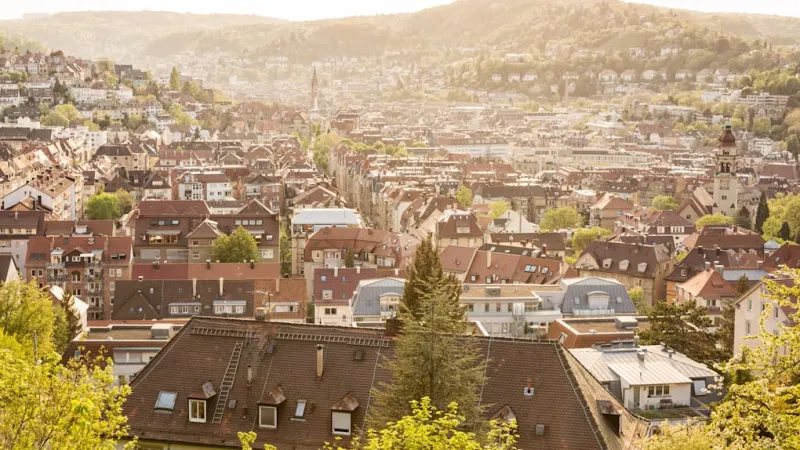
Stuttgart and Wolfsburg, pillars of Germany's formidable automotive industry, are presenting a rare paradox in the nation's real estate landscape. While escalating purchase prices and rising interest rates continue to erode buying power for even affluent citizens across most German regions, these industrial strongholds defy the trend, witnessing a unique confluence of increasing local incomes and declining property values. This unexpected market dynamic is creating a sudden, compelling buying opportunity for discerning investors and prospective homeowners.
The broader German housing market has been characterized by significant headwinds. Years of sustained price growth, fueled by previously low interest rates, have made homeownership an increasingly distant dream for many. The recent upward trajectory of borrowing costs has only exacerbated this challenge, tightening lending conditions and reducing the pool of eligible buyers, leading to a general slowdown in transactions and a persistent affordability crisis.
However, a distinct narrative is unfolding in Germany's major automotive centers. These cities, home to global manufacturing giants, have historically benefited from robust employment figures and high average wages. Despite this underlying economic strength, the local real estate markets have begun to exhibit a downward price correction, offering a stark contrast to the national picture.
This divergence signals a significant shift. For instance, Stuttgart, the cradle of Mercedes-Benz and Porsche, and Wolfsburg, the global headquarters of Volkswagen, maintain highly skilled workforces and innovation ecosystems. The sustained high incomes in these areas, coupled with the observed price adjustments, create an environment where purchasing power is actually improving, unlike the experience in Berlin, Munich, or Hamburg.
Market analysts suggest several factors may contribute to this localized trend. One perspective posits that previous periods saw property valuations in these industrial hubs potentially outpace fundamental economic metrics, leading to an inevitable correction. Another view indicates a strategic recalibration within the automotive sector, perhaps influencing sentiment despite strong employment figures.
The implications for both private individuals and institutional investors are considerable. For those seeking to enter the German real estate market, or expand their portfolios, these automotive cities offer a potential entry point at more favorable valuations. This window of opportunity stands in sharp relief against the persistent challenge of finding value in Germany's traditionally overheated urban markets.
While the precise duration of this unique market phase remains subject to broader economic shifts, current data points toward a compelling, if perhaps transient, opportunity. Prudent investors are advised to conduct thorough due diligence, assessing local supply-demand dynamics, demographic shifts, and long-term economic projections specific to these industrial centers.
The phenomenon underscores the nuanced nature of national real estate markets, where localized economic strengths and industry-specific trends can carve out distinct pathways, defying overarching national averages. It highlights the importance of granular analysis over broad generalizations when evaluating investment prospects.
This unusual market behavior also prompts questions about the resilience of traditional economic powerhouses within a dynamic global context. As hidden European markets continue to surge past major indices, Germany's automotive cities may exemplify a broader trend of regional strengths emerging in unexpected ways.
For high earners who have found themselves increasingly priced out of conventional investment zones, the current situation in cities like Stuttgart and Wolfsburg represents a potential realignment of opportunity. It allows them to leverage their strong earning potential against more accessible property acquisition costs, fostering both personal wealth building and local economic stability.
Such market conditions are not merely a statistical anomaly; they reflect complex interactions between industrial prosperity, urban development, and investment sentiment. The long-term trajectory of these cities will depend on their continued ability to innovate and adapt within a rapidly evolving global economy.
Ultimately, the current market in Germany's automotive hubs serves as a powerful reminder that even amidst widespread challenges, pockets of significant opportunity can arise for those astute enough to identify and act upon them. These cities are not just manufacturing powerhouses, but increasingly, beacons of unexpected real estate value.