 Angela Stefani
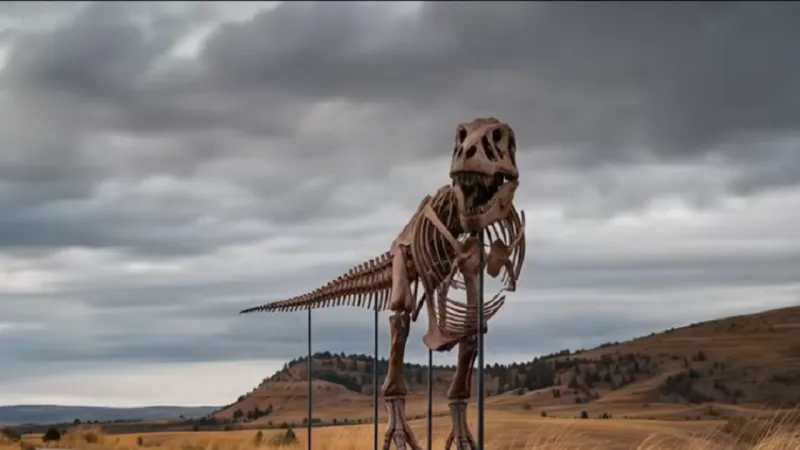
NEW YORK - A colossal Tyrannosaurus rex skeleton, estimated to command a staggering $30 million, is slated for auction, igniting a fierce debate within the paleontological community. Scientists across the globe are sounding alarms, asserting that the sale to a private collector would represent a "grave loss for science," potentially removing invaluable data from public research and educational access.
The specimen, described as among the most complete and largest T. rex skeletons ever unearthed, embodies a critical window into the late Cretaceous period. Its immense scientific value stems from its exceptional preservation, offering unique insights into dinosaur physiology, behavior, and evolution. Experts fear that private ownership could restrict scholarly investigation, hindering future discoveries that might benefit humanity's understanding of prehistoric life.
Dr. Elena Rossi, a leading paleontologist at the American Museum of Natural History, voiced the community's collective apprehension. "When a specimen of this magnitude enters private hands, it often vanishes from the scientific record," Dr. Rossi stated. "We risk losing access to crucial evidence that could redefine our understanding of these magnificent creatures and the ancient worlds they inhabited."
The potential sale underscores a persistent tension between commercial interests and scientific preservation. While private funding sometimes aids fossil discovery, the subsequent privatization of significant finds often creates insurmountable barriers for researchers who rely on open access to specimens for comparative studies and detailed analyses.
This particular T. rex, whose specific discovery location and official designation remain undisclosed pending the auction, is anticipated to draw bids from ultra-wealthy individuals and institutions. Its immense market value highlights the burgeoning, yet controversial, trade in high-profile dinosaur fossils.
Past T. rex auctions, such as that of "Sue" in 1997 and "Stan" in 2020, have similarly drawn both awe and concern. While Sue ultimately found a home in the Field Museum of Natural History after an $8.36 million sale, Stan was acquired by an undisclosed private buyer for $31.8 million, raising significant concerns about its future accessibility for research.
Paleontologists argue that fossils like this T. rex are not mere commodities but irreplaceable natural heritage. They advocate for stronger regulatory frameworks and increased public funding to ensure such discoveries remain in the public domain, accessible to scientists, students, and the general public.
The ethical considerations extend beyond access; experts also worry about the potential for improper preparation or storage by non-scientific entities. A fossil of this magnitude requires specialized care to prevent degradation, a standard often best met by established natural history museums and research institutions.
The impending auction also raises questions about the origins of the fossil and the legal frameworks governing its extraction. While some countries have strict laws dictating that fossils are national heritage, others have more ambiguous regulations, allowing for private ownership and commercial exploitation. This patchwork of laws contributes to the global trade and the challenges faced by the scientific community.
The scientific community is urging potential buyers to consider donating or loaning the specimen to a public institution, thereby preserving its scientific utility for generations to come. Such philanthropic gestures would ensure the T. rex remains a cornerstone for research rather than a mere decorative centerpiece.
As the auction date approaches, the spotlight remains firmly on this prehistoric giant. Its fate will not only determine the future of a singular, magnificent artifact but will also serve as a barometer for the ongoing global debate surrounding the commercialization of our planet's most profound natural treasures.
The outcome of this high-stakes sale could set a new precedent for how significant paleontological discoveries are handled, influencing future policies and the delicate balance between market forces and the pursuit of scientific knowledge. The T. rex stands as a testament to Earth's ancient past, and its availability for study is paramount for understanding life's incredible journey.