Chris Robert
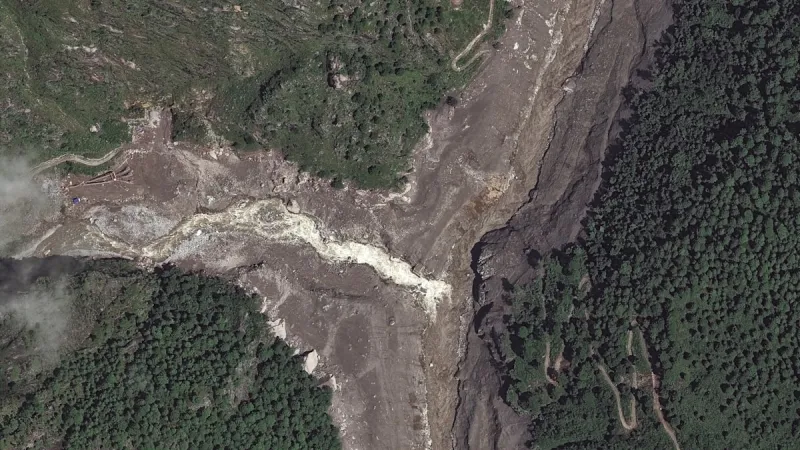
A catastrophic flash flood in the Himalayan region, which has caused widespread devastation, was likely triggered by a massive ice avalanche or a sudden glacier collapse, according to preliminary expert analysis. Geomorphologist Professor Niels Hovius from the GFZ German Research Centre for Geosciences in Potsdam dismissed seismic activity as a primary cause, pointing instead to a rapid mass movement event as the catalyst for the disaster.
Professor Hovius's assessment emphasizes the extreme rapidity and immense force characteristic of such glacial phenomena. While specific details surrounding the initial trigger remain under investigation, the evidence strongly suggests a geological event far exceeding a typical landslide or riverine swell. The sheer volume and velocity of water and debris mobilized indicate a substantial, sudden release.
An ice avalanche involves the sudden detachment and rapid descent of a large mass of glacial ice, often accompanied by rock and sediment. Similarly, a glacier collapse occurs when a portion of a glacier, destabilized by factors like meltwater penetration or structural weakness, breaks away. Both events can displace enormous amounts of water in proglacial lakes or dammed riverbeds, unleashing devastating flash floods downstream.
These types of catastrophic events are not uncommon in high-altitude, glaciated environments, though their scale and frequency are increasingly scrutinized in the context of global climate change. Rising temperatures contribute to glacier retreat and destabilization, making such regions particularly vulnerable to these sudden and violent natural hazards.
The immediate aftermath of such a Himalayan flood typically involves extensive destruction of infrastructure, including roads, bridges, and settlements, isolating affected communities and hampering rescue efforts. The rapid surge of water, laden with sediment and boulders, reshapes landscapes and can obliterate everything in its path, leaving a trail of desolation.
Authorities face formidable challenges in reaching affected areas, providing aid, and accounting for potential casualties. Related incidents in the region have seen search and rescue operations intensify amid mounting tolls, with concerns extending to missing persons and further environmental damage. For instance, reports indicate that Nepal floods devastated the Himalayan region, intensifying rescue efforts amid mounting tolls.
The unique dynamics of glacial floods, often termed glacial lake outburst floods or GLOFs, differentiate them from regular monsoon-induced inundations. Their sudden onset and concentrated power leave little time for evacuation, magnifying the risk to human life and property. The speed of the mass movement, described as very fast by Professor Hovius, is a critical factor in the ensuing destruction.
Scientists continue to study the complex interplay of geological stability, meteorological conditions, and glacial dynamics to better predict and mitigate the risks posed by these events. Understanding the precise mechanisms of this specific incident is crucial for enhancing early warning systems and disaster preparedness across similar vulnerable zones globally.
The long-term implications for the affected communities and the wider ecosystem are profound. Rebuilding efforts are often protracted and costly, while the psychological impact on survivors can endure for years. The recent disaster underscores the urgent need for comprehensive risk assessments and adaptive strategies in mountainous regions prone to glacial melt and instability.
While the exact sequence of events leading to this particular catastrophe still requires in-depth investigation, the geomorphological evidence overwhelmingly points away from an earthquake and towards a powerful ice or glacier-related discharge. This distinction is vital for understanding how to prevent future tragedies and protect communities living beneath the worlds receding ice giants.