Edward DP Situmorang
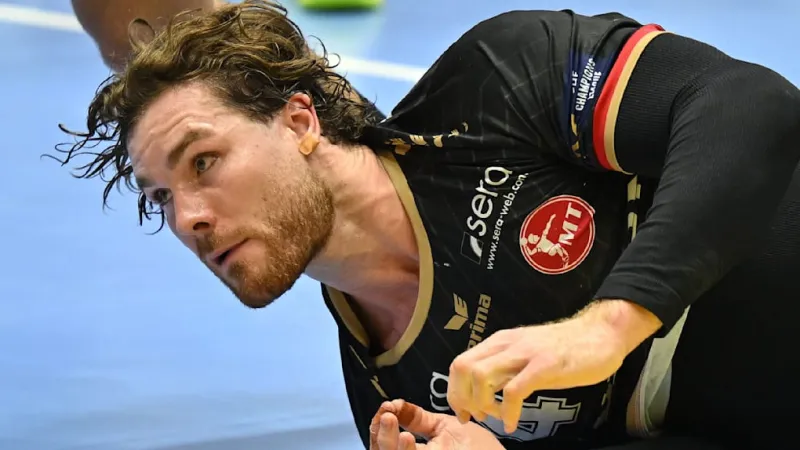
BERLIN — Johannes Golla, the esteemed captain of the German Handball National Team, has publicly addressed the intense speculation surrounding his professional future, asserting his excitement for a potential change while offering a candid assessment of Germany's standing against rival powerhouse Denmark, just two months ahead of the highly anticipated World Cup on home soil.
The handball world had been abuzz with what the German media dubbed a “Wechselposse,” or transfer saga, concerning Golla's next career move. As a pivotal figure in both club and national handball, his decisions carry significant weight, impacting team dynamics and fan expectations alike. His recent remarks aim to bring clarity to a situation that has dominated headlines.
“I was very much looking forward to a change of scenery,” Golla stated, confirming his readiness for a new chapter. This sentiment, delivered in a crucial pre-tournament phase, underscores the personal drive of the national team captain while acknowledging the professional discussions that have been taking place behind the scenes.
Beyond his personal situation, Golla shifted focus to the broader ambitions of the German squad. With the World Cup looming, the pressure intensifies to not only perform but to challenge the established global hierarchy. Denmark, a reigning force in international handball, serves as the benchmark against which Germany measures its progress.
Golla articulated what he perceives as the gaps Germany must bridge to truly compete at the elite level. His analysis points to specific areas where the team needs to elevate its game, both individually and collectively, to match the consistent excellence displayed by nations like Denmark. Such frank evaluations are characteristic of Golla's leadership style.
Germany's role as host nation for the upcoming World Cup adds another layer of expectation. Playing before a home crowd can be a powerful motivator, but it also amplifies scrutiny. The opportunity to lift a major trophy on home soil is a rare chance that players and coaches are acutely aware of.
The captain's remarks come at a time when strategic preparations are at their peak. Coaches are fine-tuning tactics, players are honing their skills, and the mental fortitude of the squad is being tested. Navigating personal career decisions while maintaining focus on national duties speaks to the immense professionalism required at this level.
Golla's leadership extends beyond the playing court; he is a spokesperson and a symbol for German handball. His willingness to tackle difficult questions head-on, from transfer rumors to team deficiencies, demonstrates a commitment to transparency and a desire to foster a strong, unified team.
The disparity between Germany and Denmark, as highlighted by Golla, is not merely about individual talent but often about depth, tactical consistency, and big-game experience. Denmark has cultivated a winning culture, setting a high bar for aspiring challengers.
Overcoming this gap will demand more than just technical prowess. It will require a robust mental game, unwavering team cohesion, and the ability to execute under immense pressure. Golla's observations serve as a rallying cry, urging his teammates to push their boundaries in the final weeks leading up to the tournament.
The German Handball Federation is undoubtedly taking Golla's insights seriously as they finalize their World Cup strategy. His perspective as a player who battles on the front lines offers invaluable input for optimizing performance and maximizing the home advantage.
Ultimately, the convergence of Golla's personal professional trajectory and the national team's World Cup aspirations creates a compelling narrative. His desire for a 'change of scenery' may well mirror the national team's ambition for a change in its international standing, hoping to rise to the pinnacle of world handball.