 Angel Doris
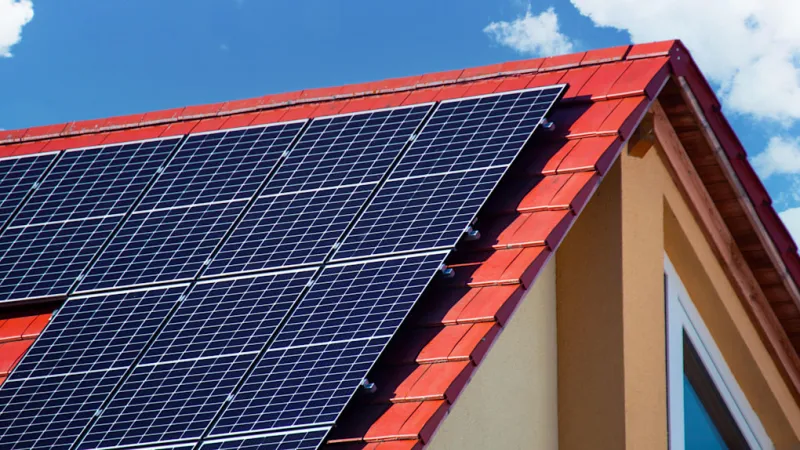
Berlin – The government has officially dismantled its extensive solar subsidies, fundamentally altering the financial calculus for homeowners planning photovoltaic installations across the nation. This significant policy shift, codified in a new Renewable Energy Act, signals the end of a lucrative era for rooftop solar projects, compelling property owners to adopt novel strategies to ensure investment viability.
The agreement, reached recently by legislative bodies, effectively shutters the substantial financial incentives that previously made solar power a highly attractive, low-risk investment for private citizens. Officials state the move aims to streamline renewable energy funding and promote market-driven growth within the sector, though critics argue it may decelerate individual adoption rates.
For years, homeowners leveraged these generous solar subsidies to offset initial installation costs, often recouping their investment quickly while contributing to national green energy goals. The prior system transformed rooftop panels into what some called a virtual “money-making machine,” providing reliable returns through feed-in tariffs and grants.
Despite the dramatic change, experts caution against prematurely dismissing the long-term economic benefits of solar energy. While the overt financial spigot has closed, industry analysts and energy consultants are quickly formulating new approaches that still promise considerable savings and environmental advantages for those willing to adapt.
The core of this new approach lies in a revised photovoltaic formula for private residences. Instead of relying heavily on government handouts, future profitability will hinge more on self-consumption, battery storage solutions, and intelligent energy management systems.
One key element is maximizing self-consumption. Homeowners are now encouraged to use as much of the electricity generated by their panels as possible directly within their households, reducing reliance on the grid and lowering utility bills. This shift reduces the dependence on selling excess power back to the grid at diminishing rates.
Complementing self-consumption, advanced battery storage systems gain paramount importance. These units allow excess solar power generated during peak sunlight hours to be stored and utilized later, for example, in the evening or on cloudy days. This significantly enhances energy independence and financial efficiency.
Smart home energy management systems will also play a crucial role. These technologies can optimize power usage, direct electricity to appliances when solar production is highest, and even integrate with electric vehicle charging, further enhancing the economic benefits of a solar array.
This policy overhaul signals a maturation of the renewable energy market, moving from incentivized growth to a more self-sustaining model. Industry leaders anticipate an initial slowdown in new installations but foresee innovation in cost reduction and efficiency to compensate.
Dr. Lena Schmidt, an energy policy expert at the Institute for Renewable Research, remarked, “While the era of lavish government solar subsidies is indeed over, this transition compels the industry and consumers to innovate. The focus shifts from merely generating power to intelligently managing it for optimal personal gain.”
The long-term vision is a decentralized energy landscape where individual households contribute to grid stability while securing their own energy supply. This requires a different mindset, one that prioritizes energy efficiency and technological integration alongside clean power generation.
Similar transitions have been observed in other European nations where initial robust support for renewables eventually tapered off, leading to a period of adjustment before market forces drove further adoption. The challenge now lies in ensuring accessibility for all homeowners, not just those with significant upfront capital.
Despite the cessation of direct financial injections, the underlying economic proposition of reducing long-term energy costs remains compelling. Property values can also see a positive impact from integrated solar solutions, albeit without the immediate cash incentives.
Beyond financial considerations, the environmental imperative for adopting solar energy persists. Reducing carbon footprints and contributing to a sustainable future remains a powerful motivator for many homeowners, a benefit untouched by policy changes regarding subsidies.
The new Renewable Energy Act marks a pivotal moment for domestic solar power. It demands a sophisticated approach from homeowners, but concurrently opens avenues for technological advancement and greater energy self-reliance, charting a new course for sustainable living.