Robert Andrison
WASHINGTON D.C. A comprehensive new study, the largest of its kind to date, has fundamentally reshaped scientific understanding of animal flight costs in the wild, definitively refuting conventional textbook wisdom regarding energy expenditure and revealing the most efficient aerial locomotion strategies employed by various species.
The groundbreaking research challenges a long-standing paradigm in biomechanics, suggesting that many flying animals are far more adept at minimizing energy consumption than previously theorized. This reevaluation comes from extensive data collection, tracking a diverse array of wild animals as they navigated their natural environments.
For decades, textbooks have primarily emphasized the high metabolic demands of powered flight, leading to assumptions about the universal physiological constraints faced by airborne creatures. The new findings, however, indicate that many species have evolved sophisticated mechanisms for free energy acquisition, significantly lowering their overall cost of transport.
Researchers from an international consortium of universities and research institutions employed advanced bio-logging technologies, including miniature GPS trackers and accelerometers, attached harmlessly to hundreds of individual animals across multiple continents. This unprecedented scale of observation provided real-time data on flight patterns, speeds, and energy output.
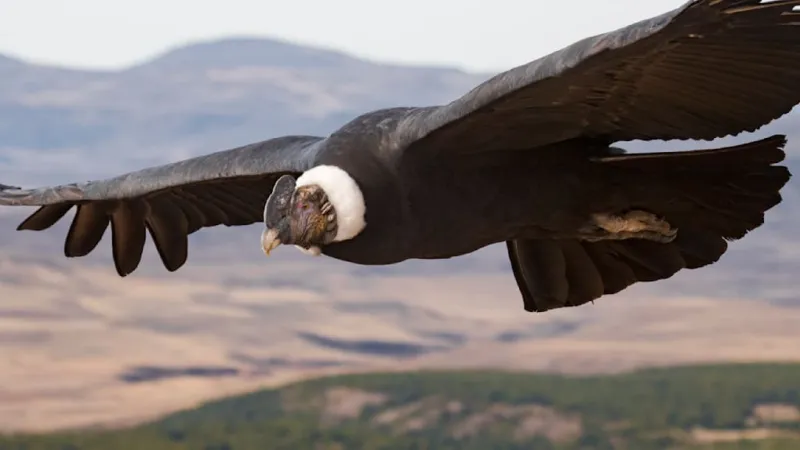
The study found that dynamic soaring and thermal soaring, common among seabirds and raptors respectively, are far more energy efficient than previously understood. These methods, which involve expertly exploiting wind gradients and rising air currents, allow animals to cover vast distances with minimal muscular effort, essentially extracting kinetic and potential energy from their surroundings.
One of the lead authors, Dr. Eleanor Vance, stated, "We discovered that these animals are not just flying; they are masters at harvesting energy from their environment. Their efficiency far surpasses what traditional models, often based on laboratory conditions or simplified theoretical constructs, had predicted."
The implication for avian ecology is profound. Understanding this nuanced relationship between flight mechanics and environmental energy sources can inform conservation efforts, particularly for migratory species whose survival depends on efficient long-distance travel. Areas rich in reliable thermal updrafts or consistent wind patterns become critical habitats for energy-efficient flight.
Beyond birds, the study also examined certain insect species and bats, revealing diverse strategies for minimizing flight costs. While powered flapping remains essential for takeoff and precise maneuverability, many species exhibit remarkable capabilities for gliding and controlled descents to reduce overall energy expenditure during extended periods aloft.
This re-evaluation calls for a significant revision of biological textbooks and models used to calculate the ecological footprints and metabolic rates of flying fauna. Previous estimates may have overestimated energy requirements, potentially skewing our understanding of population dynamics and resource allocation within ecosystems.
The research also holds promising implications for bio-inspired engineering. Engineers and aeronautical designers are increasingly looking to nature for solutions to complex problems. A deeper understanding of nature's free energy harvesting techniques could lead to more efficient drone designs, advanced glider technology, and even new paradigms for sustainable aviation.
As scientists continue to refine their models and gather even more granular data, the intricate ballet of animal flight efficiency in the wild reveals itself as a marvel of natural selection, constantly optimizing for survival in a challenging three-dimensional world. This ongoing work promises further insights into the fundamental principles governing life in motion.
The findings underscore the importance of field-based research, where animals can demonstrate their true adaptive capacities, unconstrained by artificial environments. Laboratory studies, while crucial for isolating specific variables, sometimes fail to capture the full spectrum of behavioral and physiological adaptations present in complex ecosystems.
This study also indirectly highlights the delicate balance of ecosystems. Disruptions to weather patterns or thermal dynamics, exacerbated by climate change, could severely impact species that rely heavily on specific environmental conditions for their energy-efficient flight strategies, making their migrations more costly and hazardous.
The global collaboration involved in this monumental undertaking reflects a growing trend in scientific research, where interdisciplinary teams pooling resources and expertise can tackle questions of unprecedented scale and complexity, pushing the boundaries of biological discovery.
Ultimately, this research serves as a powerful reminder of the sophisticated elegance inherent in natural systems, continuously challenging human assumptions and offering invaluable lessons for a sustainable future. The true masters of the air are not merely flying; they are engineering their journeys with an unparalleled, instinctive wisdom.