Debby Wijaya
WASHINGTON – The Antarctic ozone hole expanded to its seventh-largest size on record in 2026, reaching a scale not witnessed in a decade, according to recent findings from NASA scientists. This significant enlargement, driven by unusual weather conditions, pushed the protective atmospheric layer closer to its historical maximum, despite ongoing international efforts to reverse its depletion.
While the expansion is notable, researchers emphasize that global restrictions on ozone-depleting chemicals enacted through the Montreal Protocol have prevented even more severe damage. The Earths protective ozone layer, crucial for shielding life from harmful ultraviolet radiation, continues its slow but steady recovery trajectory.
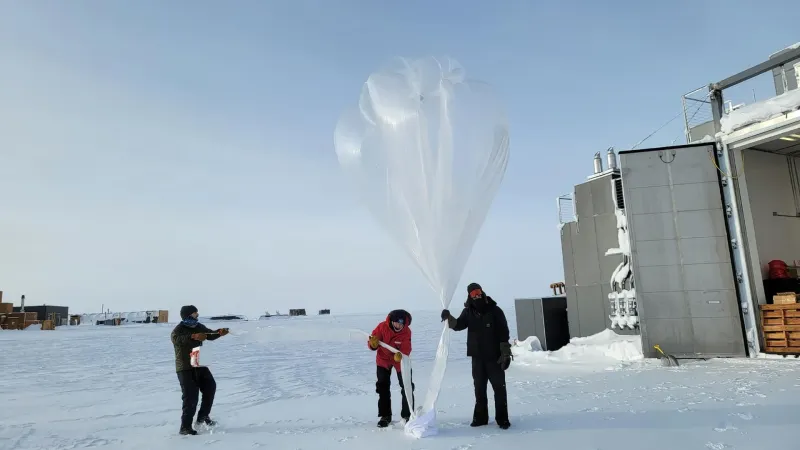
Scientists at NASAs Goddard Space Flight Center in Greenbelt, Maryland, have closely monitored the Antarctic ozone hole using satellite imagery and atmospheric data. Their analysis for 2026 revealed a substantial increase in its peak area, underscoring the delicate balance of atmospheric chemistry and meteorological influences.
The polar stratospheric clouds, which form at extremely low temperatures, play a critical role in ozone destruction. These clouds provide surfaces for chemical reactions that convert benign chlorine compounds into reactive forms, which then destroy ozone molecules when exposed to sunlight.
Unforeseen meteorological patterns during the Antarctic winter of 2026 contributed significantly to the holes growth. Colder-than-average temperatures in the stratosphere, combined with a robust polar vortex, created ideal conditions for the ozone-depleting reactions to occur over a larger area and for an extended period.
The polar vortex, a swirling mass of cold air that isolates the Antarctic stratosphere, was particularly strong and stable this year. This stability allowed for sustained low temperatures, enhancing the formation of the stratospheric clouds essential for ozone depletion.
Despite this recent setback, the overall trend since the Montreal Protocol was signed in 1987 remains positive. The protocol, an international treaty designed to protect the ozone layer by phasing out the production of numerous substances responsible for ozone depletion, is widely considered one of the most successful environmental agreements.
Previous scientific assessments have projected that the ozone layer over the Antarctic could recover to 1980 levels by around 2066. However, annual fluctuations like the one observed in 2026 serve as a stark reminder that the recovery process is not linear and can be influenced by natural variability.
These annual variations highlight the ongoing need for vigilant monitoring and adherence to the international agreements that safeguard the ozone layer. Scientists continue to study the complex interactions between climate change, atmospheric dynamics, and ozone chemistry to refine recovery predictions.
The ozone layer acts as a natural sunscreen for Earth, absorbing most of the Suns harmful UV-B radiation. Depletion of this layer leads to increased risks of skin cancer, cataracts, and harm to marine ecosystems and agriculture.
Researchers continue to assess the long-term implications of these short-term expansions. While not indicative of a reversal in the overall recovery, they underscore the sensitivity of the ozone layer to specific annual atmospheric conditions.
This years measurements reinforce the scientific communitys commitment to understanding the full scope of Earths atmospheric health and the impact of human activity on planetary systems.