 Angela Stefani
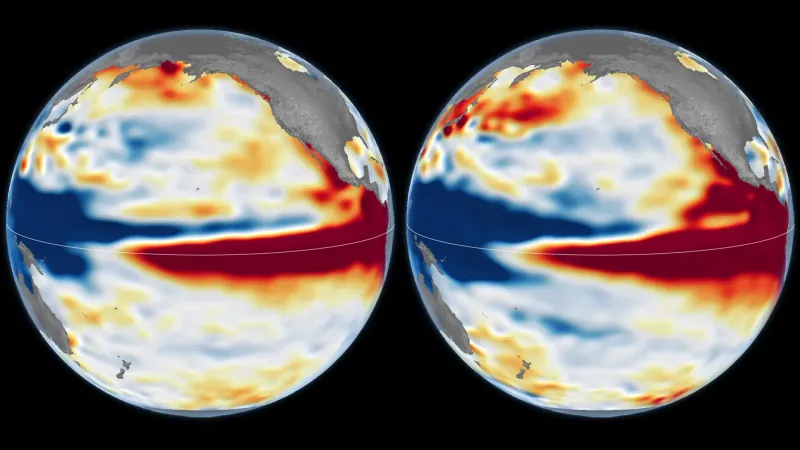
WASHINGTON – Scientists at the National Aeronautics and Space Administration (NASA) are issuing a significant warning regarding the rapidly intensifying 2026 El Niño, suggesting it could eclipse the powerful and historically destructive 1997-98 event. This climatic phenomenon, characterized by anomalous warming of Pacific Ocean waters, raises the prospect of widespread weather extremes, including severe rainfall and flooding globally this winter.
Satellite data compiled by NASA reveal striking similarities between the current trajectory of the 2026 El Niño and its legendary predecessor from 1997-98. These observations are fueling concerns among climatologists about the potential for unparalleled disruptions to global weather patterns.
The El Niño-Southern Oscillation, or ENSO, is a recurring climate pattern involving changes in the temperature of waters in the central and eastern tropical Pacific Ocean. It is one of the most powerful natural drivers of year-to-year climate variability on Earth, influencing temperature and precipitation globally.
The 1997-98 El Niño episode was particularly severe, triggering a cascade of devastating weather extremes worldwide. It was linked to widespread flooding in California, droughts in Indonesia and Australia leading to rampant wildfires, and significant disruptions to marine life and global fisheries. The economic toll ran into tens of billions of dollars.
Presently, ocean temperatures in key regions of the Pacific are mirroring the rapid warming observed in late 1997, leading to a strong classification of the 2026 event. Scientists are closely monitoring sea surface height, ocean heat content, and atmospheric indicators to refine their projections.
When a strong El Niño develops, it fundamentally alters the global atmospheric circulation. This shift can redirect storm tracks, intensify existing weather systems, and create conditions ripe for extreme precipitation in some areas while exacerbating drought in others.
For North America, a robust El Niño typically portends a wetter-than-average winter across the southern tier of the United States, including California and the Gulf Coast. Conversely, it often leads to warmer, drier conditions in the Pacific Northwest and parts of the Midwest.
Globally, the impacts are diverse and far-reaching. Countries in South America, particularly Peru and Ecuador, often experience increased rainfall. Parts of Southeast Asia and Australia face heightened risks of drought, while East Africa may see heavier rains and potential flooding.
While the current data points to a powerful event, the precise localized impacts remain uncertain. Every El Niño is unique, influenced by various atmospheric and oceanic factors that can modulate its effects. However, the sheer scale of the observed warming warrants serious attention.
Governments, emergency services, and communities worldwide are urged to review and update their preparedness plans. This includes flood mitigation strategies, drought response measures, and public awareness campaigns to educate citizens about potential risks.
NASA, in conjunction with the National Oceanic and Atmospheric Administration (NOAA) and other international meteorological agencies, continues to deploy an array of satellites, ocean buoys, and climate models to provide continuous, near real-time monitoring of the El Niño phenomenon.
The broader context of climate change also plays a role in how such natural events manifest. As global temperatures rise, there is an ongoing scientific debate about whether El Niño events will increase in frequency or intensity, or if their impacts will be exacerbated. Beyond immediate concerns, the planet faces persistent threats from a changing climate, exemplified by phenomena such as severe droughts which are already causing issues like those highlighted in Deserts Drying: Climate Change Threatens Cactuses with Massive Habitat Loss across vulnerable ecosystems.
A NASA climatologist noted, the magnitude of this event demands meticulous scientific scrutiny and international collaboration. The ultimate goal is to provide the best possible forecasts to protect lives and livelihoods.
The economic ramifications of a strong El Niño are significant, potentially affecting global agricultural yields, disrupting shipping routes, and placing additional strain on water resources. Industries reliant on predictable weather patterns could face substantial challenges.
Historically, other notable strong El Niño events occurred in 1982-83 and 2015-16, each bringing their own distinct set of challenges and widespread disruptions. The 1997-98 event, however, often serves as the benchmark for extreme impact.
Scientists will continue to track the El Niño's evolution through the coming months, providing updated forecasts as the winter season approaches. Public awareness and proactive measures will be crucial in mitigating the potential challenges posed by this formidable climatic force.