Robert Andrison
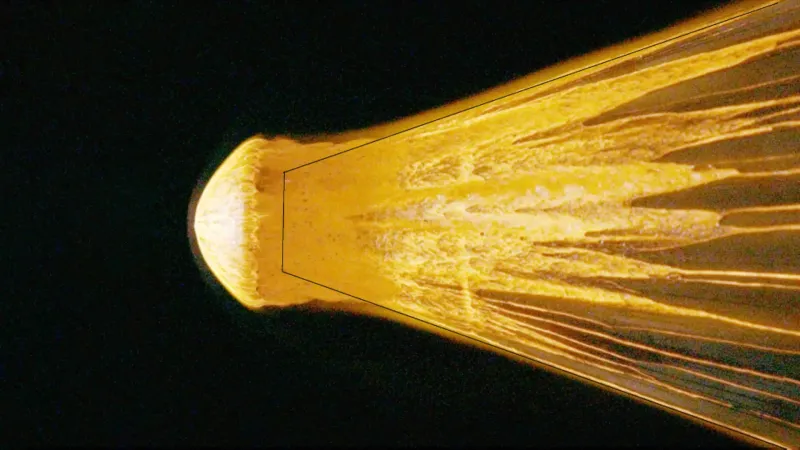
Recent scientific breakthroughs have fundamentally reshaped our understanding of what happens when space rocks hurtle towards Earth, revealing a far more violent process of melting and fragmentation rather than simple evaporation. This groundbreaking discovery sheds new light on why meteorites are scattered across the ground and how dangerous asteroids spectacularly explode in Earths atmosphere.
For decades, the prevailing belief suggested that meteors primarily burned up through ablation as they encountered our planets dense atmosphere. The romanticized image of a shooting star, gracefully diminishing to dust, has long overshadowed a far more aggressive reality now brought to light by meticulous scientific inquiry.
A team of international scientists has meticulously documented seven distinct and surprising stages that these extraterrestrial objects undergo. Their findings indicate that the journey from outer space to Earths surface is punctuated by intense pressure, extreme heat, and dramatic structural failures that previously were not fully comprehended.
Initially, as a space rock enters the atmosphere at hypersonic speeds, it experiences significant aerodynamic drag and heating. This phase initiates surface melting, but crucially, it also induces enormous internal stresses that prepare the object for its more destructive transformations.
The critical revelation centers on violent fragmentation. Instead of a gradual erosion, the intense forces exerted by the atmosphere cause these cosmic projectiles to break apart explosively. This is not a slow disintegration but a rapid, often catastrophic, series of ruptures, creating multiple smaller pieces.
This multi-stage fragmentation process directly addresses the longstanding puzzle of meteorite strewn fields. When a single space rock shatters high in the atmosphere, its fragments disperse over a wider area, explaining the broad distribution patterns observed after meteorite falls around the globe.
The implications extend to larger, more dangerous asteroids. The research suggests that the catastrophic airbursts observed from larger extraterrestrial objects, like the Chelyabinsk meteor event, are not merely thermal explosions but rather the culmination of these violent, sequential fragmentation events, releasing vast amounts of energy.
Researchers emphasized that the composition of the incoming space rock plays a significant role in how it progresses through these stages. Denser, more brittle materials may fragment differently than softer, more porous ones, influencing both the altitude of breakdown and the size distribution of the resulting debris.
This enhanced understanding is crucial for planetary defense. By accurately modeling the atmospheric entry dynamics of space rocks, scientists can better predict the trajectory, fragmentation pattern, and potential ground impact zone of future celestial visitors, improving hazard assessment and mitigation strategies.
The discovery also encourages a deeper exploration into the fundamental physics governing these cosmic interactions. It aligns with broader scientific efforts to unravel the universe's mysteries, including the quest to understand phenomena like the Forgotten Neutrino May Explain Why Universe Exists, Say Scientists, pushing the boundaries of our knowledge.
Sophisticated atmospheric modeling, high-speed laboratory impact simulations, and detailed analysis of recovered meteorites were instrumental in discerning these complex stages. The interdisciplinary approach combined expertise in aerospace engineering, material science, and astrophysics.
Such research contributes significantly to our overall comprehension of the solar system's dynamic environment and the constant bombardment Earth experiences. It underscores the importance of continued investment in space observation and scientific inquiry to safeguard our planet.
This revision of understanding echoes other recent astronomical revelations, such as how White Dwarfs Display Dazzling Hues, Challenging Stellar Assumptions, where new observations compel scientists to rethink long-established stellar models.
The core takeaway is that the atmospheric entry of a space rock is a physically brutal and dynamic event. It involves a sophisticated interplay of thermal, mechanical, and aerodynamic forces that transform a solid object into a cascade of fragments and a spectacular display of cosmic violence.
Future research will likely focus on refining these models further, incorporating more variables such as angle of entry, rotational dynamics, and even the effects of atmospheric composition. Enhanced observational capabilities, perhaps from new satellite systems, could provide real-time data to validate these theoretical stages.
This constant questioning and rigorous re-evaluation of established scientific paradigms are hallmarks of progress, ensuring that our understanding of the cosmos remains as accurate and comprehensive as possible. This iterative process is also evident in fields where new calculations challenge Dark Energy, reviving theories previously thought settled.