Robert Andrison
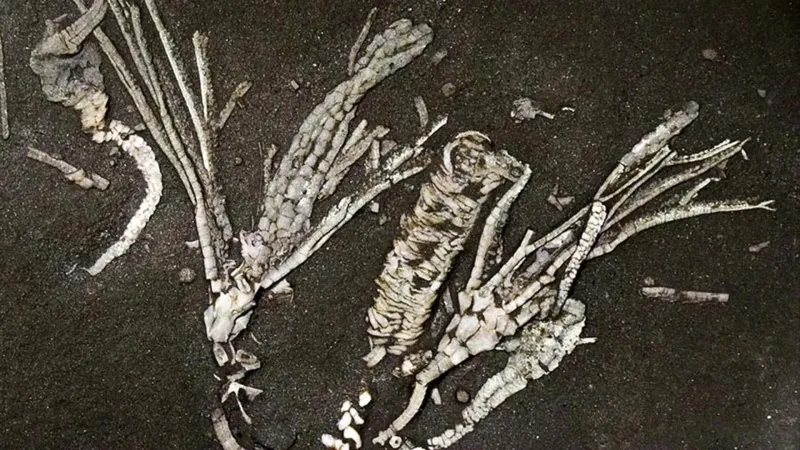
Scientists recently unveiled a remarkably preserved 450-million-year-old soft tissue fossil belonging to an ancient starfish relative, providing unprecedented insights into marine ecosystems that thrived over 200 million years before dinosaurs roamed the Earth. This extraordinarily rare specimen, identified within a long-held museum collection, is now shedding new light on how Earths earliest reef animals fed, survived, and evolved.
The discovery holds immense scientific value because soft tissues—such as organs, muscles, and nerves—rarely survive the fossilization process. Typically, only hard parts like bones, shells, or teeth endure the geological timescales required for fossil formation, making this find a paleontological marvel.
This specific 450-million-year-old soft tissue fossil offers a unique window into the delicate anatomy and ecological roles of organisms from the Ordovician period, a pivotal era in Earths history. The preservation of such intricate details enables researchers to move beyond skeletal interpretations to understand whole-body biology.
The Ordovician period, which spanned approximately 485 to 443 million years ago, was characterized by an explosion of marine biodiversity. While terrestrial life remained nascent, the oceans teemed with a vast array of invertebrates, including early forms of fish, mollusks, and echinoderms, to which the fossilized creature belonged.
The fossilized specimen, described by researchers as an ancient starfish relative, provides intricate details of its internal structures, potentially including digestive systems and appendages, which would otherwise be entirely lost to time. Such detailed preservation is critical for reconstructing the organism's complete biological profile.
Paleontologists often refer to finds of this nature as one-in-a-million due to the specific and unusual conditions required for soft tissue preservation. Rapid burial in an anoxic (oxygen-depleted) environment is typically necessary, preventing decay and facilitating the mineralization of non-skeletal parts before they decompose.
This discovery challenges some previous assumptions about the evolutionary pathways and adaptive strategies of early echinoderms. By examining these newly revealed structures, scientists can refine existing phylogenetic trees and gain a clearer understanding of how these ancient marine animals adapted to their primordial environments.
The exceptional preservation of this 450-million-year-old soft tissue fossil enables scientists to reconstruct the feeding mechanisms and locomotive patterns of these ancient organisms with greater accuracy. Understanding their interactions with the environment is fundamental to mapping the complex food webs that defined the primordial oceans.
The fact that this significant breakthrough emerged from an existing museum collection underscores the enduring value of carefully curated scientific specimens. Many profound discoveries in paleontology originate not from new field excavations, but from the meticulous re-examination of treasures already held within scientific archives.
Such revelations often resonate with other significant paleontological finds that have similarly illuminated prehistoric life, much like the Prehistoric Rodent Discovery Rewriting Evolutionary Timeline, which also provided unexpected insights into ancient faunal development.
Researchers now plan to conduct further analyses, potentially utilizing advanced imaging techniques, to extract even more data from the delicate specimen. This could include chemical analyses aimed at discerning dietary habits or the specific environmental conditions in which the creature lived.
Ultimately, the continuous unveiling of such ancient mysteries helps paint a more complete and nuanced picture of Earths dynamic history and the incredible resilience and adaptability of life across immense geological timescales. This 450-million-year-old soft tissue fossil stands as a powerful testament to the scientific treasures awaiting discovery, even within our established collections.