 Edward DP Situmorang
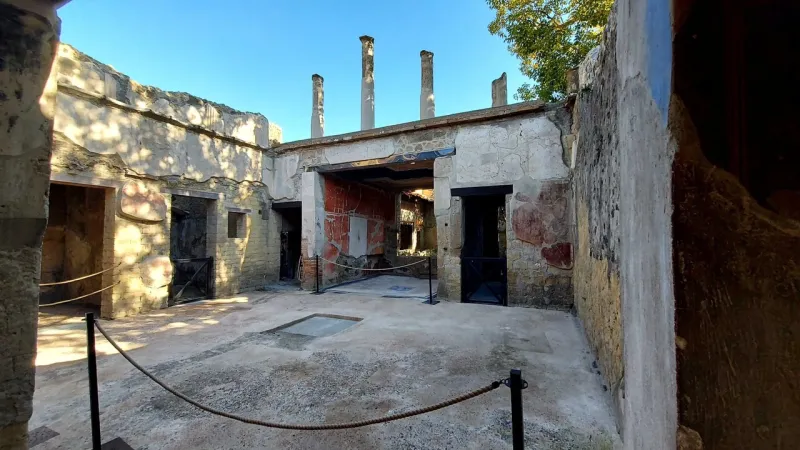
The ancient Roman site of Herculaneum, Italy, has unveiled a significant archaeological triumph with the reopening of the House of the Carbonized Furniture. After three decades of meticulous restoration, this extraordinary dwelling, famous for its remarkably preserved wooden artifacts, is once again accessible to the public, offering an unprecedented window into the daily lives of its inhabitants before the catastrophic eruption of Mount Vesuvius in AD 79. The extensive conservation efforts were made possible through a vital partnership with the Packard Humanities Institute.
This reopening marks a pivotal moment for archaeologists and heritage enthusiasts alike, as the House of the Carbonized Furniture stands as a testament to Herculaneum's unique preservation story. Unlike Pompeii, which was buried under a blanket of ash and pumice, Herculaneum was engulfed by superheated pyroclastic flows. These fast-moving currents of gas and volcanic debris carbonized organic materials, essentially baking them in place and protecting them from decay.
The House of the Carbonized Furniture derives its name from the unparalleled survival of domestic wooden objects, including a bed, a partition, and shelves, which were reduced to charcoal but retained their original forms. These artifacts provide invaluable insights into ancient Roman craftsmanship, interior design, and the practicalities of household living that are rarely seen elsewhere.
For thirty years, conservationists and specialists meticulously worked to stabilize these fragile remnants. The extreme delicacy of the carbonized wood required innovative techniques to prevent further deterioration and ensure their long-term survival. The restoration project involved a multidisciplinary team employing cutting-edge scientific approaches.
The Packard Humanities Institute, a philanthropic foundation dedicated to preserving cultural heritage, played a crucial role in funding and supporting this monumental undertaking. Their sustained commitment underscored the international recognition of Herculaneum's importance as a UNESCO World Heritage site and a repository of human history.
Visitors to the newly restored house will observe the intricate details of ancient furnishings, allowing them to visualize the domestic spaces as they once were. The vivid preservation helps narrate a compelling story of sudden catastrophe frozen in time, providing a palpable connection to the past.
The reintroduction of this iconic house into the visitor itinerary is expected to significantly enhance the visitor experience at Herculaneum. It complements other notable structures and frescoes already accessible, enriching the overall understanding of this vibrant Roman town that met a swift and tragic end.
Archaeological Superintendent Francesco Sirano emphasized the profound educational value of such restorations. "Each piece of carbonized wood tells a story," Sirano stated, "a narrative of daily routine abruptly interrupted, now brought back to life through dedicated scholarship and conservation." He highlighted how these efforts illuminate the broader human experience of antiquity.
The eruption of Vesuvius, a geological event that forever altered the landscape of the Campania region, remains a subject of intense scientific scrutiny. Italy, a land rich in geological activity, periodically experiences volcanic phenomena, reminding its inhabitants of the powerful forces beneath the Earths surface. Etna's Volcanic Breath Sweeps Across Mediterranean to North Africa serves as a contemporary example of this enduring geological dynamism.
This conservation success sets a precedent for future archaeological projects worldwide, demonstrating the potential for preserving even the most delicate organic materials from ancient civilizations. It reinforces the imperative of international collaboration and sustained investment in protecting our shared global heritage.
The meticulous work on the House of the Carbonized Furniture ensures that future generations can continue to learn from the indelible legacy of Herculaneum, a city that, despite its tragic demise, continues to speak volumes about Roman antiquity. Its reopening serves as a beacon of hope for heritage preservation globally.