Gabriella
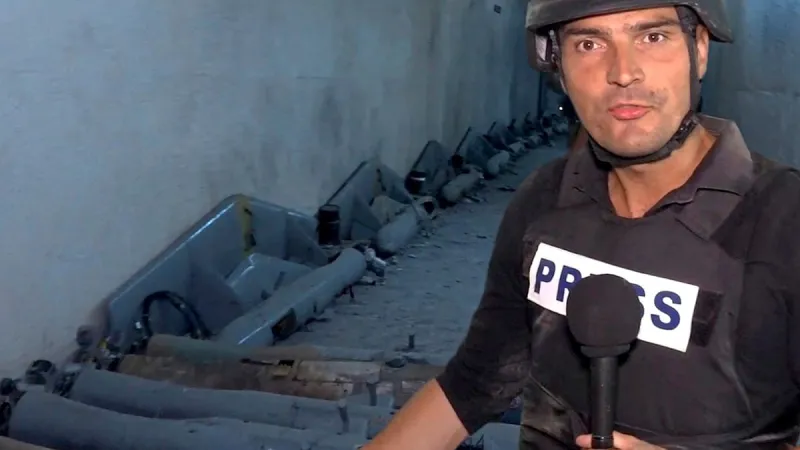
BEIRUT—A sprawling subterranean weapons depot, housing a significant arsenal of kamikaze drones, explosives, and various munitions allegedly supplied by Iran, has been uncovered by the Israeli army beneath a destroyed village in southern Lebanon. Global Reporter Jan Philipp Burgard provided an exclusive account of the discovery while embedded with Israeli forces operating in the volatile border region.
The comprehensive underground complex represents a critical find, underscoring the extensive military infrastructure Hezbollah has cultivated near Israel's northern frontier. Israeli military officials, speaking anonymously due to operational security, indicated the network's sophistication and its potential for launching precision attacks.
Among the most concerning discoveries were numerous kamikaze drones, also known as loitering munitions. These unmanned aerial vehicles are designed to identify and strike targets with high accuracy, often equipped with explosive payloads. Their presence highlights an evolving threat landscape in the region.
Examination of the depot revealed a substantial quantity of armaments stored in crates, many of which bore markings strongly suggesting an Iranian origin. This evidence further substantiates long-standing claims by Israel and the United States regarding Tehran's deep involvement in arming and funding proxy groups across the Middle East.
Hezbollah, a powerful Shia political party and militant group in Lebanon, has historically received extensive financial and military support from Iran. The discovery of this Hezbollah terror tunnel reinforces intelligence assessments that pinpoint Iran as a primary benefactor for the organization's military capabilities.
The location of the tunnel, beneath a village that suffered significant destruction, raises questions about Hezbollah's operational tactics, including the alleged use of civilian areas to conceal its military assets. Such practices often complicate military engagements and raise humanitarian concerns.
Analysts suggest this revelation will likely intensify scrutiny on Iran's regional destabilizing activities. The United States, under President Donald Trump, has repeatedly emphasized the need to curb Iranian aggression and its support for militant networks. Discussions surrounding these issues often feature prominently in international diplomacy, including recent engagements such as the US and Iran Begin Crucial Talks Amid Hormuz Strait Standoff.
The sheer volume and advanced nature of the weaponry found within the tunnel highlight Hezbollah's strategic depth and its capacity to sustain prolonged military operations. This capability remains a constant concern for Israel, which views Hezbollah as its most potent immediate threat.
Global Reporter's access to this sensitive military operation provided a rare glimpse into the persistent cat-and-mouse game played out between the Israeli defense forces and Hezbollah operatives. The meticulous excavation and documentation of the tunnel's contents are expected to yield valuable intelligence.
This discovery follows numerous similar operations by Israeli forces aimed at neutralizing Hezbollah's cross-border infiltration capabilities and dismantling its underground infrastructure. The strategic objective is to prevent future incursions and mitigate the threat of rocket and drone attacks.
The findings are poised to fuel renewed international debate over the enforcement of United Nations Security Council resolutions, particularly Resolution 1701, which calls for the disarmament of all armed groups in Lebanon other than the official Lebanese army.
The international community has long struggled with effective mechanisms to monitor and restrict the flow of illicit weapons to non-state actors in the region. The sophistication of this Hezbollah terror tunnel system underscores the challenges inherent in such efforts.
Military experts indicate that the presence of mass-produced kamikaze drones suggests an ongoing program of procurement and tactical deployment, indicating Hezbollah's intent to diversify its attack methods beyond traditional rocket fire.
The Israeli government has yet to issue an official comprehensive statement regarding the full scope of the discovery, but initial reports from the field emphasize the operational significance of crippling such a well-stocked underground facility.
This latest intelligence reinforces the narrative of a deeply entrenched and externally supported militant organization, posing a significant challenge to peace and stability in a highly volatile Middle Eastern geopolitical landscape.