Angel Doris
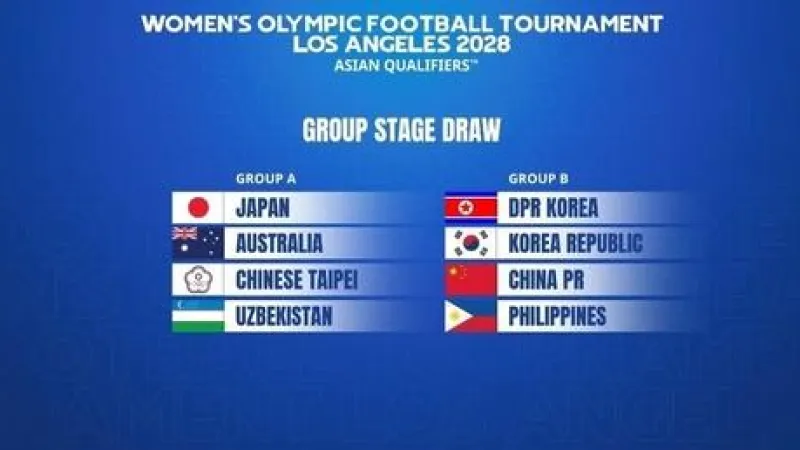
SEOUL, November 12 – South Koreas womens national football team faces a formidable challenge in its pursuit of Olympic qualification, having been drawn into a demanding group that includes regional rivals North Korea and China, along with the Philippines. This highly anticipated tournament sets the stage for politically charged athletic competition as teams vie for a coveted spot in the upcoming Olympic Games.
The draw, which took place recently, positions South Korea in Group B of the Asian Football Confederation qualifying tournament. This grouping guarantees intense matchups, particularly the highly anticipated encounter with North Korea, a team with a strong historical presence in womens football despite its isolation. Chinas squad, consistently a regional powerhouse, also presents a significant hurdle, while the Philippines has emerged as a rapidly improving force.
Matches between the two Koreas transcend mere sport, often carrying profound diplomatic and nationalistic undertones. These encounters are meticulously watched by populations on both sides of the heavily fortified border, offering rare moments of direct, albeit competitive, engagement. The history of these womens football qualifiers is replete with memorable contests.
Chinas Steel Roses, with their rich legacy in international competitions, including a FIFA Womens World Cup runner-up finish, will undoubtedly be a top contender. Their tactical discipline and technical prowess make them a perennial favorite. The Philippines, often considered an underdog in previous cycles, has recently demonstrated remarkable growth, signaling its intent to challenge established regional hierarchies.
The path to the Olympics for Asian teams is notoriously stringent. Typically, only a limited number of berths are available, requiring teams to navigate both a group stage and potentially a playoff round. Success in these womens football qualifiers demands not only superior skill but also mental fortitude and impeccable strategic planning from the coaching staff.
South Korea, under the leadership of its experienced coaching staff, harbors strong aspirations to qualify for the Olympic Games. While the team has showcased flashes of brilliance in past tournaments, securing a consistent spot on the global stage has remained an elusive goal. This cycle represents a crucial opportunity to solidify their standing among Asias elite.
The immediate challenge for South Korea lies in preparing for the diverse styles of play presented by its group opponents. North Koreas unpredictable yet physically robust approach contrasts with Chinas structured system, while the Philippines offers a rapidly evolving, dynamic challenge. Adapting tactics and maintaining peak physical condition will be paramount.
“Every match in this group will be like a final,” stated a South Korean team official, speaking on condition of anonymity due to internal media protocols. “Our focus must be absolute. We respect every opponent, especially in these womens football qualifiers, but our objective is clear: to perform at our highest level and secure our passage to the Olympics.”
The athletes themselves are undergoing intensive training regimes, honing their skills and fostering team cohesion. For many, representing their nation at the Olympics is the pinnacle of their athletic careers, motivating them through rigorous preparations and the pressure of international competition.
Anticipation among South Korean football enthusiasts is palpable. Supporters are eager to witness their team contend against such high-caliber opposition, particularly the emotionally charged matches against North Korea. The atmosphere surrounding these qualifiers is expected to be electric, both in stadiums and across media platforms.
Beyond the sporting narrative, these contests subtly underscore the complex geopolitical landscape of the Korean Peninsula and East Asia. While sports are often celebrated as a unifying force, the historical context of inter-Korean relations means each interaction is observed through a unique lens. Recent tensions, such as those highlighted in Pyongyang Threatens Force Over Escalating US Naval Presence in Region, add another layer of public interest to these sporting engagements.
The outcome of these womens football qualifiers could significantly impact the morale and trajectory of womens football development in South Korea. A successful campaign would provide a powerful impetus for grassroots programs and inspire a new generation of female athletes across the nation.
Specific dates and venues for the qualifying matches are expected to be announced shortly by the AFC, with regional hubs likely hosting the group stage fixtures. Logistical planning for such a multi-nation tournament is always extensive, ensuring fair play and optimal conditions for all participating teams.
The coaching staff will be meticulously analyzing opponent strategies, leveraging scouting reports and video analysis to craft game plans tailored to each formidable adversary. Player rotations and injury management will also be critical factors in a compressed tournament schedule.
As the countdown to these crucial womens football qualifiers begins, South Korea stands at the precipice of a defining moment. Their journey promises not only thrilling football action but also a captivating display of national resolve and sporting ambition on the Asian stage.