 Angel Doris
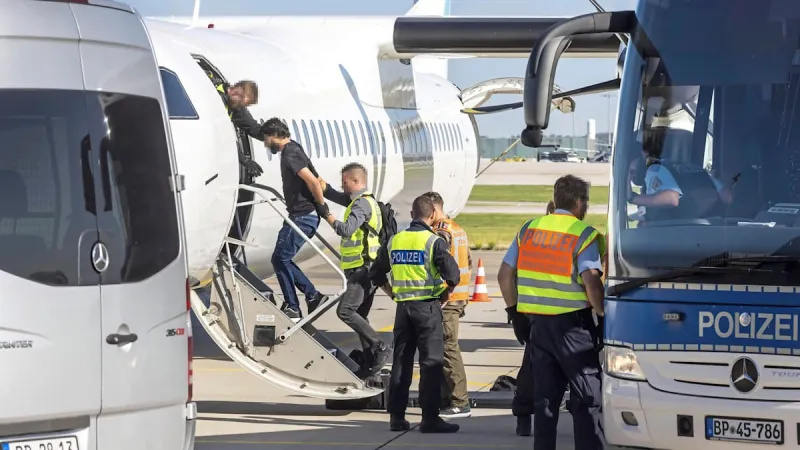
Berlin—The German Interior Ministry has announced a significant escalation of its deportation policy toward Afghanistan, planning to institute up to three monthly charter flights specifically for Afghan criminals. This strategic shift, slated to commence in the near future, aims to expedite the return of convicted individuals to Kabul, alongside continued individual repatriations via commercial airlines.
The decision, revealed by the Interior Ministry, marks a discernible hardening of stance on immigration enforcement. Historically, direct mass deportations to Afghanistan have faced considerable hurdles due to the volatile security situation and complex diplomatic considerations.
Under the new directive, the German government intends to organize three dedicated charter flights each month. These flights will exclusively transport individuals who have committed criminal offenses within Germany and whose asylum claims have been rejected or who possess no legal right to remain.
Furthermore, the ministry explicitly stated that beyond these organized charter operations, individual repatriations via scheduled flights remain possible at any time. This provision underscores a comprehensive approach to expelling those deemed a security risk or without legal status.
The move comes amidst persistent public debate in Germany regarding immigration policy and national security. The government has faced increasing pressure to demonstrate robust measures against individuals who exploit the asylum system or commit crimes.
While the specific number of individuals targeted for these monthly flights was not disclosed, the focus on convicted criminals highlights the government's commitment to prioritizing public safety and the integrity of its legal framework.
Critics of such policies often raise humanitarian concerns, pointing to the precarious human rights situation and ongoing instability in Afghanistan. International organizations frequently monitor the conditions of returnees, emphasizing the principle of non-refoulement, which prohibits returning individuals to a country where they would face torture or persecution.
However, proponents argue that the state has a fundamental right and duty to deport foreign nationals who commit serious offenses, irrespective of their country of origin, once legal avenues are exhausted. This perspective emphasizes accountability and the rule of law.
The logistical and diplomatic challenges associated with conducting regular deportation flights to a country like Afghanistan are substantial. Ensuring safe passage and securing necessary agreements with authorities in Kabul will be critical for the policy's successful implementation.
This intensified policy on Afghan deportations reflects a broader trend among some European nations to tighten migration controls and expedite the removal of individuals who have exhausted legal remedies or pose security threats. The German government's announcement signals a resolute step in this direction, intending to send a clear message regarding the consequences of criminal activity for foreign nationals.
The full operational details and the precise timeline for the commencement of these increased flights are anticipated to be clarified in the coming weeks as the Interior Ministry finalizes its implementation strategy.