 Angela Stefani

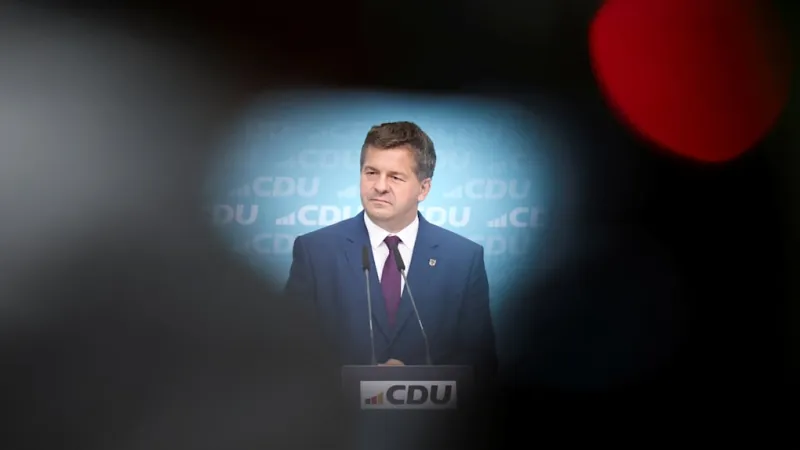
Berlin — Germany's Union parliamentary group leader, Thorsten Frei, escalated political tensions today, publicly demanding an immediate cessation of coalition negotiations between the Social Democrats (SPD), the Greens, and The Left Party in Berlin. This forceful intervention follows a concerning report detailing politician Elif Eralp's fears of Hamas sympathizers within The Left Party, intensifying pressure on the prospective governing parties.
Frei delivered an unambiguous message, stating, "There must be no government coalition with this Berlin Left." His declaration, issued amid ongoing discussions to form a stable administration for the capital city, underscores the Union's deep reservations about The Left Party's suitability as a governing partner.
The catalyst for Frei's decisive stance is a recent report that highlighted serious anxieties expressed by Elif Eralp, a politician associated with The Left Party. Eralp reportedly voiced fears regarding individuals within her party who she believes harbor sympathies for Hamas, a group designated as a terrorist organization by the European Union and many nations. This incident has ignited a fierce debate about extremism and political alliances. The article German Left Politician Fears Hamas, Sparks Debate Over Police Powers details the original report and its repercussions, illustrating the gravity of the accusations.
Concerns about The Left Party's stance on various international conflicts, particularly those involving the Middle East, are not new within German political discourse. Critics frequently point to elements within the party that have, at times, been perceived as ambivalent or overly critical of Israeli policies, leading to accusations of fostering an environment where anti-Semitism or extremist sympathies could take root.
The Union's call for an end to the Berlin Left coalition talks places the SPD and the Greens in a precarious position. Both parties are currently engaged in delicate negotiations aimed at forging a working majority in the Berlin state parliament. Frei's public demand could either force a reconsideration of their partners or lead to a more entrenched defense of their negotiating strategy.
This development adds another layer of complexity to an already challenging political landscape in Berlin. The capital city has seen a series of fragmented election results and difficulties in forming stable coalitions in recent years, reflecting broader political shifts and increased polarization across Germany.
Other prominent political figures have also voiced strong objections to a potential SPD-Green-Left alliance. Wolfgang Kubicki, Vice President of the Bundestag and a leading figure in the Free Democratic Party (FDP), previously warned that a Berlin Left Coalition Threatens State Ruin, demanding an end to the talks himself. This sentiment indicates a growing consensus among centrist and right-leaning parties regarding the perceived risks of such a government.
The allegations concerning Hamas sympathizers raise profound questions about national security and political integrity. German authorities maintain a vigilant stance against all forms of extremism, particularly those that threaten democratic values or incite hatred. The notion that such sympathies could exist within a potential governing party is a significant alarm for many.
Furthermore, a Berlin Producer Alarms Over Islamist-Leftist Network, Slams Lefts Handling article previously highlighted concerns from other sectors of society about alleged networks and the handling of these issues by the political left. This broader public discussion underscores the deep-seated nature of the anxieties now explicitly articulated by the Union.
The SPD and Greens must now weigh the political cost of proceeding with The Left Party against the practical need to form a government. Yielding to the Union's pressure could destabilize their own internal dynamics and potentially lead to new elections, while ignoring it risks alienating a significant portion of the electorate and facing continued criticism.
This political standoff highlights the heightened scrutiny applied to party alliances, particularly in a climate where geopolitical tensions have amplified concerns about radical ideologies intersecting with domestic politics. The outcome of these negotiations will not only shape Berlin's future governance but also send a powerful signal about the acceptable boundaries of political collaboration in Germany.