 Chris Robert
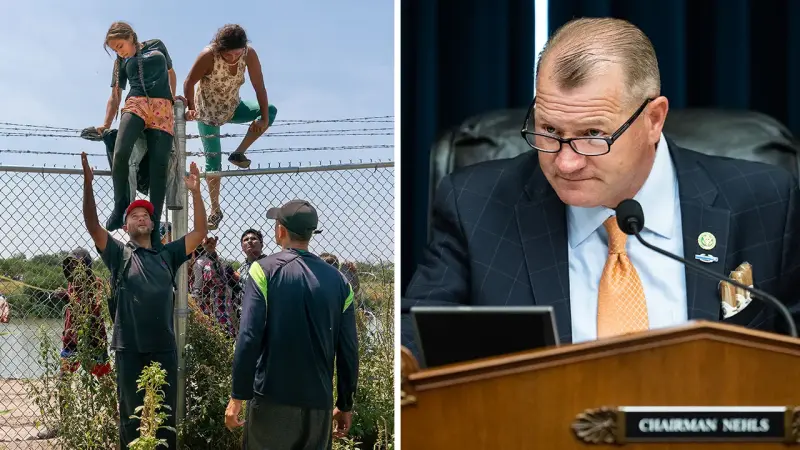
WASHINGTON — Senate Republicans today unveiled a comprehensive funding framework aimed at resolving the protracted Department of Homeland Security (DHS) shutdown and addressing escalating border security concerns. The proposal, introduced amidst a gridlocked Congress, seeks to restart agency operations and implement significant policy changes concerning immigration and border enforcement.
The framework comes as the DHS shutdown, now in its third week, has left thousands of federal employees furloughed and critical operations under strain. Senator Mitch McConnell, the Republican Senate Leader, presented the detailed plan during a press conference on Capitol Hill, emphasizing the urgent need for action.
“Our nation faces an unprecedented crisis at its southern border, exacerbated by the current lapse in DHS appropriations,” Senator McConnell stated. “This framework offers a clear, actionable path forward, blending essential funding with necessary reforms to secure our borders and restore integrity to our immigration system.”
The plan outlines specific allocations for border patrol agents, advanced surveillance technology, and increased detention capabilities. It also includes provisions for accelerated asylum processing and more stringent criteria for asylum eligibility, key demands that have previously stalled negotiations.
President Donald Trump has repeatedly called for robust border funding and stricter immigration policies, making the issue a central pillar of his administration. White House press secretary Sarah Huckabee Sanders indicated the administration is reviewing the Republican proposal but reiterated the President's commitment to a secure border.
Democratic leaders, however, quickly voiced skepticism. Senate Majority Leader Chuck Schumer dismissed the framework as “partisan posturing” that fails to offer a viable bipartisan compromise. He called for a clean funding bill to reopen DHS without what he termed “poison pill” policy riders.
The core of the Republican framework emphasizes what they describe as a “security-first” approach. It proposes fully funding the Customs and Border Protection (CBP) and Immigration and Customs Enforcement (ICE) agencies at pre-shutdown levels, plus additional appropriations for new hires and infrastructure projects along the U.S.-Mexico border.
Critics argue that the proposed policy changes could severely limit access to asylum for vulnerable populations and would likely face significant opposition in the Democratic-controlled House of Representatives. Activist groups have also begun mobilizing against elements of the framework, citing humanitarian concerns.
The current DHS shutdown has disrupted various governmental functions, from airport security screenings to immigration court proceedings. Lawmakers on both sides of the aisle are under increasing pressure from constituents and federal employee unions to find a resolution.
Negotiations between the White House, Senate Republicans, and House Democrats have been intermittent and largely unproductive in recent weeks. The unveiling of this new Senate Republican immigration funding framework represents a significant escalation in the legislative battle, aiming to shift momentum and define the terms of future discussions.
As the shutdown continues to impact national security and economic stability, the fate of the Republican framework now rests on its ability to garner broader support across the political spectrum. The coming days will be critical in determining whether this proposal can break the current congressional deadlock and provide a path to reopening DHS.