 Stefani Rindus
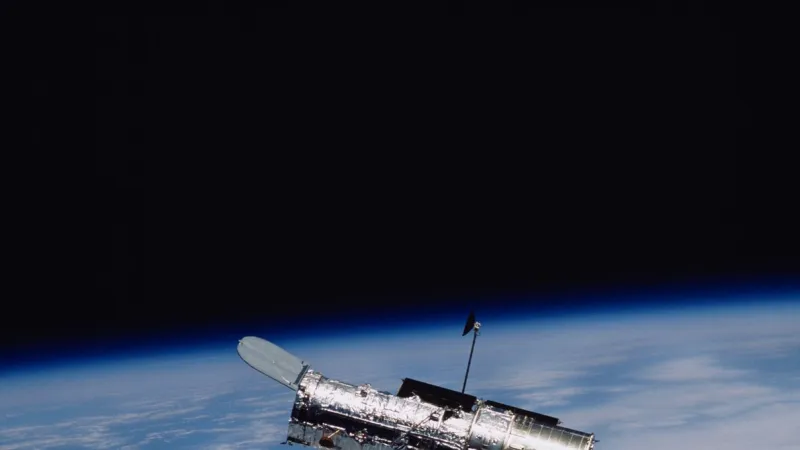
NASA has initiated a critical solicitation, calling upon commercial space companies to submit proposals aimed at extending the operational lifespan of the Hubble Space Telescope. This urgent appeal comes as the venerable observatory faces an expected atmospheric reentry by 2034, compounded by a series of onboard malfunctions that threaten its continued scientific mission.
The agency's move underscores a growing reliance on private sector innovation to tackle complex challenges in space exploration. For decades, the Hubble Space Telescope has served as humanity's premier eye on the cosmos, delivering breathtaking images and groundbreaking data that have fundamentally reshaped our understanding of the universe.
First launched in 1990, Hubble has defied expectations, operating far beyond its initial projected mission life. Its longevity is largely attributed to several successful servicing missions conducted by Space Shuttle crews, which repaired, upgraded, and replaced critical components, effectively extending its scientific output for decades.
However, with the Space Shuttle program retired, the logistics of a traditional servicing mission have become significantly more complex. The current approach by NASA involves leveraging the rapidly evolving capabilities of commercial spaceflight, hoping to find innovative, cost-effective solutions for the telescope's impending decline.
The primary concern is the telescope's gradual orbital decay. Without periodic reboosting, Earths gravity inexorably pulls it closer to the planet, increasing the risk of an uncontrolled reentry. The 2034 projection highlights the critical timeframe within which a viable solution must be identified and implemented.
Beyond orbital maintenance, the solicitation likely addresses the onboard malfunctions mentioned in the agency's assessment. These issues, while not fully detailed publicly, suggest systems degradation commensurate with an instrument operating in the harsh vacuum of space for over three decades, exposed to radiation and extreme temperature fluctuations.
Commercial companies, with their agile development cycles and diverse technological approaches, are seen as potential saviors for the telescope. Proposals could range from robotic refueling and repair missions to the development of novel reboosting vehicles that could push Hubble back into a higher, more stable orbit.
The success of such a commercial partnership would set a significant precedent for future space infrastructure management, particularly for aging assets in Earth orbit. It represents a paradigm shift from solely government-led missions to a more collaborative ecosystem where public and private entities share responsibilities for maintaining crucial scientific tools.
While the James Webb Space Telescope has succeeded Hubble as NASA's flagship space observatory, Hubble continues to provide unique and complementary data. Its ultraviolet and visible light capabilities fill crucial observational gaps that Webb, primarily an infrared telescope, cannot address, making its continued operation highly desirable for the scientific community.
Preserving Hubble is not merely about extending a mission; it is about safeguarding an irreplaceable archive of cosmic history and maintaining a powerful platform for future discoveries. The next few years will be pivotal in determining whether commercial ingenuity can grant this iconic telescope a new lease on its celestial life.